
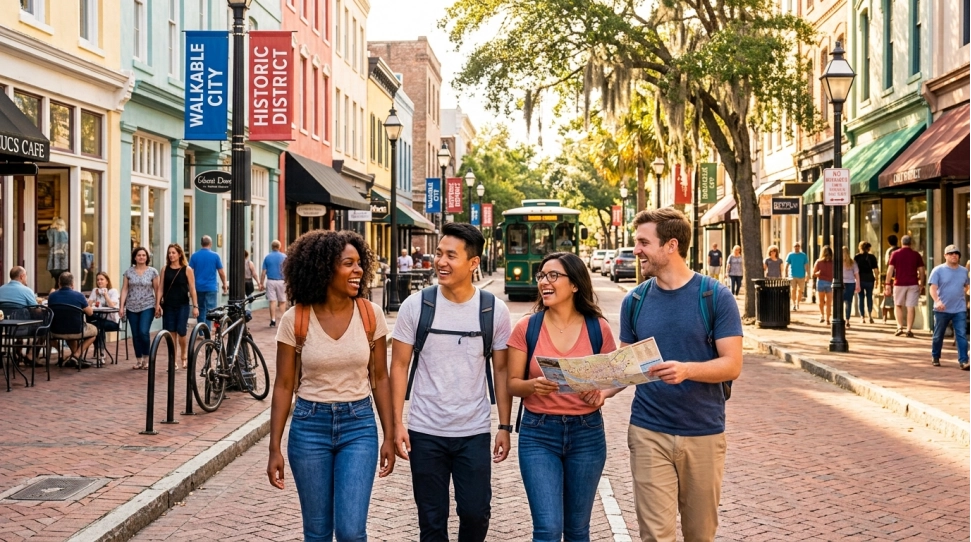
There’s a particular pleasure in a city trip where the car stays parked from Friday to Sunday. The most walkable cities in America compress their best restaurants, museums, and neighborhoods into districts you can cover on foot, which means no parking apps, no rideshare surge pricing, and the kind of wandering where the trip’s best moments happen between the planned stops. Walking is also, not incidentally, the healthiest way to see a city, and a good weekend on foot can log 25 miles without ever feeling like exercise. Here are the cities that reward the approach, chosen for flat terrain, connected neighborhoods, and density of things worth walking to.
Charleston and Savannah: The Gold Standard
The Southern pair remains unbeatable for pedestrian pleasure. Charleston’s peninsula packs three centuries of architecture, a waterfront promenade, and one of America’s great food scenes into a district barely two miles long, all of it flat as a table. Stay south of Calhoun Street and everything from the City Market to the Battery is a stroll. We’ve covered the city’s current moment in our piece on why everyone’s visiting Charleston right now, and its newest anchor, the International African American Museum, sits right on the walking route at the old Gadsden’s Wharf. Savannah, two hours south, may be even more walkable thanks to its grid of 22 squares, each a shaded park roughly every two blocks, which function as built in rest stops. The genius of Savannah on foot is that you’re never more than a hundred yards from a bench under a live oak.
Boston, Portland, and the Compact Northeast
Boston is the great American walking city, full stop. The Freedom Trail’s red brick line connects 16 historic sites across 2.5 miles, but the better move is treating it as a spine and detouring constantly, into the North End for cannoli, through Beacon Hill’s gaslit lanes, along the Charles River esplanade. The T subway backstops any tired feet. Portland, Maine offers the small city version, with the entire Old Port district of cobblestones, galleries, and some of the best eating per capita in the country coverable in an afternoon, plus a working waterfront where the lobster boats still unload. Both cities shine in September, when summer humidity breaks and the crowds thin.
The Surprises: Alexandria, Santa Fe, and a College Town
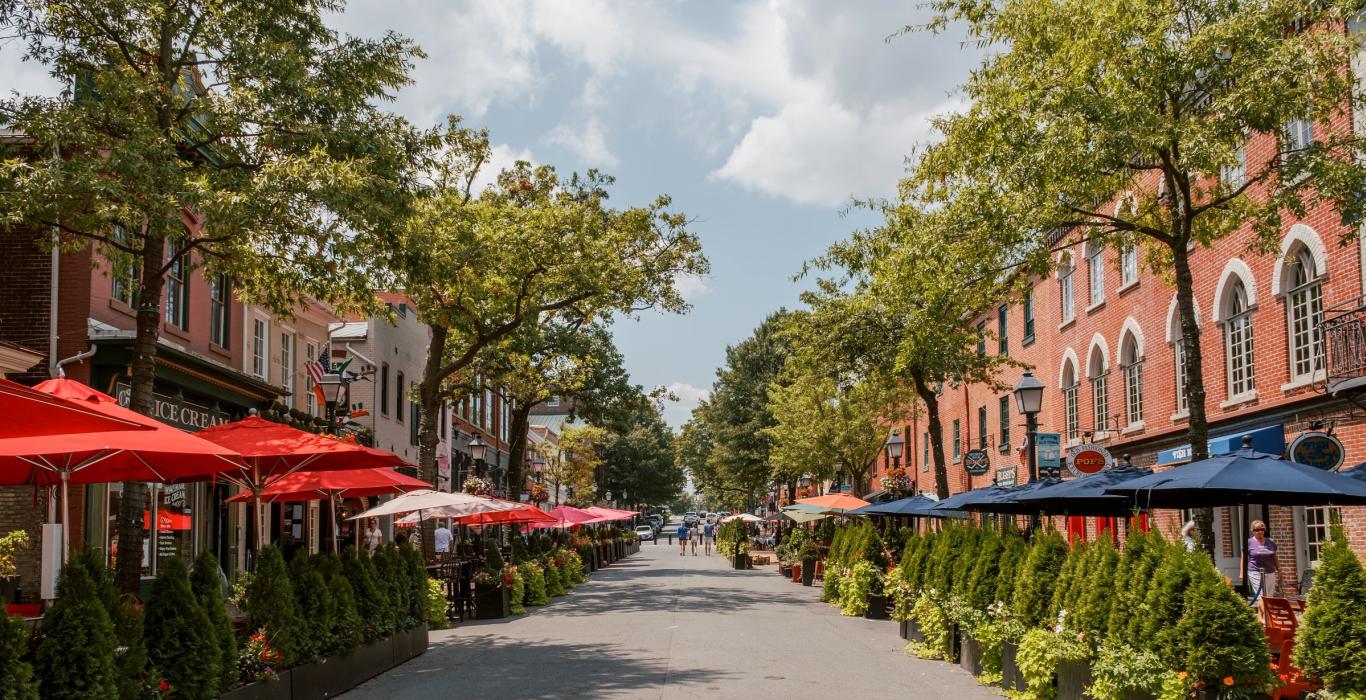
Alexandria, Virginia sits ten minutes from Washington’s museums by Metro yet feels like its own destination, with King Street running a walkable mile from the river through boutiques and 18th century townhouses. It’s the smart base for a Washington trip: capital sights by day, small town evenings by night. Santa Fe compresses 400 years of history, the state capital, and more than 250 galleries into a downtown you can cross in 20 minutes, though its 7,000 foot elevation means pacing yourself the first day. And don’t overlook the college towns, which are engineered for walking by their nature. Princeton, New Jersey wraps a world class art museum, leafy campus paths, and a proper main street into a weekend that requires no car at all once you arrive, as we detailed in our guide to a weekend in Princeton.
Planning the Perfect Walking Weekend
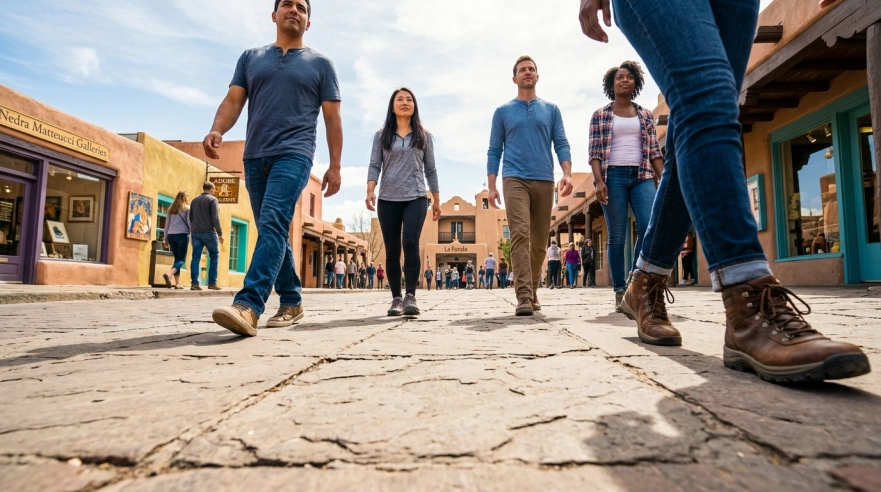
A few tactics elevate the whole experience. Choose your hotel by walking radius rather than price alone, since a room in the historic core saves both rideshare money and energy, and check the location’s Walk Score on walkscore.com, which rates any address for pedestrian friendliness. Plan each day as a loop rather than an out and back, so the scenery never repeats. Front load the ambitious walking in the morning and design afternoons around a long lunch and a shorter stroll, which matches how energy actually works.
Comfort planning deserves the same attention as the itinerary. Every one of these cities has a transit or trolley backstop, from Boston’s T to Charleston’s free downtown shuttle, so a tired afternoon never strands you, and knowing the backup route before you need it removes the only real risk of a walking trip. Weather is the other variable worth respecting: the Southern cities walk best October through April, the Northeastern ones May through October, and a morning ice cream in Savannah’s July humidity counts as athletic activity. Build a bench and coffee stop into every couple of miles, not because you need it, but because sitting in a beautiful square watching a city go about its business is half the point of coming.
Free walking tours led by local guides, bookable through sites like the National Park Service in cities with national historical parks, are terrific first morning orientations that turn every subsequent walk into review. And pack the shoes you already trust, never new ones, with a spare pair so damp shoes get a day off. The walkable city weekend is travel at its most efficient: maximum discovery, minimum logistics, and you come home having earned every dinner.

Written by the
ZestYears Editorial Team