

You drove three hours to see them. You baked the cookies, brought the board game, planned the afternoon at the park. And there they are on the couch, headphones in, fully absorbed in something on a tablet. You say hi. You get a half-wave back.
If you have grandkids under the age of 18 in 2026, some version of this scene has probably played out in your living room. It is one of the most common frustrations modern grandparents talk about, and it is also one of the most loaded. Push too hard and you risk a tense conversation with your adult child. Say nothing and you wonder if you are the only person in the room still trying to make eye contact with the kids.
Here is the good news: you have more influence than you think, and you can use it without overstepping. The trick is understanding what kids are actually doing on screens, what the experts now recommend, and how to make your time together compelling enough to compete.
How Much Screen Time Are Kids Actually Getting?
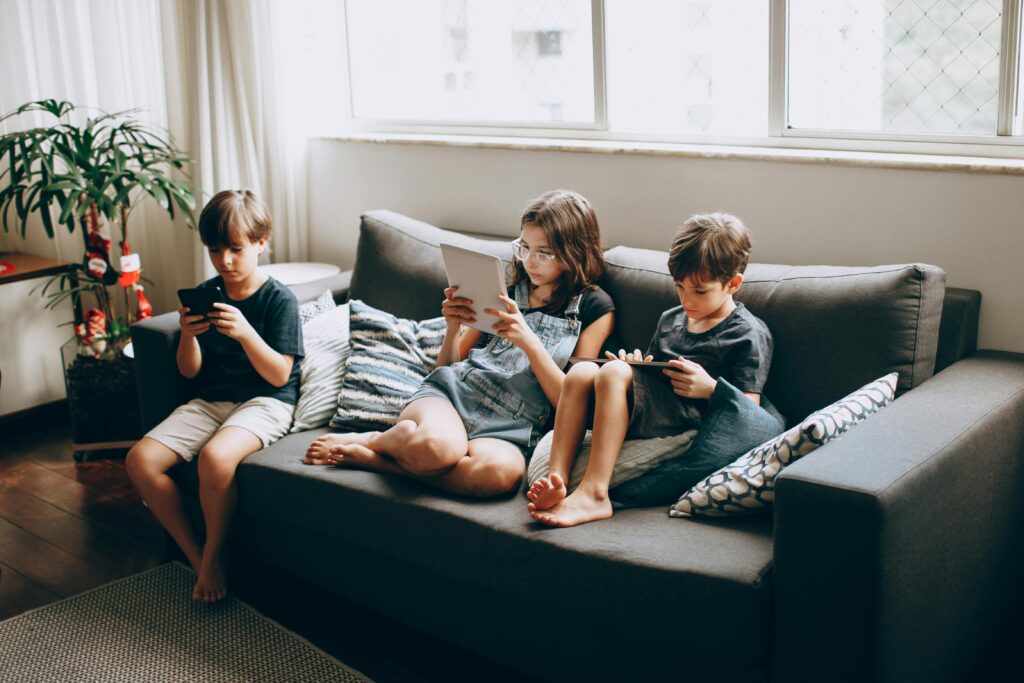
A lot. According to a 2024 report from Common Sense Media, tweens (ages 8 to 12) average about five and a half hours of entertainment screen time per day, and teens average more than eight. That does not include screens used for school. For younger kids, the average is lower but still meaningful, and it has crept up steadily since 2019.
For context, the American Academy of Pediatrics used to recommend hard limits like “no more than two hours a day.” In recent years they have moved away from a single number and toward what they call a Family Media Plan, which considers the child’s age, what they are watching, and whether screens are getting in the way of sleep, school, exercise, or real-world relationships. That shift matters for grandparents, because the question is no longer “how many hours” but “what is the screen replacing right now.”
That is a much more useful question, and one you can act on.
Why the Pull Is So Strong (And Why It Is Not Your Grandchild's Fault)

The shows, games, and short-form videos kids are watching are engineered by some of the best behavioral designers in the world to keep attention locked in. Auto-play, algorithmic feeds, and reward loops are doing exactly what they were built to do.
Dr. Jenny Radesky, a developmental behavioral pediatrician at the University of Michigan and a lead author on the AAP’s media guidelines, has described this as a tug-of-war between a child’s developing self-control and an app’s professional persuasion team. The kid is going to lose that tug-of-war most of the time. So are most adults, honestly.
Knowing this changes the tone of the whole conversation. Your grandchild is not being rude on purpose. They are responding to a very effective product. That insight alone takes the sting out of the moment and lets you respond from curiosity instead of frustration.
Seven Things You Can Do (Without Starting a Family Feud)
These are not rules to impose on the parents. They are things you can do during your own time with your grandkids that consistently work.
1. Make in-person time so good they do not want to miss it. This sounds obvious, but it is the single most effective strategy. A walk to get ice cream, a science experiment in the kitchen, a card tournament with a small prize, a project you can build over multiple visits. Kids who are bored reach for screens. Kids who are engaged do not.
2. Watch with them, at least sometimes. Sitting next to your grandchild while they show you their favorite YouTuber or game is one of the most underused grandparent moves. Ask questions. Be a little impressed. You are sending the message that you are interested in their world, which makes them dramatically more open when you suggest something off-screen.
3. Have a clear, gentle house rule when they are at your place. Something like “phones go in the basket during meals” works because it is simple, it applies to everyone (including you), and it is your house. Most parents will quietly appreciate this. The phrasing matters: make it a shared family ritual, not a punishment.
4. Bring something analog and surprising. A magnifying glass and a walk in the yard. A deck of cards and a new game they have never seen. A disposable camera. A jar of buttons and some thread. A jigsaw puzzle that takes the whole weekend. Novelty competes with screens better than nagging ever will.
5. Use the drive, the meal, or the porch as your window. Kids open up in side-by-side moments more than face-to-face ones. The dinner table, the car, and the front step are gold. Resist the urge to ask “How is school?” and try “What is the weirdest thing that happened this week?” or “What is one thing your friends are obsessed with right now?”
6. Loop the parents in privately if you are truly worried. If you notice something concerning, like a kid who seems withdrawn, sleep-deprived, or watching content that feels age-inappropriate, mention it to your adult child one-on-one. Lead with curiosity, not judgment. Try something like, “I noticed she seemed really tired and quiet this visit. Is everything okay?” That opens a door instead of closing one.
7. Model what you want to see. If you are scrolling your own phone during dinner or pulling it out to check email mid-conversation, your grandchildren are taking note. The most powerful thing you can do is put your own phone face-down in another room when they are with you. They notice. They always notice.
What Not to Do
A few moves that consistently backfire: making screens the villain in every conversation, comparing today’s kids unfavorably to your own childhood, going around the parents to confiscate devices, and turning every visit into a referendum on technology. None of those build the long-term relationship you actually want.
The goal is not to be the grandparent who got the iPad away from them. The goal is to be the person they want to spend time with for the next thirty years.
When to Get More Support

If screen use is genuinely interfering with your grandchild’s sleep, school, friendships, or mental health, that is a parent-and-pediatrician conversation, not a grandparent one. You can be a soft, supportive presence around it. Trusted resources include the AAP’s Family Media Plan tool and the Common Sense Media’s parent guides.
For more on staying close to the grandkids no matter what the family setup looks like, see our piece on long-distance grandparenting and our age-by-age grandparent gift guide for ideas that pull kids off the couch and into something they will remember.
The screens are not going anywhere. But the version of you who shows up curious, calm, and a little bit fun is something no algorithm can compete with.

Written by the
ZestYears Editorial Team