
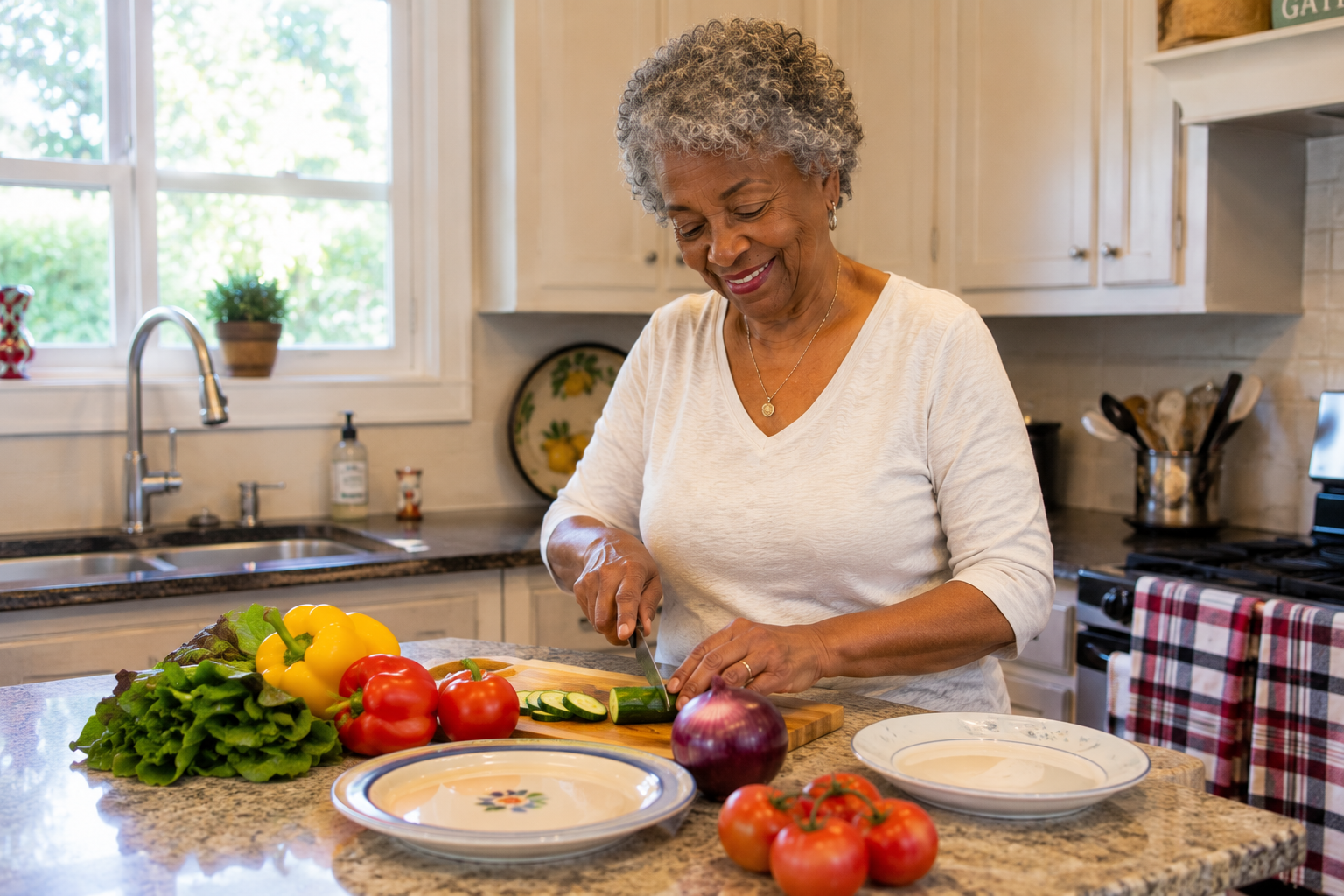
As the years go by, many people start eating less almost by default. Portions shrink, meals get skipped, and “eating light” begins to feel like the responsible choice.
But according to nutrition coach Michelle, consistently eating too little often does the opposite of what people intend. Instead of improving energy or health, it can leave you feeling depleted, weaker, and less resilient. Eating well is not about restriction. It is about giving your body what it needs to move, recover, and stay engaged with life. Eating for strength and energy after 55 means fueling your body with enough protein, fiber, and nourishing meals to support muscle, stamina, and daily life.
Why Undereating Can Quietly Undermine Your Health
When food intake stays low for long periods, the body reads that as scarcity. In response, it conserves energy in ways that are not always helpful long term. “Under-eating sends a clear signal to the body that resources are scarce,” Michelle explains. “In that environment, recovery is suppressed, injury risk goes up, and people often feel more fatigued, not less.”
One major issue is protein intake. According to research published by the National Institute of Health, a large percentage of adults fail to meet even the minimum recommended protein intake, especially as appetite declines and meals become smaller. This can impair muscle repair, immune function, and overall energy levels.
Michelle notes that appetite is not always a reliable guide over time, which is why eating with structure becomes important. “The right balance comes from eating enough to support training, daily movement, and repair. Stability, not restriction, is what keeps the body functioning well.”
A Simpler Way to Think About Nutrition

Macro-based nutrition does not have to mean tracking every bite. Michelle teaches it as a framework, not a math problem. “You don’t need numbers to do this well,” she says. “Macro-based thinking is about balance, not perfection.”
Instead of counting grams, she encourages people to build meals around a few consistent priorities:
A palm-sized portion of protein at every meal to support strength and recovery
Produce for fiber and micronutrients
A visible carbohydrate source to fuel movement and energy
Fats added intentionally, rather than accidentally, for hormonal health and satisfaction “If those elements are present most of the time, people usually end up very close to where they need to be,” Michelle explains.
This approach keeps meals flexible, satisfying, and far less stressful.
Protein That Works When Appetite Is Low

Smaller appetites, cooking fatigue, or living alone can make eating feel like a chore. Michelle emphasizes that protein does not need to be complicated or heavy to be effective. “Food density matters more than volume,” she says. “Protein doesn’t need to be elaborate.”
She often recommends simple, easy-to-digest options like Greek yogurt paired with fruit and seeds, eggs combined with cottage cheese or sliced ham, protein smoothies made with milk or soy milk, and soups or stews that include lentils, beans, or shredded meat. “For people cooking for one, preparing food once and eating it twice can make nutrition much easier to sustain.” These meals support strength without requiring large portions or long prep time.

Small Shifts That Help Food Feel Better
Digestion and metabolism may change over time, but Michelle is clear that they do not stop working. “Metabolism doesn’t break,” she says. “It just becomes less forgiving of extremes.”
Spacing protein evenly throughout the day helps the body use it more effectively. Smaller, balanced meals often feel better than one large dinner. Hydrating earlier in the day can support digestion without disrupting sleep, and slowing meals down can resolve many common digestive complaints on its own. “Skipping meals or saving most calories for late at night usually makes energy and digestion worse, not better,” Michelle explains.
Food as a Source of Joy, Not Just Fuel
Beyond physical health, Michelle believes food plays a powerful role in emotional well-being and independence. “Food is one of the last daily activities that gives us agency,” she says.
Planning meals, preparing food, and sharing meals keep people mentally engaged and socially connected. Even small rituals, like a consistent breakfast routine or a weekly dinner with friends, can add structure and meaning to daily life. “Eating with others helps you eat better and feel better,” Michelle notes. “Longevity isn’t just about living longer. It’s about staying involved, capable, and connected.”
Eating for strength and energy is not about eating less. It is about eating intentionally. When meals support recovery, movement, and enjoyment, the body responds with better energy, stronger resilience, and a greater sense of well-being. With simple structure and nourishing choices, food becomes one of your strongest allies in living well and loving every bite.
About the Contributor

Michelle MacDonald is a world-renowned strength and transformation coach helping women over 40 build muscle, reclaim their health, and lead themselves with unshakable discipline. A four-time FMG champion, elite Contest Prep Coach, founder of The Wonderwomen coaching team, and the strategist behind her mother Joan MacDonald’s viral transformation, Michelle blends science, powerful storytelling, and mindset to redefine what’s possible in midlife. Her mission? To end the cultural obsession with shrinking and show women how to rise through strength, structure, and agency. Michelle speaks boldly on aging, performance, hormone literacy, and training for life. She lives between San Miguel and Tulum, and yes, she lifts heavy.
Website: Michelle MacDonald