

Aircraft seats were engineered for an average body holding still, which is precisely what arthritic joints and temperamental backs handle worst, and anyone researching flying with arthritis knows the dread math of a long-haul: hours of enforced stillness followed by days of paying for it. The encouraging truth is that flight discomfort responds remarkably well to strategy, and the difference between arriving wrecked and arriving ready comes down to choices made at booking, movement made in the air, and assistance most travelers never think to request. Here’s the complete comfort playbook.
Win the Flight at Booking
Comfort begins weeks before the airport. Book the aisle seat always, since it grants standing rights without negotiation, and choose the aisle side that frees your more troublesome hip or knee toward open space. Pay for extra-legroom economy on any flight over three hours, the best comfort-per-dollar upgrade in aviation, and consider bulkhead seats for stretch room, noting the tradeoff that armrests there don’t lift and bags must be stowed overhead.
On long-hauls, treat schedule as medicine: daytime flights beat redeyes for anyone whose joints stiffen with sleep in a chair, and a one-stop itinerary that breaks ten seated hours into five and five, with a walking hour between, is a legitimate comfort strategy rather than an inconvenience. Nonstop dogma deserves rethinking when your back is the one voting. Finally, book morning flights when airports are calmer and your energy fullest, and give yourself the long layover rather than the tight sprint, since rushing is what backs and hips forgive least. A packing cube system that keeps essentials on the top layer also spares the repeated bending and rummaging that travel days pile on.
Move Like It's Your Job, Because It Is
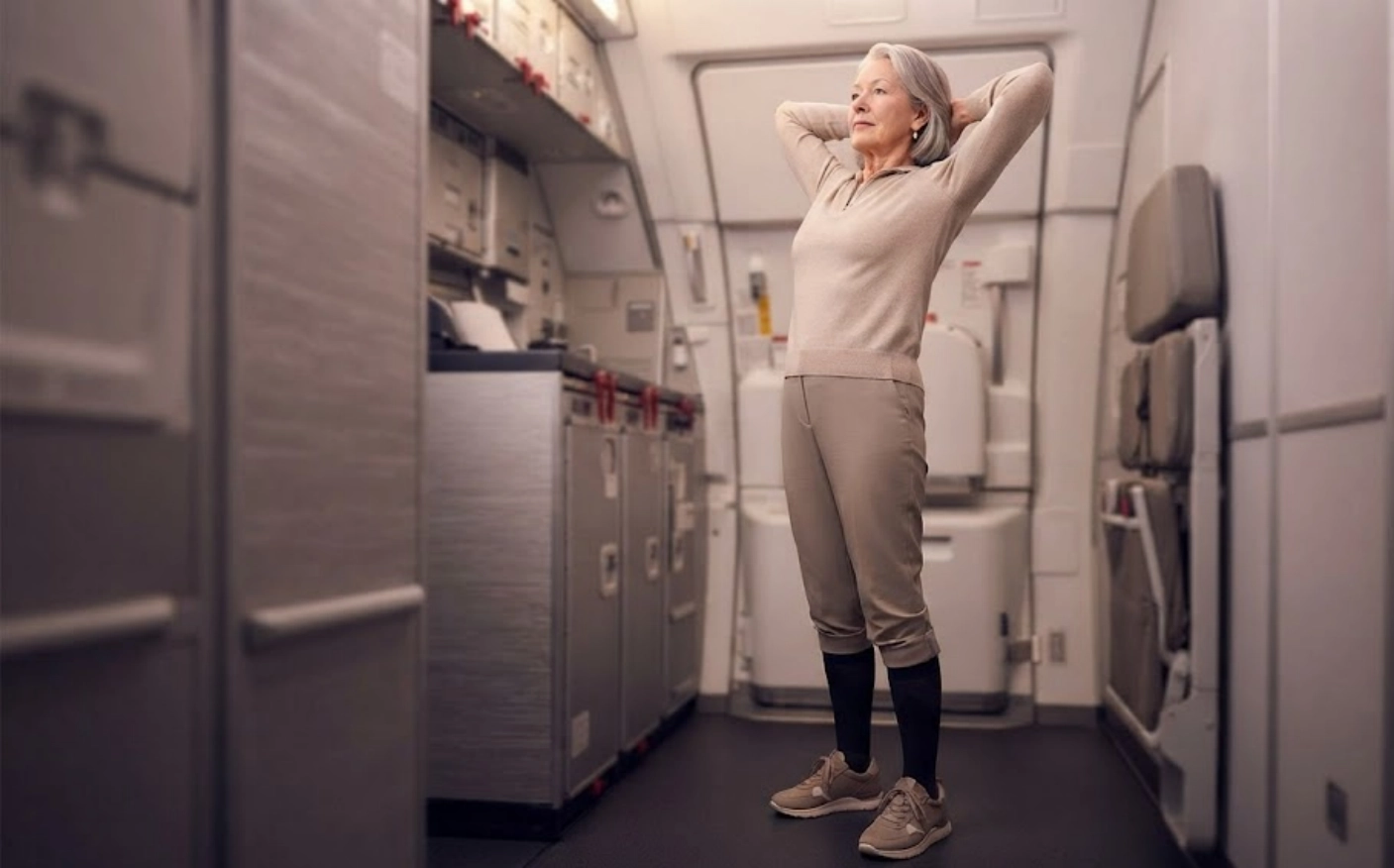
In the air, stillness is the enemy and the fix is rhythm. Stand or walk the aisle every 45 to 60 minutes, setting a silent timer rather than trusting inclination, and use the galley area for a genuine stretch: gentle back extensions, calf raises, shoulder rolls, the routine your physical therapist would design if asked. Between walks, run seated circuits of ankle pumps, knee extensions, and seat-level pelvic tilts, which keep synovial fluid doing its lubricating work and double as the clot precaution every long-haul passenger needs anyway.
Support the structure too: a small lumbar pillow or rolled airline blanket behind the low back transforms most economy seats, a memory foam seat cushion is worth its carry-on space for anyone with hip or tailbone issues, and heat patches applied pre-flight quiet many backs for hours.
Time medication thoughtfully, taking your usual anti-inflammatory schedule with food and carrying doses in the personal item, never checked luggage, and hydrate more than feels necessary, since cabin air dehydrates tissue that joints prefer supple. The Arthritis Foundation’s travel guidance at arthritis.org adds condition-specific tactics worth reviewing before a big trip.
Request the Assistance the System Already Owes You
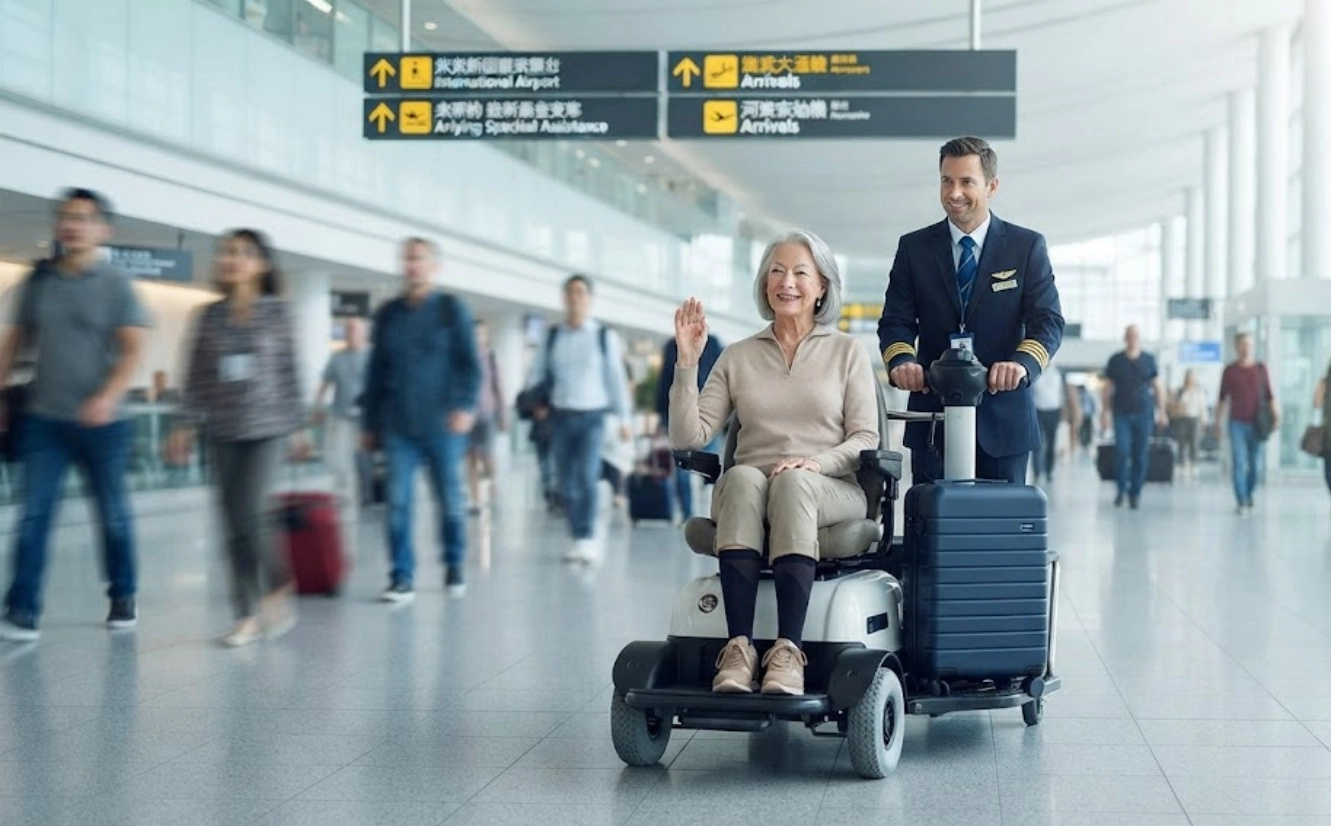
The least-used comfort tools are the free ones. Airport wheelchair and cart service, guaranteed by federal law at every US airline for any passenger who requests it, exists precisely so the half-mile concourse doesn’t spend the joint capacity you’d rather use at the destination, and requesting it takes one call or a checkbox at booking, with no documentation required. Preboarding, available on request to anyone needing extra time or assistance, removes the aisle shuffle and guarantees overhead space above your seat, sparing the overhead-bin hoist that shoulders resent. At security, travelers with limited mobility can request seated screening and assistance through TSA Cares 72 hours ahead. And pack ruthlessly light with spinner luggage that rolls beside you effortlessly.
Landing Well
The final tactic is the arrival day itself: schedule nothing ambitious, book the hotel with the pool or tub, take the gentle evening walk that tells your spine the ordeal is over, and let day one be the transition your joints are owed.
One reader with rheumatoid arthritis who’d sworn off Europe reversed course with exactly this playbook, aisle seat, hourly walks, wheelchair service through Heathrow’s endless corridors, rest day on arrival, and reported the revelation that the flight had never been the barrier. The unmanaged flight was. Managed, it’s just hours between you and the trip, and every hour of it now has a plan.

Written by the
ZestYears Editorial Team