
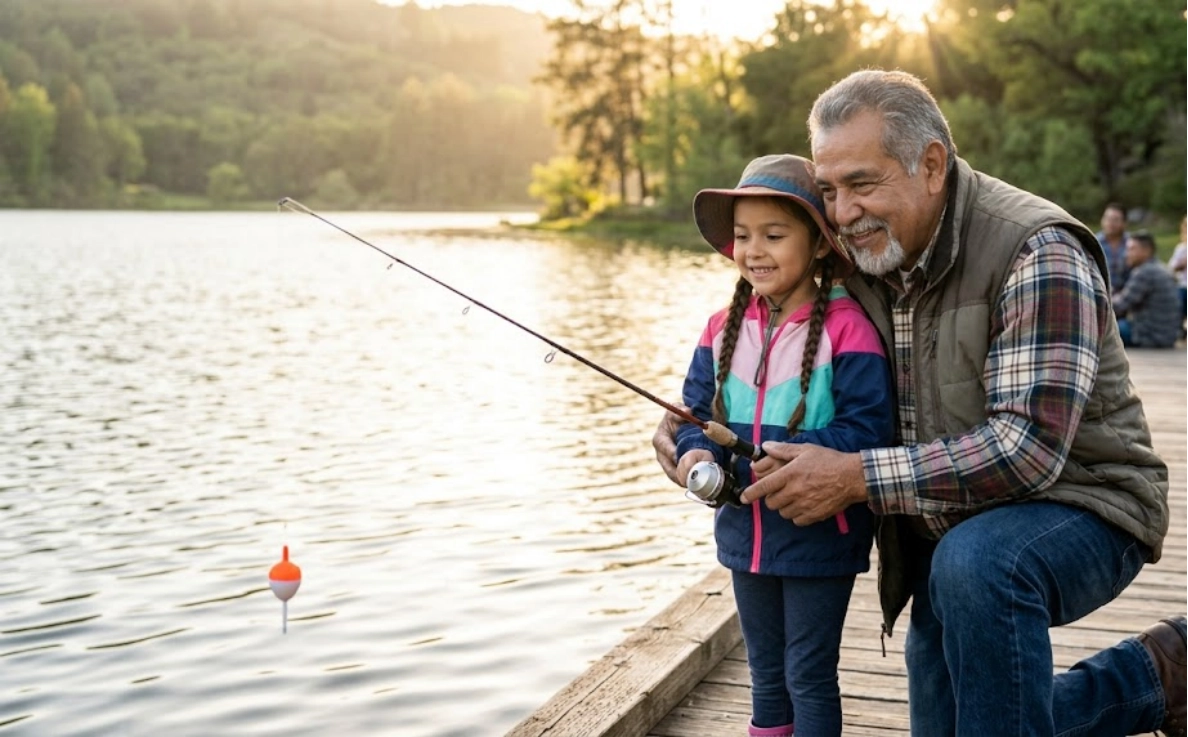
Fishing has a way of slowing things down. In a world filled with screens, schedules, and constant distractions, spending a few hours near the water can feel refreshingly simple. For children ages five to seven, fishing offers something even more valuable: a chance to explore, ask questions, and experience the excitement of not knowing what might happen next.
You don’t need to be an experienced angler to enjoy fishing with your grandchild. In fact, some of the best fishing trips happen when both generations are learning together. A family fishing day isn’t about catching the biggest fish or filling a cooler. It’s about introducing a child to an outdoor activity that encourages patience, observation, and curiosity.
Many grandparents are surprised by how much children enjoy simply being near the water. Watching turtles, spotting birds, skipping rocks, and searching for fish beneath the surface can be just as exciting as making a catch.
If you’re looking for more outdoor adventures after your fishing trip, explore our Fun Things to Do With Your Grandchild guide for additional ideas organized by age.
Why Fishing Is a Great Activity for Young Children
Children between five and seven are naturally curious about the world around them. Fishing introduces them to an environment filled with things to observe and explore.
A pond, lake, river, or fishing pier becomes a place where something interesting is always happening. Fish create ripples beneath the surface. Birds hunt along the shoreline. Dragonflies skim across the water. Even waiting becomes more interesting when surrounded by nature.
Fishing also provides a sense of anticipation that many children find exciting. Every cast carries the possibility of a bite. Even if a fish isn’t caught immediately, the feeling that something might happen at any moment keeps many children engaged.
Another advantage is that fishing can easily be adapted to different attention spans. Some children may happily fish for hours, while others prefer shorter outings combined with exploration and play.
Start With the Right Location
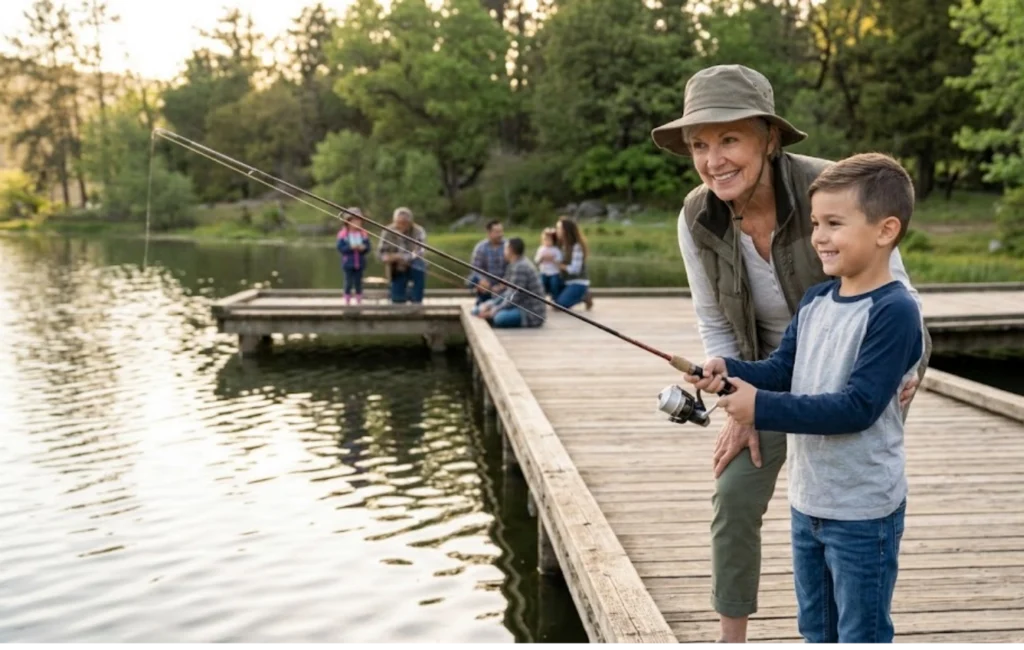
One of the biggest factors in a successful fishing trip is choosing the right place. While adults may enjoy remote lakes and rivers, young children usually have more fun where the fish are plentiful and the surroundings feel safe and relaxed. A small pond, community lake, fishing pier, or stocked fishing area is often a much better choice for beginners.
Look for a location that’s easy to reach, has restrooms nearby, offers some shade, and gives children a safe place to stand near the water. The easier it is to catch a fish, the more likely your grandchild will enjoy the experience and want to go again.
Many state parks and community recreation areas offer family-friendly fishing spots, and the Take Me Fishing Program is a great resource for finding beginner-friendly locations across the country.
Your first geocaching adventure doesn’t have to take place deep in the woods. Many beginner-friendly caches are hidden in places you probably already visit, including community parks, nature trails, botanical gardens, historic sites, and public green spaces. A local park is often the perfect place to begin because children are comfortable exploring there and there are plenty of opportunities to stop, play, and take breaks along the way.
Many families are surprised to discover geocaches hidden in places they’ve walked past for years without ever noticing.
Keep Equipment Simple
When introducing fishing to a young child, simplicity is your best friend. A basic spincast rod and reel is usually all you need, and many beginner kits are designed specifically for children.
Instead of bringing every piece of fishing gear you own, focus on the basics: a rod and reel, fishing line, a few hooks and bobbers, bait, and a small tackle box. Most children care far more about casting a line than learning the technical details of the equipment.
Before You Head Out
A little preparation goes a long way toward making the day enjoyable. Pack water, snacks, sunscreen, hats, bug spray, towels, and a change of clothes so everyone stays comfortable. Folding chairs can make waiting more relaxing, and a small first-aid kit is always a good idea. If your grandchild enjoys spotting wildlife, a pair of binoculars can add another layer of fun while you’re waiting for a bite.
Focus on the Experience, Not the Catch
Adults sometimes make the mistake of measuring a fishing trip by how many fish are caught. Children usually see things differently. For a young child, the experience itself is often the highlight. Watching a bobber float on the water, exploring the shoreline, or spotting a turtle can be every bit as exciting as catching a fish.
If your grandchild catches something, celebrate the moment. If they don’t, focus on everything else they enjoyed during the outing. The goal isn’t to create a competitive fishing experience. It’s to help your grandchild develop a positive connection with the outdoors.
Turning Waiting Into Exploration
One challenge many adults worry about is whether a child will have the patience to wait for fish. The good news is that fishing doesn’t need to involve sitting still for long periods.
Encourage your grandchild to look for wildlife nearby. Ask questions about what they see. Explore the shoreline together. Bring a small nature guide and identify birds, insects, or plants. The National Wildlife Federation offers resources that help families identify wildlife and encourage outdoor exploration.
By treating the outing as an adventure rather than a fishing competition, you create more opportunities for engagement and discovery.
Teaching Respect for Nature
Fishing provides an excellent opportunity to discuss environmental stewardship in a way children can understand. Talk about why it’s important to keep waterways clean. Explain why fish and wildlife depend on healthy habitats. Encourage your grandchild to pick up litter if they notice any nearby. Many children respond positively when they feel they are helping protect the places they enjoy visiting.
These conversations don’t need to feel like lessons. They can happen naturally while you’re enjoying time outdoors together.
Consider Family Fishing Events
Many communities host family fishing days throughout the year, often with free instruction, loaner equipment, demonstrations, children’s activities, and opportunities to catch stocked fish. These events can be especially helpful when neither you nor your grandchild has much fishing experience. Check with local parks departments, state wildlife agencies, and recreation organizations to see what family fishing events are available nearby.
What Happens After the First Catch
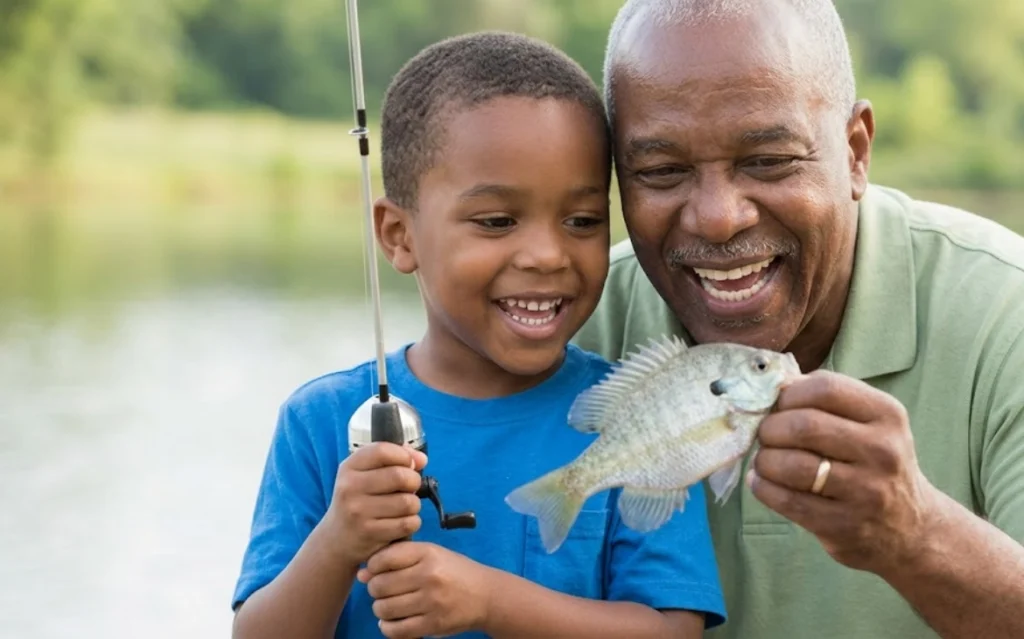
For many children, catching their first fish becomes a milestone they remember for years. The moment doesn’t need to involve a large fish or a dramatic story. Even a small catch can feel incredibly exciting when it happens for the first time.
Take a photo, celebrate the achievement, and talk about the experience afterward. Many children enjoy telling friends and family about their first successful fishing trip. More importantly, remember that the first catch isn’t the end goal. It’s simply one part of a much larger experience that encourages exploration, patience, and time outdoors.
More Than Just Fishing
A family fishing day offers far more than the chance to catch fish. It creates opportunities to explore nature, learn new skills, and experience the excitement of discovery.
Whether your grandchild spends the day watching wildlife, practicing casts, or proudly reeling in their first fish, the outing provides a chance to slow down and enjoy the outdoors together.
The next time you’re looking for an activity that combines adventure, nature, and a little bit of mystery, consider heading to the nearest pond, lake, or fishing pier. You never know what might be waiting beneath the surface.

Written by the
ZestYears Editorial Team