
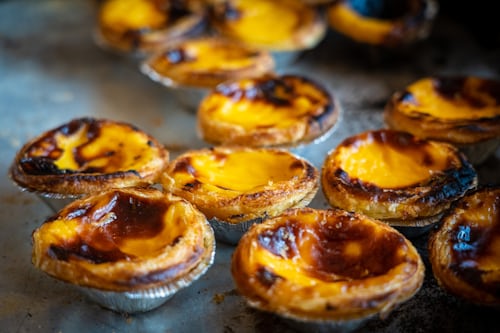
There is something about walking into a bakery and spotting a tray of warm Portuguese custard tarts that instantly pulls you in. The tops are blistered and caramelized, the pastry looks impossibly flaky, and the smell of cinnamon and butter fills the air before you even reach the counter.
Pastéis de nata, also known as Portuguese custard tarts, are one of those desserts that feel special from the very first bite. The contrast is what makes them unforgettable. Crisp, shattering pastry on the outside, silky warm custard in the center, and just enough sweetness to make you reach for another.
And surprisingly, they are very doable at home.
A Dessert With a Long History
These famous tarts trace back to the Jerónimos Monastery in Lisbon, where monks reportedly used egg whites to starch clothing and were left with large amounts of egg yolks. Instead of letting them go to waste, they turned them into rich baked desserts, including the custard tart that eventually became famous throughout Portugal.
When the monastery closed in the 1800s, the recipe was sold to a nearby bakery, now known as Pastéis de Belém, where the original version is still made today.
If you have ever traveled to Portugal, there is a good chance you stood in line for one fresh from the oven.
They Taste Better Fresh
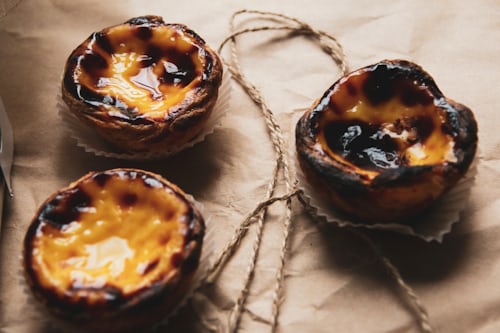
Store-bought versions can be good, but homemade pasteis de nata have something most bakery versions lose after sitting too long: texture.
The pastry should crackle when you bite into it. The custard should still feel slightly warm and creamy in the middle. And the top should have those signature dark caramelized spots that almost look burnt but taste incredible. That balance only really happens when they are fresh from the oven.
Recipe: Portuguese Custard Tarts (Pasteis de Nata)
Ingredients (makes 12)
- 1 sheet store-bought puff pastry, thawed
- 1 cup whole milk
- 1/2 cup sugar
- 3 tablespoons flour
- 1 tablespoon cornstarch
- 5 egg yolks
- 1 teaspoon vanilla extract
- 1 strip lemon peel
- 1 cinnamon stick
- Pinch of salt
Directions
Start by heating the milk in a saucepan with the lemon peel and cinnamon stick until it just begins to simmer. Remove the lemon peel and cinnamon stick and set the milk aside.
In a separate bowl, whisk together the sugar, flour, cornstarch, and salt. Add the egg yolks and whisk until smooth and creamy.
Slowly pour the warm milk into the egg mixture while whisking constantly so the eggs do not scramble. Return everything to the saucepan and cook over medium heat, stirring continuously, until the custard thickens. Stir in the vanilla and allow the mixture to cool completely.
Next, roll the puff pastry into a tight log and slice it into 12 rounds. Press each piece into a muffin tin cup, pushing the dough up the sides to form a shell.
Fill each pastry shell about three-quarters full with custard.
Bake at 500 degrees for 12 to 15 minutes until the tops are deeply golden with dark blistered spots and the pastry is crisp.
Let them cool slightly, then dust with cinnamon and powdered sugar before serving.
For additional step-by-step guidance and photos, is a helpful reference for home bakers.
The Secret is the heat
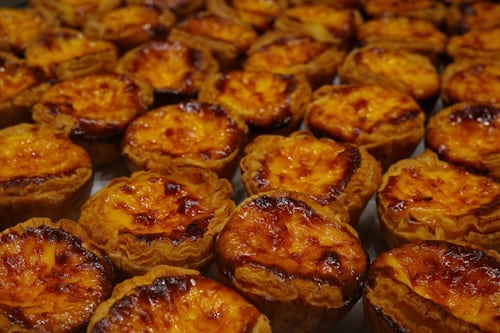
The very hot oven is what transforms these from ordinary custard tarts into something memorable. That intense heat creates the caramelized top while keeping the inside creamy and soft. It also causes the puff pastry to rise into delicate, crisp layers that practically shatter when you cut into them.
If you can, eat them within the first hour after baking. That is when they are at their absolute best with warm custard, flaky pastry, and just enough cinnamon drifting up with every bite. It is the kind of dessert that turns an ordinary afternoon coffee into something that feels a little special.
If this recipe makes you want to try more global sweets and baked treats, visit the desserts section of ZestYears for more recipes, travel-inspired flavors, and classic favorites from around the world.
About the contributor

Written by the ZestYears Food & Drink Editorial Team