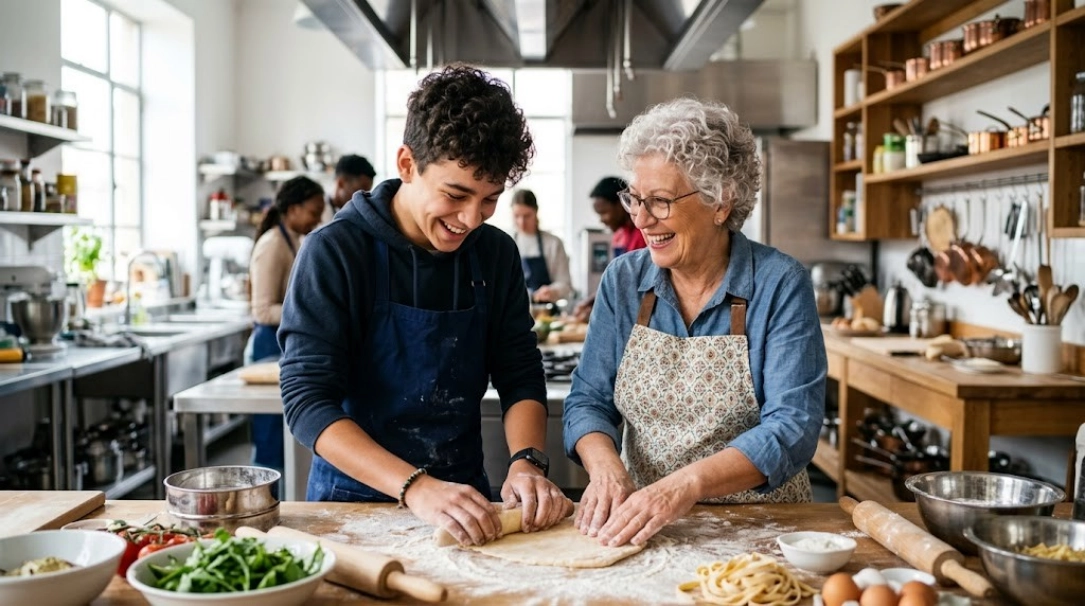
As grandchildren grow into their teenage years, finding activities that feel both enjoyable and meaningful can become more challenging. Many traditional family outings lose some of their appeal as teenagers become busier and more independent. That’s one reason cooking classes can be such a great option. They offer the opportunity to learn something new together while creating an experience that feels productive, social, and fun.
Unlike activities where one person watches while the other participates, cooking classes encourage collaboration. You’ll both be measuring, mixing, chopping, tasting, and learning side by side. Whether you’re making homemade pasta, learning the basics of baking, exploring international cuisine, or trying a specialty cooking workshop, the experience naturally creates opportunities for teamwork and conversation.
Perhaps best of all, the skills you learn don’t stay in the classroom. Long after the class ends, you’ll be able to recreate recipes, experiment with new dishes, and continue building on what you’ve learned together. In many cases, a single cooking class becomes the beginning of a shared hobby that lasts for years.
If you’re looking for more activities to enjoy together, visit our Fun Things to Do With Your Grandchild page.
Why Cooking Is a Skill Teenagers Can Use for Life
One reason cooking classes work particularly well for teenagers is that the experience feels practical. While many activities are enjoyable in the moment, cooking teaches skills that can be used for years to come. As your grandchild moves closer to adulthood, learning how to prepare meals becomes increasingly valuable.
At the same time, cooking is about much more than following recipes. It encourages creativity, problem-solving, and confidence. When teenagers successfully prepare a meal, they experience a sense of accomplishment that often extends beyond the kitchen. They begin to realize they can create something from scratch and share it with others.
You may also find that cooking helps teenagers become more adventurous. Many young people are willing to try ingredients and flavors in a cooking class that they might never order in a restaurant. The process of preparing a dish often creates curiosity about how foods are made and where ingredients come from.
Because cooking combines learning with immediate rewards, it tends to hold teenagers’ attention in a way that many traditional classes do not.
Choosing the Right Class
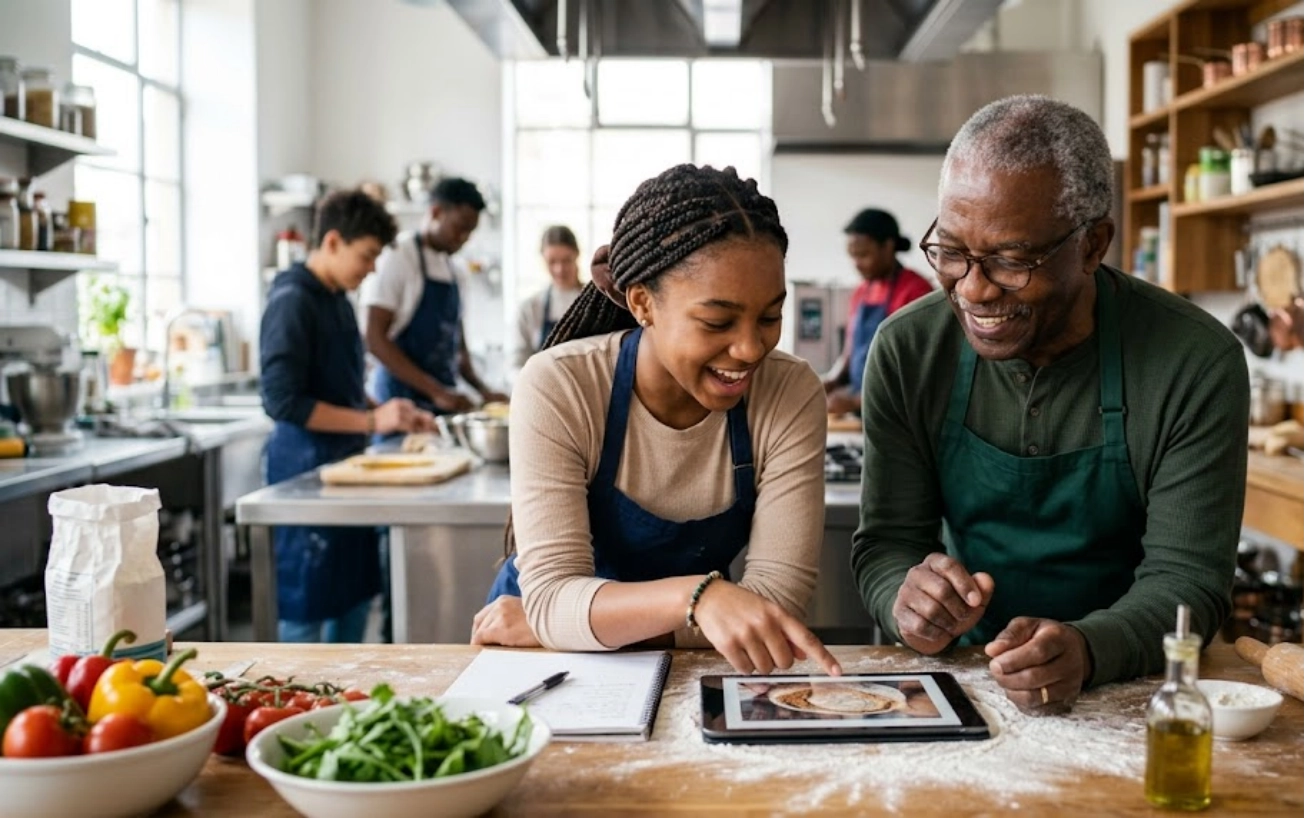
One of the best things about cooking classes is the variety of options available. Whether your grandchild enjoys baking, grilling, international cuisine, healthy eating, or desserts, there is likely a class that matches their interests.
As you explore options, involve your grandchild in the decision. Ask what types of foods they would like to learn to make and whether there are cuisines they’ve always wanted to try. Giving them a voice in the selection process helps ensure they arrive excited and engaged.
You don’t need to choose an advanced course. In fact, beginner-friendly classes often provide the most enjoyable experience because they allow everyone to participate comfortably regardless of skill level. The goal isn’t to become professional chefs. It’s to learn something new together and enjoy the process.
Many local culinary schools, community centers, specialty kitchen stores, and restaurants offer classes designed specifically for beginners.
Learning Together Changes the Experience
One reason cooking classes work so well for grandparents and grandchildren is that neither person needs to be the expert.
Even if you’ve spent years cooking at home, you’ll likely encounter techniques, ingredients, and approaches that are unfamiliar. Your grandchild may pick up certain skills quickly, while you may excel in other areas. That shared learning experience creates a dynamic that feels collaborative rather than instructional.
As you work together, you’ll naturally help each other solve problems, follow directions, and navigate unfamiliar recipes. The small challenges that arise often become some of the most memorable parts of the experience.
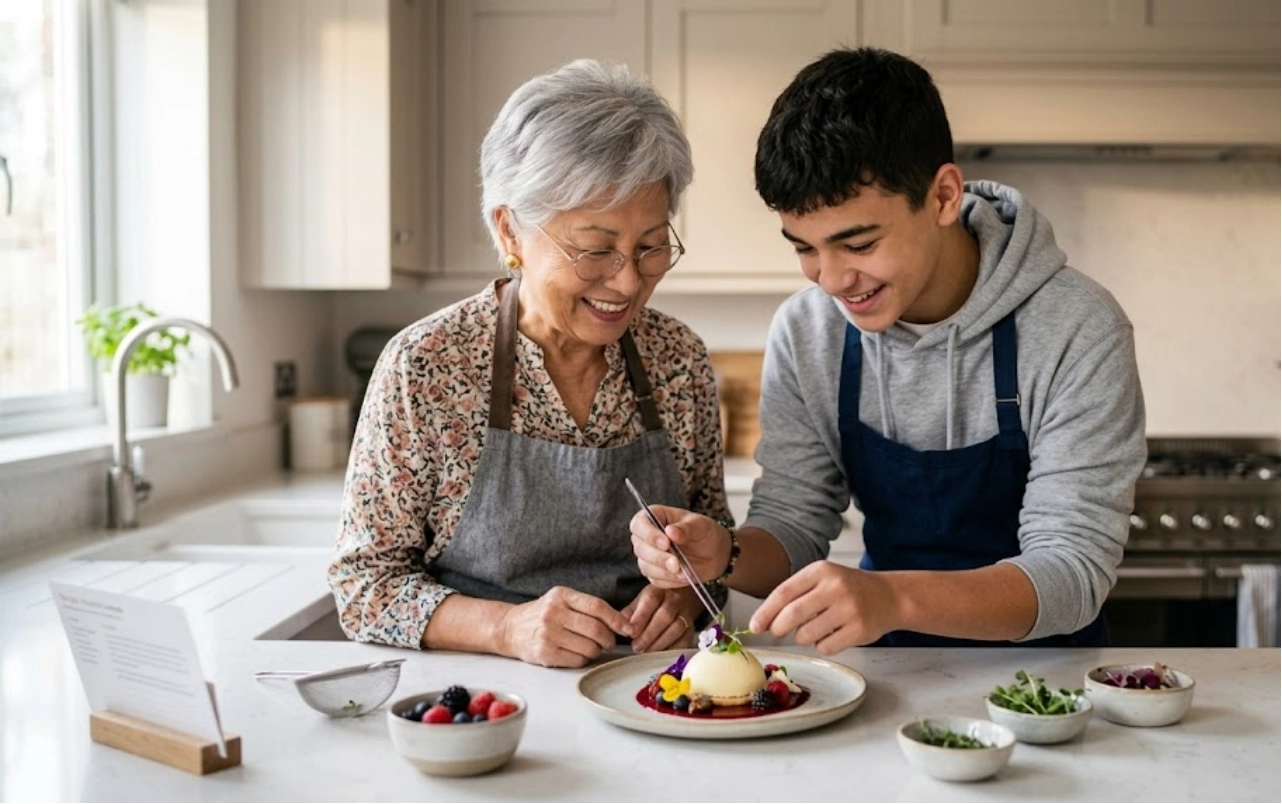
You may find yourselves laughing over mistakes, celebrating successes, and comparing your finished dishes to those of other participants. These moments help create memories that extend beyond the meal itself. Because everyone is learning, there is less pressure to perform perfectly and more freedom to enjoy the experience.
Beyond the Food
While preparing a delicious meal is certainly rewarding, the value of a cooking class extends far beyond what ends up on the plate. The experience creates opportunities to spend uninterrupted time together while focusing on a shared activity. In a world filled with screens, notifications, and busy schedules, that kind of attention has become increasingly rare.
You may discover new things about your grandchild’s personality, preferences, and interests simply by working together in the kitchen. Likewise, they may learn stories about your own experiences with food, family traditions, and favorite recipes.
Food has a unique ability to bring people together. Cooking amplifies that connection because it involves creating something together rather than simply consuming it. Many families find that the conversations they have while preparing food are every bit as meaningful as the meal that follows.
Bringing the Experience Home
One of the most enjoyable aspects of taking a cooking class is continuing the experience afterward. Once you’ve learned a new recipe, consider setting aside time to make it again at home. Recreating the dish helps reinforce what you’ve learned while giving you another opportunity to spend time together.
You may even decide to establish new traditions. Perhaps you choose one new recipe to try each month or take turns selecting dishes from different cultures and cuisines. These ongoing experiences can transform a single class into a lasting hobby.
As your confidence grows, you may find yourselves experimenting with new ingredients, modifying recipes, and developing your own culinary style. The possibilities are nearly endless.
Why a Cooking Class Is Worth the Time
A cooking class offers something increasingly valuable during the teenage years: a chance to learn, create, and connect at the same time. It provides practical skills, encourages teamwork, and creates opportunities for meaningful conversation in a relaxed environment.
Whether you’re mastering homemade pasta, learning how to decorate cakes, exploring regional cuisines, or simply trying something completely new, the experience offers rewards that continue long after the final dish has been served.
The next time you’re looking for an activity that combines learning and fun, consider signing up for a cooking class together. You may discover that the best thing you create isn’t the meal itself, but the memories that come from making it side by side.
For additional planning help, you may want to explore cooking class ideas, and food safety guidance.

Written by the
ZestYears Editorial Team