

The national parks were built on a democratic idea, that the country’s grandest landscapes belong to everyone, and the park service has spent recent decades making the promise physical, which is why the list of genuinely wheelchair accessible national parks is longer and better than most travelers assume. Boardwalks now carry wheels to erupting geysers, paved rim trails deliver canyon panoramas, and scenic drives put glaciers and giant sequoias through the windshield. For travelers using wheelchairs, scooters, rollators, or simply knees that prefer pavement to scree, here are the parks where the marquee experiences, not the consolation versions, are the accessible ones.
The Standouts, and What Makes Each Work
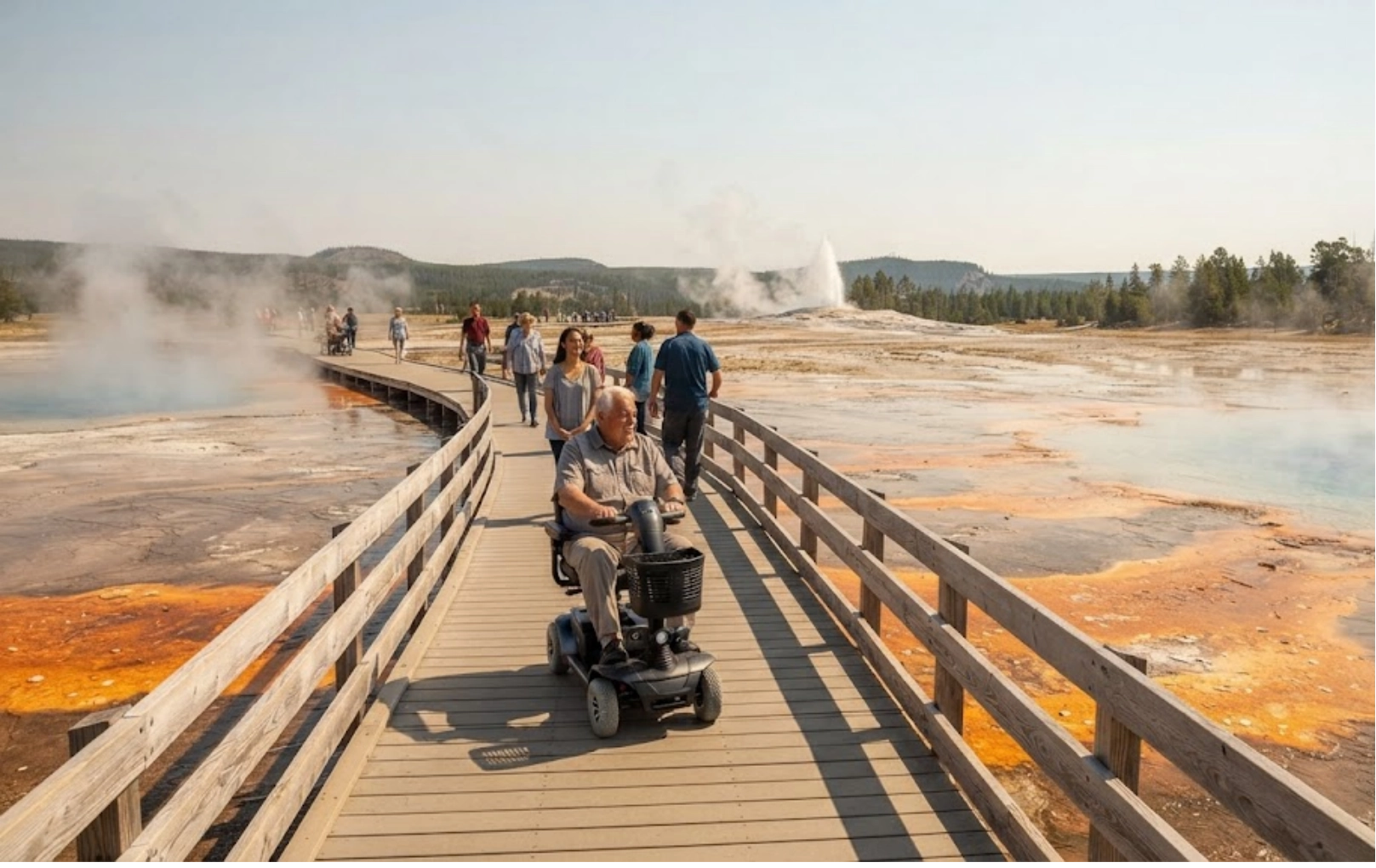
Yellowstone: The park’s signature attractions were boardwalked decades ago to protect the thermal features, with the happy result that Old Faithful, the Grand Prismatic overlookable basins, and miles of geyser country roll smoothly under wheels, with accessible viewing areas at the famous eruption itself. Wildlife watching, the park’s other headline, happens largely from pullouts along the road, the most accessible safari in America, binoculars on the dashboard and coffee in hand.
Grand Canyon: The South Rim Trail runs paved and generally level for miles along the very edge of the canyon, passing viewpoint after viewpoint, and the park issues a scenic drive accessibility permit allowing visitors with mobility needs to drive their own vehicle on the otherwise shuttle-only Hermit Road, putting the sunset overlooks a parking spot away. Wheelchairs are loaned free at the visitor centers, and the shuttle fleet is lift-equipped.
Acadia: The historic carriage roads, 45 miles of smooth crushed-stone paths closed to cars, were graded for horse-drawn carriages and turn out to be superb for wheelchairs and rollators, winding past lakes and under stone bridges, while the Ocean Path and Jordan Pond’s accessible sections deliver the coastal drama. The free Island Explorer buses, ramp-equipped, link the carriage road entrances with Bar Harbor.
Zion: The Pa’rus Trail, fully paved and gently graded, follows the Virgin River beneath the canyon’s soaring walls for over three miles round trip, and the park shuttle fleet is lift-equipped, making the famous canyon corridor genuinely reachable. Spring and fall visits keep canyon temperatures kind to long outdoor days on the trail.
Great Smoky Mountains: Clingmans Dome’s steep summit path aside, the park’s Cades Cove loop is an 11-mile scenic drive through wildlife-filled meadows and pioneer homesteads, and several accessible trails and picnic areas dot the valleys. The flat, paved Gatlinburg Trail and the valley’s accessible visitor centers round out an easy mountain day.
The Tools the Parks Hand You
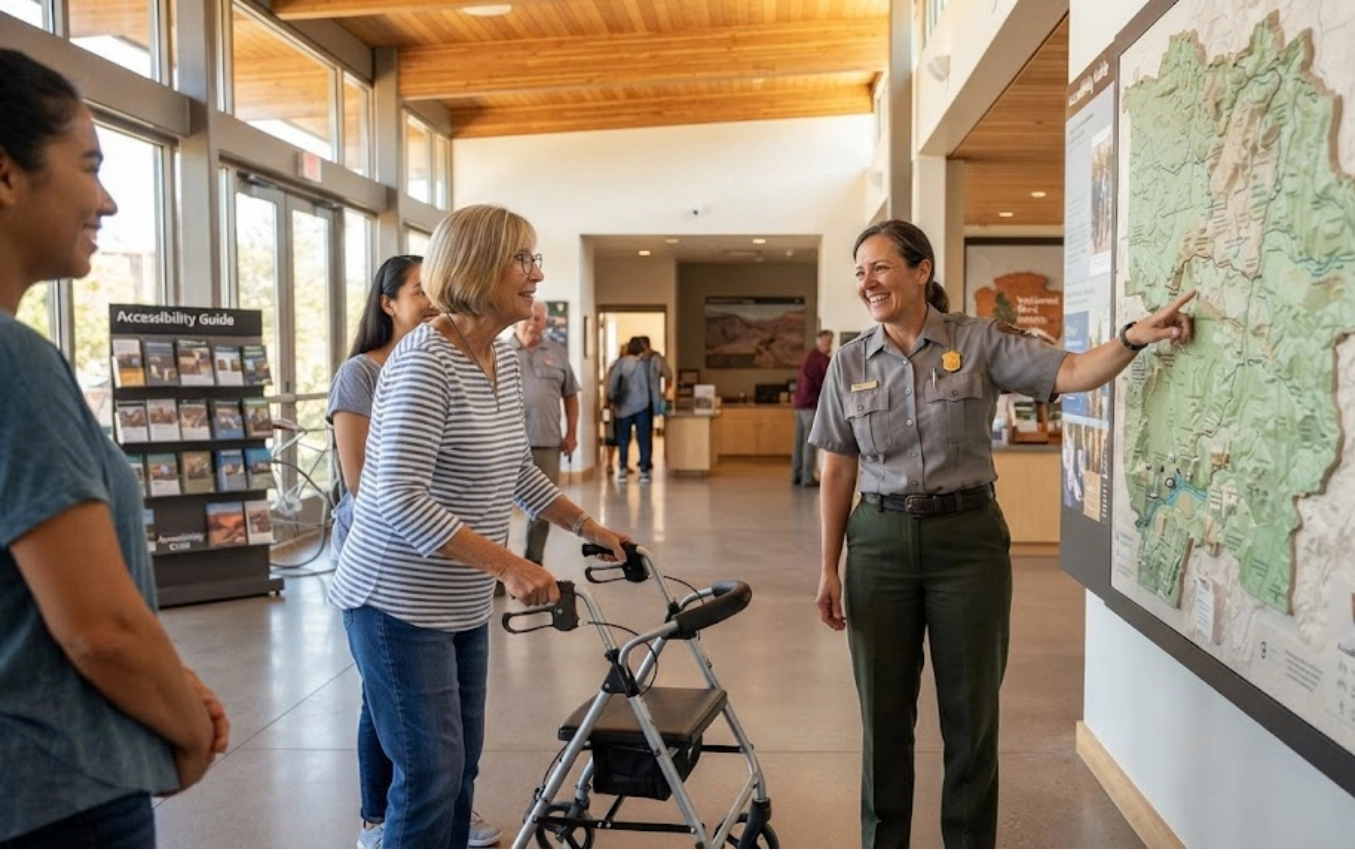
The park service backs the infrastructure with programs worth knowing. The Access Pass, a free lifetime pass for US citizens with permanent disabilities, admits the passholder and vehicle occupants to every national park and federal recreation site, and discounts many campground fees, with details at the NPS Access Pass page. Every park publishes a dedicated accessibility page detailing trail surfaces, accessible viewpoints, restrooms, and lodging, indexed from the service’s central accessibility portal, and visitor centers loan or rent wheelchairs at many parks, while some concessioners rent beach-style and all-terrain chairs. Accessible lodging inside the parks exists but sells out first, the same early-booking rule that governs everything scarce, so reserve rooms at the historic lodges up to a year ahead and confirm roll-in shower specifics directly, applying the full checklist from our hotel accessibility questions guide.
Planning the Trip Around the Wheels
A few strategies squeeze the most from an accessible park trip. Anchor each day around one accessible marquee experience in the morning, boardwalks at Yellowstone, the rim trail at dawn, then let scenic drives carry the afternoon, since the drives are rest and spectacle simultaneously. Time visits for shoulder seasons, when thinner crowds mean easier parking at accessible spaces and boardwalks without the shuffle, and check each park’s page for accessible ranger programs, which increasingly include ASL interpretation and mobility-friendly walks.
Travelers using mobility scooters should confirm each park’s rules, since scooters are welcome wherever wheelchairs go. One reader who returned to Yellowstone forty years after honeymooning there, now rolling the Old Faithful boardwalk beside her husband, described the eruption as better the second time, because this visit she’d been told for years she couldn’t take. The parks never actually said that. They’d been paving the way the whole time.

Written by the
ZestYears Editorial Team