
Nearly one in three people over 65 lives with meaningful hearing loss, which makes traveling with hearing loss one of the most common accessibility scenarios in any airport, yet it remains the least visibly accommodated, since travel’s critical moments, gate changes, boarding calls, tour narration, hotel alarms, still default to sound. The gap is real but so are the fixes, a combination of legal rights most travelers never invoke, technology that has improved stunningly, and advance requests that take minutes. Here’s how to travel with your ears fully supported, from booking to the flight home.
The Airport and Airline Playbook
Airports are audio environments, overhead announcements, last calls, rebooking instructions, so replace the audio channel with visual ones deliberately. Note your hearing loss on the reservation and identify yourself to the gate agent at every leg, requesting that they notify you personally of boarding and any changes, an accommodation airlines are accustomed to providing, and enable every visual alert your airline’s app offers, since gate changes and delays now push to phones faster than they reach the loudspeakers.
Preboarding is yours for the asking, buying time to inform flight attendants of your hearing loss so safety information and any announcements reach you directly, and crews will communicate in-flight updates individually when asked. Hearing aids and cochlear implants stay in and on through security screening, and TSA officers will face you and communicate in writing on request, with additional support arrangeable through TSA Cares 72 hours ahead. The Air Carrier Access Act backs all of this with legal force, summarized at the Department of Transportation’s disability travel page.
Hotels Owe You a Kit, So Ask for It
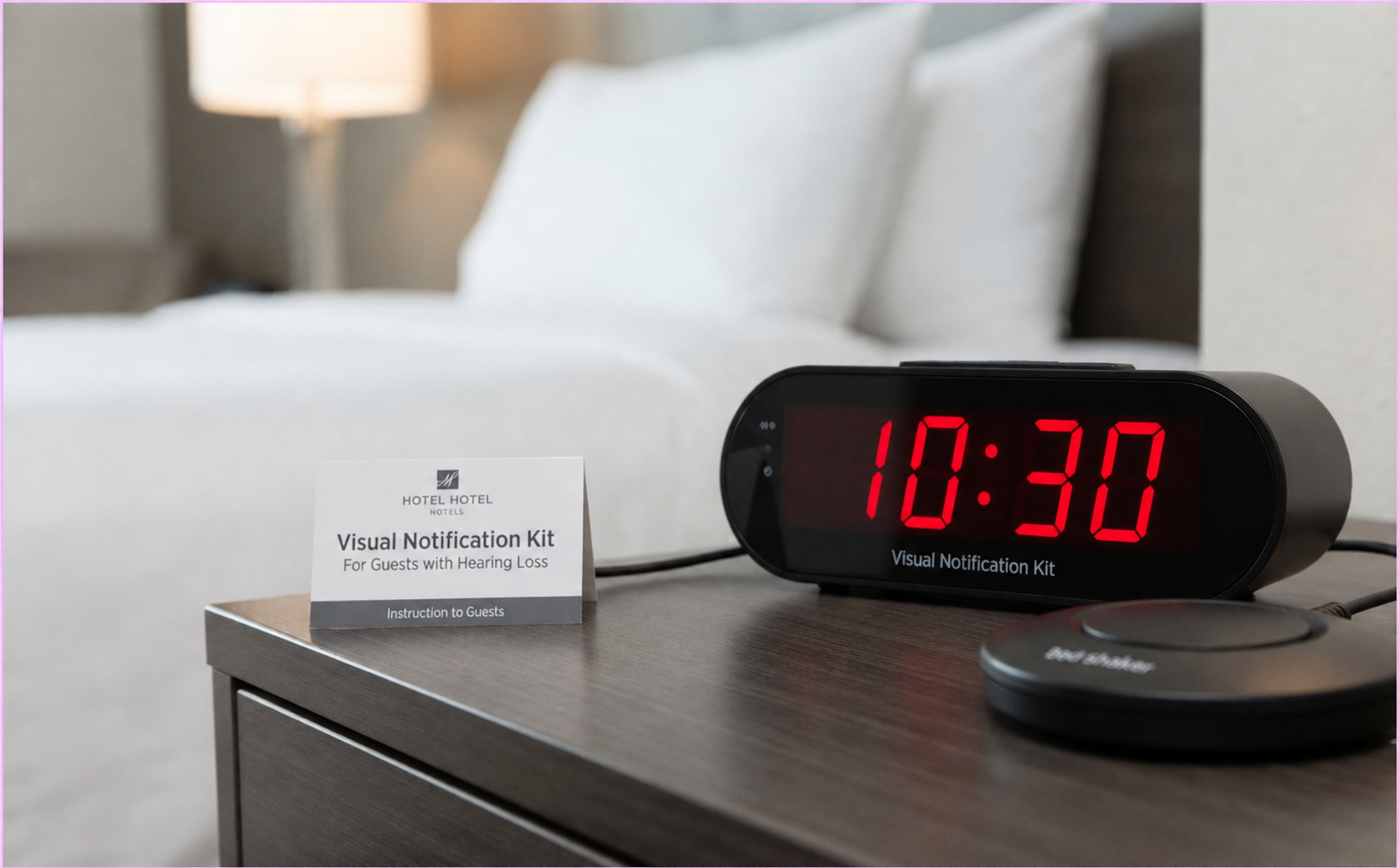
Few travelers know that US hotels are required under the ADA to provide accessible communication features for guests who are deaf or hard of hearing, typically assembled as a kit including a visual and bed-shaker fire alarm notification device, a flashing or vibrating alarm clock, doorbell and phone signalers, and closed-caption-enabled televisions. The kit exists at the front desk of essentially every American chain hotel, but only if you request it, so ask at booking and again at check-in, and abroad, where requirements vary, email ahead using the same specific-question discipline we teach in our hotel accessibility guide. The safety piece deserves emphasis: a standard audible smoke alarm may not wake a sleeping guest who has removed hearing aids for the night, which makes the visual and vibrating alarm request a genuine safety practice rather than a convenience, worth two minutes at every check-in of your traveling life. Note the request in your reservation and confirm again on arrival, since most properties stock only a few kits and they go to whoever asked first.

Tours, Technology, and the Hearing Aid Strategy
Sightseeing is where hearing loss quietly taxes the trip, since group tours deliver their value through a guide’s voice competing with street noise. Reclaim it with three tools. First, ask tour operators and museums about assistive listening systems, hearing loops, FM systems, and neck loops compatible with telecoil-equipped hearing aids, which are far more widespread than travelers realize, especially in the UK and Northern Europe where looped venues are common.
Second, favor tours using radio headset systems, now standard among quality walking tour companies, and ask whether their transmitters connect to neck loops.
Third, let your phone fill every gap: live transcription apps turn conversation and narration into scrolling text, translation apps handle the foreign-language layer simultaneously, and modern Bluetooth hearing aids stream both directly. On the hearing aid logistics, pack double batteries or the charger plus a backup, carry everything in the personal item rather than checked luggage, bring a drying kit for humid destinations, and photograph your audiogram and aid model details in case repair becomes necessary abroad. The Hearing Loss Association of America maintains excellent travel-specific guidance at hearingloss.org.
The Trip This Produces
One reader described the before-and-after of learning these systems: previously she’d smiled through half-heard tours and slept uneasily in hotels, and now she preboards, requests the kit, books the radio-headset tours, and streams the guide straight into her aids, calling the difference a return to full membership in her own vacations. That’s the point worth carrying: hearing loss taxes travel only when travel runs on default settings. Change the settings, request what’s already yours, and the trip comes through loud and clear.

Written by the
ZestYears Editorial Team