
Vision changes come for most of us eventually, from macular degeneration and glaucoma to the ordinary dimming that makes unfamiliar environments harder to read, and the travelers navigating traveling with low vision deserve better than the two extremes usually on offer, which are pretending nothing changed or staying home. The middle path is rich: a layer of services, technology, and tactics that has matured remarkably, turning airports, museums, and brand-new cities into navigable, enjoyable territory. Here’s the confident traveler’s toolkit, built from what actually works.
Airports: Use the Human Infrastructure
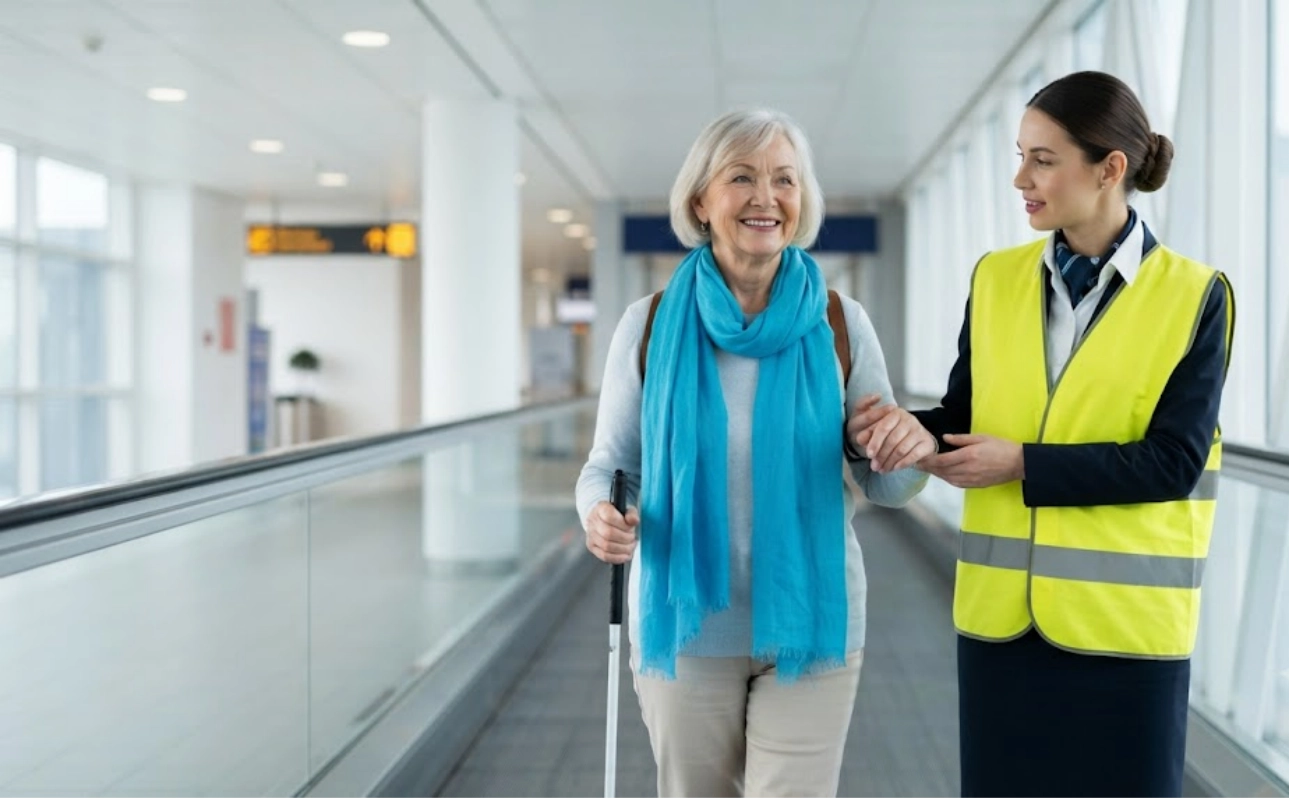
Airports are the most service-rich environments in travel for vision loss, if you activate the services. Request assistance when booking and at check-in, and an escort will guide you from counter through security to gate, between connections, and to baggage claim and ground transport at arrival, a federally mandated free service under the Air Carrier Access Act that vision-impaired travelers are squarely entitled to, no documentation required, as outlined at the Department of Transportation’s disability travel resources. At security, tell officers what assistance helps, they’ll orient you verbally and guide the bin process, with extra support arrangeable through TSA Cares ahead of travel. Onboard, ask crew for an individual safety briefing, a standard accommodation. Then let the phone backstop everything: airline apps push gate changes in adjustable large text, and your phone’s built-in accessibility suite, magnification, screen readers, high-contrast modes, turns boarding passes and signage into readable material. Aisle seats near the front simplify orientation, and the same preboarding that helps every assistance-using traveler helps here.
Museums and Sights: The Audio Layer Is Outstanding
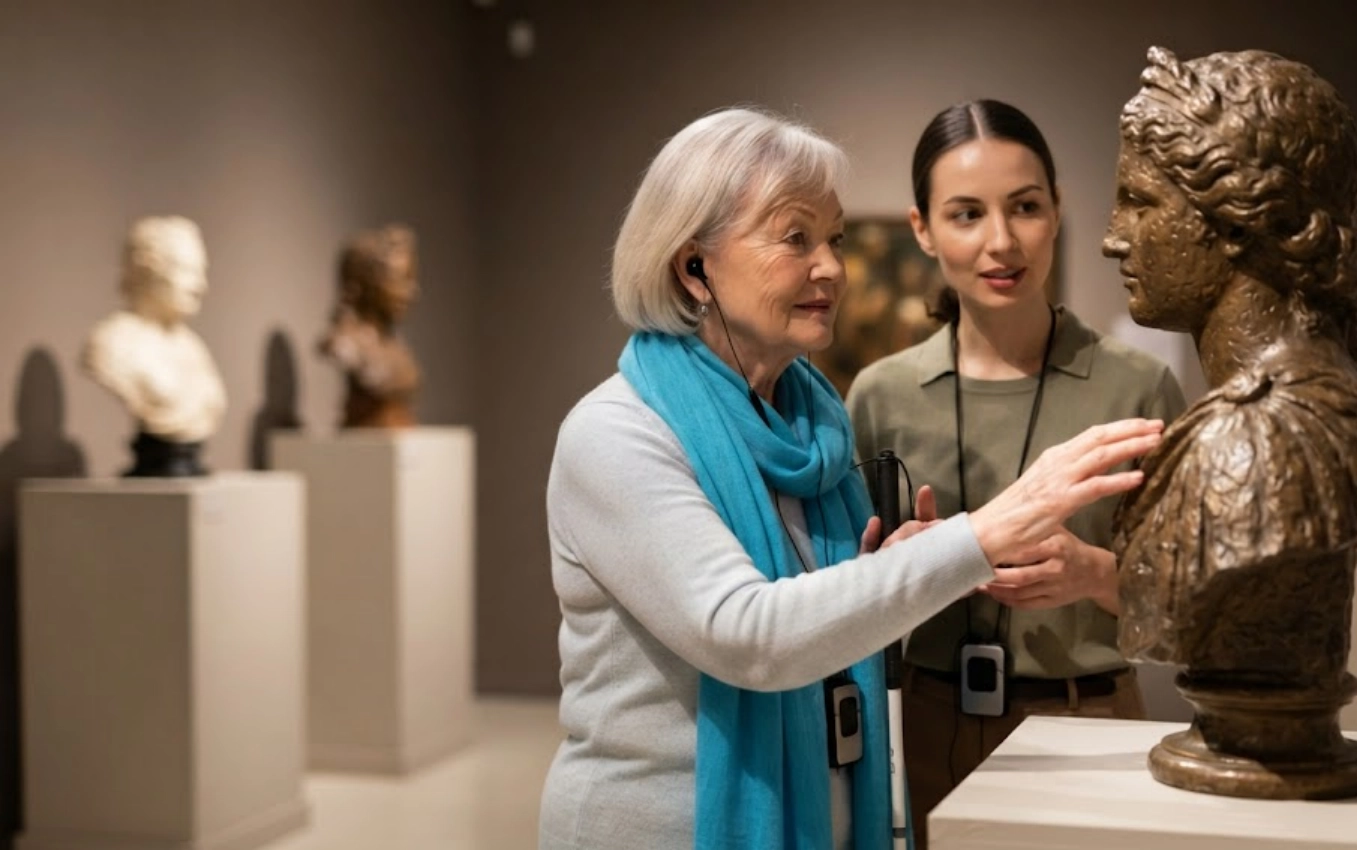
DCultural travel is where low-vision travelers are best served, because the world’s great institutions have invested seriously in non-visual experience. Major museums increasingly offer audio description tours, verbal-description and touch tours where trained guides describe artworks in rich detail and, at scheduled sessions, permit guided touching of sculptures and artifacts, offered by leading institutions worldwide, typically free with advance booking. Standard audio guides, now often app-based on your own phone with adjustable playback, deliver excellent narration everywhere, and theater districts in London and New York schedule audio-described performances. Book these ahead, since touch tours run on calendars, and ask every ticket desk one question that unlocks unadvertised services: what do you offer for visitors with low vision. Outdoors, small-group tours beat large ones because the guide’s narration stays close and questions flow, and private guides, affordable in much of the world, are essentially personal audio description with local expertise. The American Foundation for the Blind maintains helpful resources at afb.org, and organizations like the American Council of the Blind list described-experience directories.
New Cities: Technology Plus Tactics
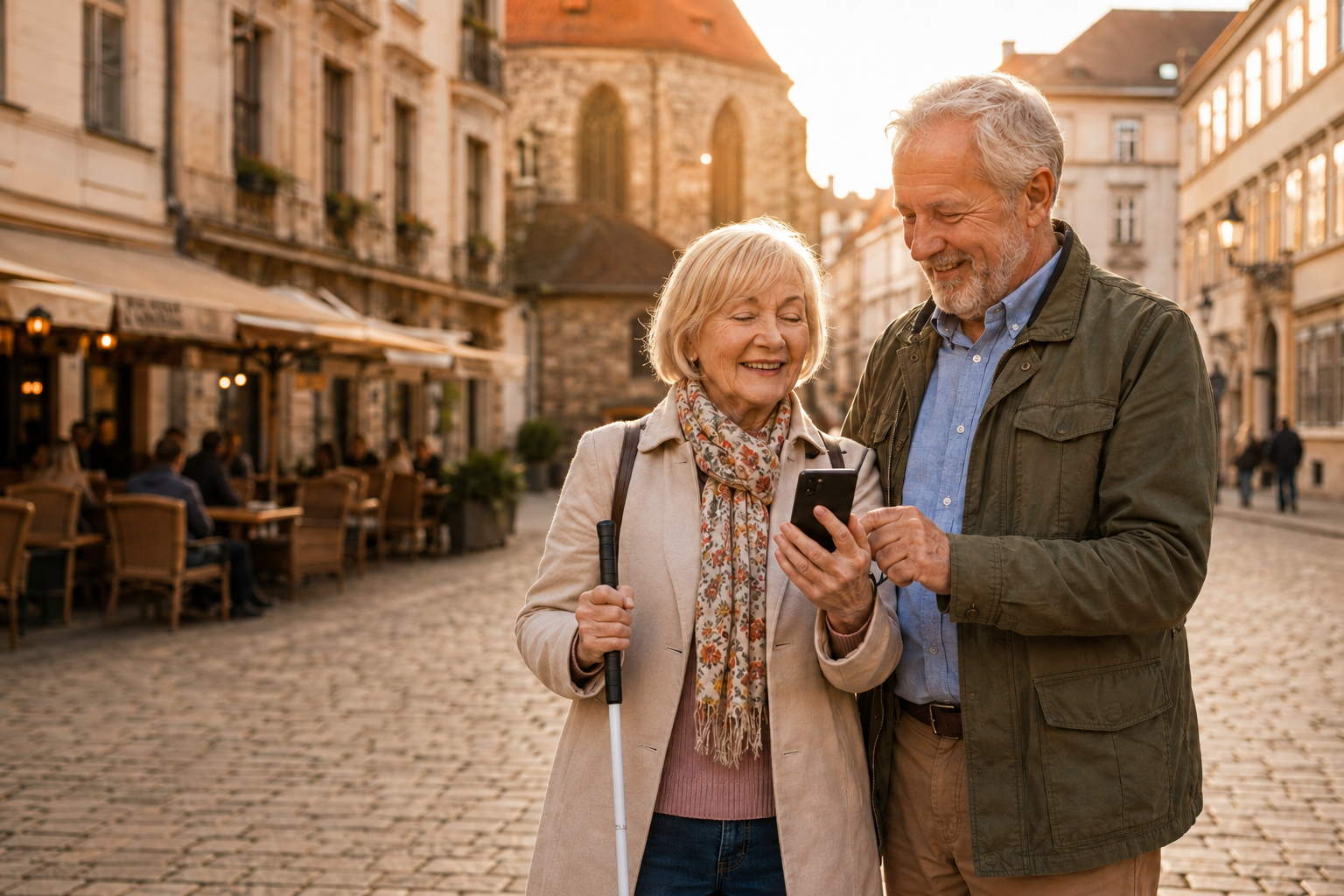
Navigating an unfamiliar city combines the phone’s superpowers with old-fashioned structure. GPS apps with voice guidance narrate turn-by-turn walking directions through earbuds, apps like Microsoft’s Seeing AI read signs, menus, and currency aloud through the camera, and services like Aira and Be My Eyes connect you by video to trained agents or volunteers who see through your camera and talk you through anything from a train ticket machine to a hotel corridor. Layer tactics on top: choose hotels in compact walkable districts and learn one home route thoroughly, orient by landmarks and counts rather than signs, favor taxis and rideshares whose apps eliminate the hailing problem, and travel with high-contrast, tactile luggage markers that end the baggage carousel squint. Lighting is the unsung variable, so schedule demanding navigation for daylight and carry a small flashlight for menus and dim historic interiors. Traveling with a companion multiplies ease when the partnership is deliberate, with the sighted partner narrating environments rather than steering.
Confidence Is a Skill Set
One reader with progressing macular degeneration described her turning point as realizing she’d been treating vision loss as a countdown on travel instead of a redesign of it. Her redesigned version, airport escorts, touch tours booked ahead, a navigation app in one ear, and a husband narrating Rome like a broadcaster, delivered a trip she ranks with any from her full-sighted decades. The world remains spectacularly worth visiting at every level of vision. The toolkit above is how you keep collecting it.

Written by the
ZestYears Editorial Team