

More than 80 percent of adults over 60 take at least one prescription daily, which makes traveling with medications less a special topic than a universal one, yet it generates a steady stream of anxious search queries: can pills go through security, what happens to a twice-daily schedule across nine time zones, how do you refill in another state, and is that prescription even legal where you’re headed. Every one of those questions has a clear answer, and together they form a system that makes medication management the most solved problem of your trip. Here’s the complete rundown.
Packing and Security: Simpler Than Feared
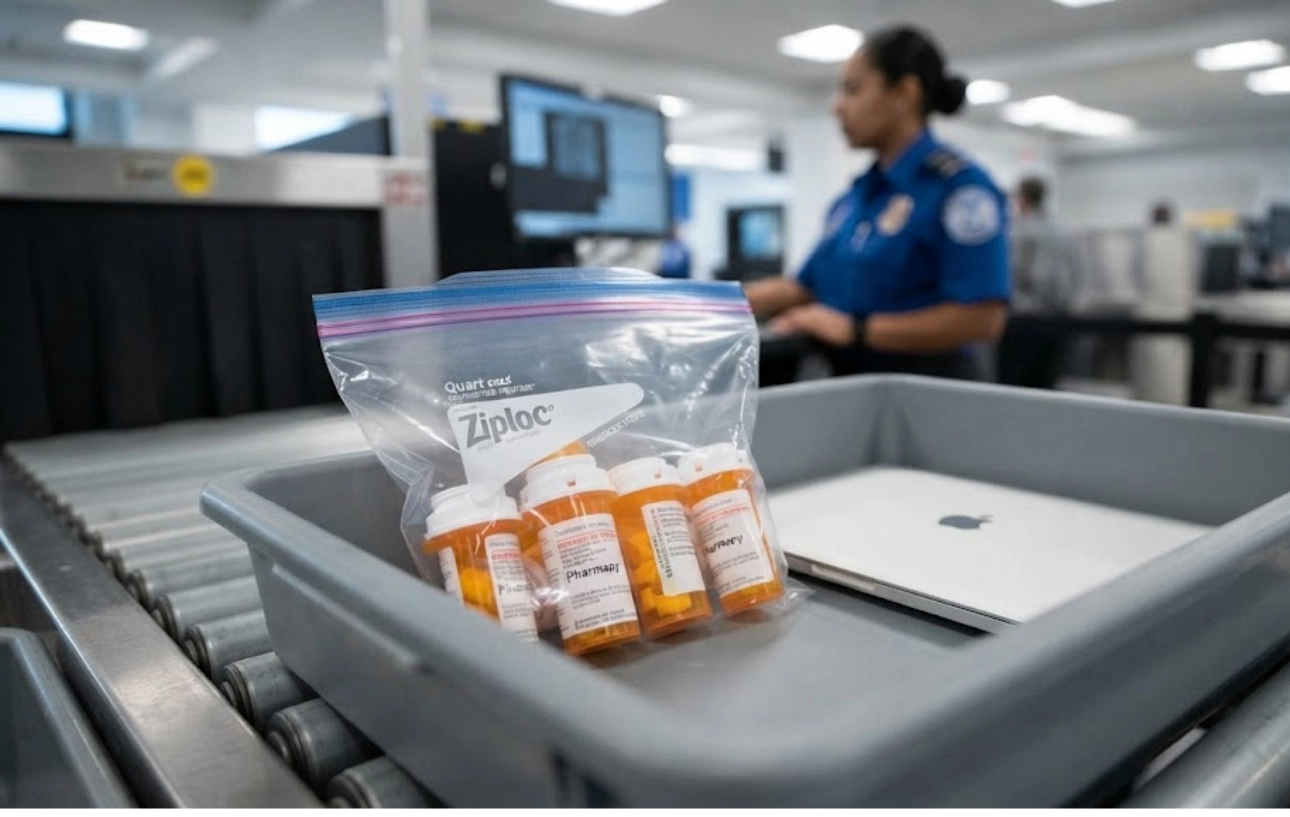
The rules at American checkpoints are friendlier than travelers assume. Medications in pill form fly in unlimited quantities in carry-on bags, prescription bottles are not federally required to be labeled for TSA, though original labeled containers simplify everything, and liquid medications are exempt from the 3.4-ounce rule in reasonable quantities when you declare them at screening, along with the associated freezer packs, syringes, and supplies, all confirmed at TSA’s medication page.
The non-negotiable rule is location: every dose travels in the carry-on, never checked luggage, since checked bags miss connections and cargo holds swing to temperatures that degrade many drugs. Pack at least a week beyond your trip length as a delay buffer, carry a current medication list including generic names, since brand names change across borders, and split supplies between two carry-on bags when traveling with a partner, an old-fashioned redundancy that has saved countless vacations. Photograph your prescriptions and your doctor’s contact information to your phone, completing a five-minute kit that handles nearly every scenario.
Time Zones: The Schedule Question Answered
The time zone question has a reassuring general answer and important exceptions. For most once-daily medications, the practical approach is to shift gradually or simply adopt destination time on arrival, taking the next dose at your usual clock time in the new zone, since a few hours’ drift matters little for most maintenance drugs. The exceptions are medications where timing is the therapy: insulin and diabetes regimens, blood thinners like warfarin, seizure medications, Parkinson’s drugs, and certain heart rhythm medications, where dosing intervals should be preserved, counting hours rather than clock time, and where the pre-trip conversation with your doctor or pharmacist about a written crossing plan is essential rather than optional.
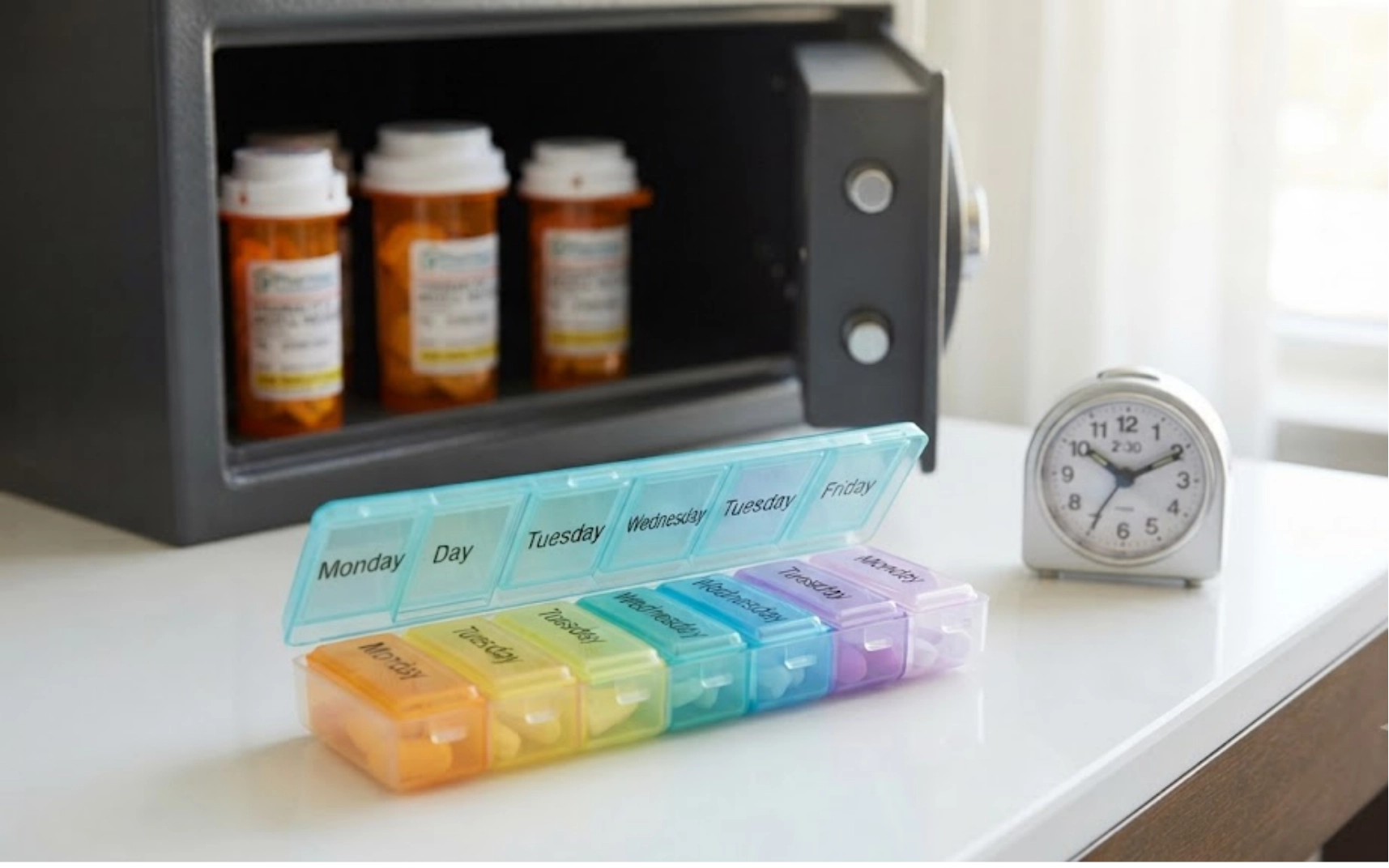
That same conversation should cover any needed adjustments for destination factors like altitude, heat, or increased activity. Set phone alarms for doses in the new zone from day one, since vacation rhythm erases the mealtime and bedtime cues that anchor pills at home, and use a labeled weekly organizer for the trip while keeping the original bottles in the luggage for documentation.
Refills Away From Home and the Legality Question Abroad
Domestically, refills while traveling are straightforward when your prescriptions live at a national chain pharmacy, whose systems transfer between locations in any state in minutes, a genuinely good reason to keep at least travel-critical prescriptions at a chain even if you prefer a local pharmacy at home. Insurance vacation overrides, which authorize an early refill before a long trip, take one call to your plan and solve the trip-longer-than-supply problem cleanly.
Internationally, the surprise most travelers never see coming is that some common American prescriptions are controlled or banned elsewhere, including certain ADHD medications, strong pain relievers, and even some cold remedies in a few countries, so check your destination’s rules through the US embassy page for that country at travel.state.gov well before departure.
Carry controlled or injectable medications with a doctor’s letter stating the condition and necessity, keep everything in original labeled containers when crossing borders, and never pack medications in quantities that look commercial. Note also that Medicare generally provides no coverage abroad, which folds the medication plan into the broader insurance conversation our guide to travel insurance essentials for international explorers lays out.
The System in Practice
Assembled, the system runs itself: carry-on only, week of buffer, list and photos in the phone, alarms on destination time, chain pharmacy backup, embassy check for international trips, and the doctor conversation for timing-critical drugs. One reader who manages nine daily prescriptions described her pre-trip routine as fifteen minutes with a checklist, taped inside her medicine cabinet, that has carried her through four continents without a missed dose or a border question.

Written by the
ZestYears Editorial Team