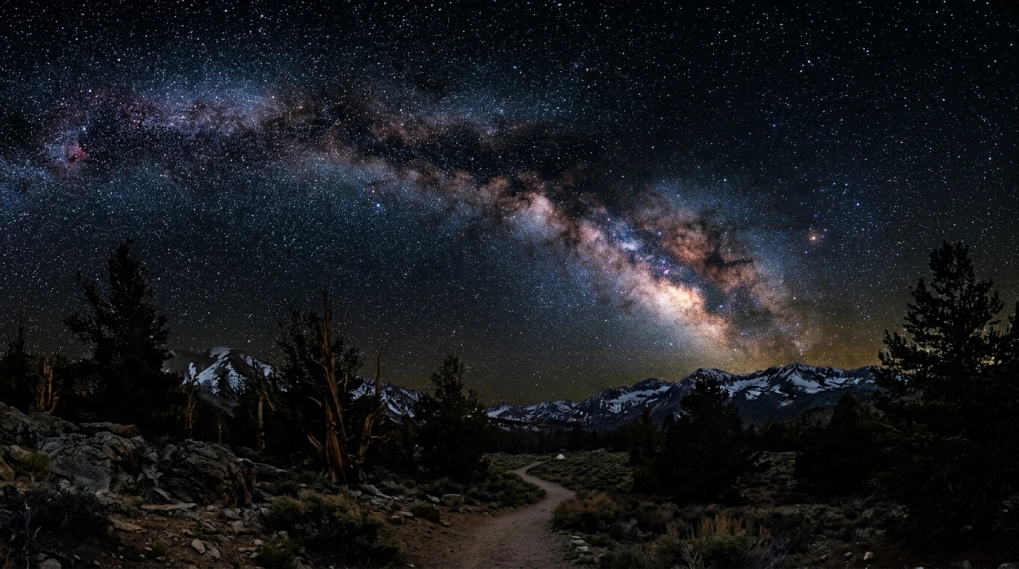
Stargazing has quietly become one of travel’s biggest trends, named a defining wellness experience by publications from National Geographic to the luxury travel press, and it makes perfect sense in an overlit, overconnected world. The dark sky parks in the US protect something 80 percent of Americans can no longer see from home, which is the actual Milky Way, arcing horizon to horizon in a sky so dense with stars that first time viewers routinely gasp. If you haven’t seen a truly dark sky since childhood summers, or perhaps ever, here’s where to find one and how to plan a night under it.
What a Certified Dark Sky Actually Means
DarkSky International, the organization that certifies these places, has designated more than 200 parks, sanctuaries, and communities worldwide for exceptional night skies and committed lighting protection, and the US holds the largest share. Certification matters because darkness is measurable, and the difference between a suburban sky and a certified one is not subtle. In a true dark sky location on a moonless night, you can see several thousand stars, the Milky Way bright enough to cast faint shadows, satellites gliding past, and a meteor every few minutes even outside the famous showers. The full directory lives at DarkSky International, and it’s worth browsing because certified places likely exist closer to you than you think, including parks in Pennsylvania, Ohio, and Florida, not just the remote West.
The Marquee Destinations
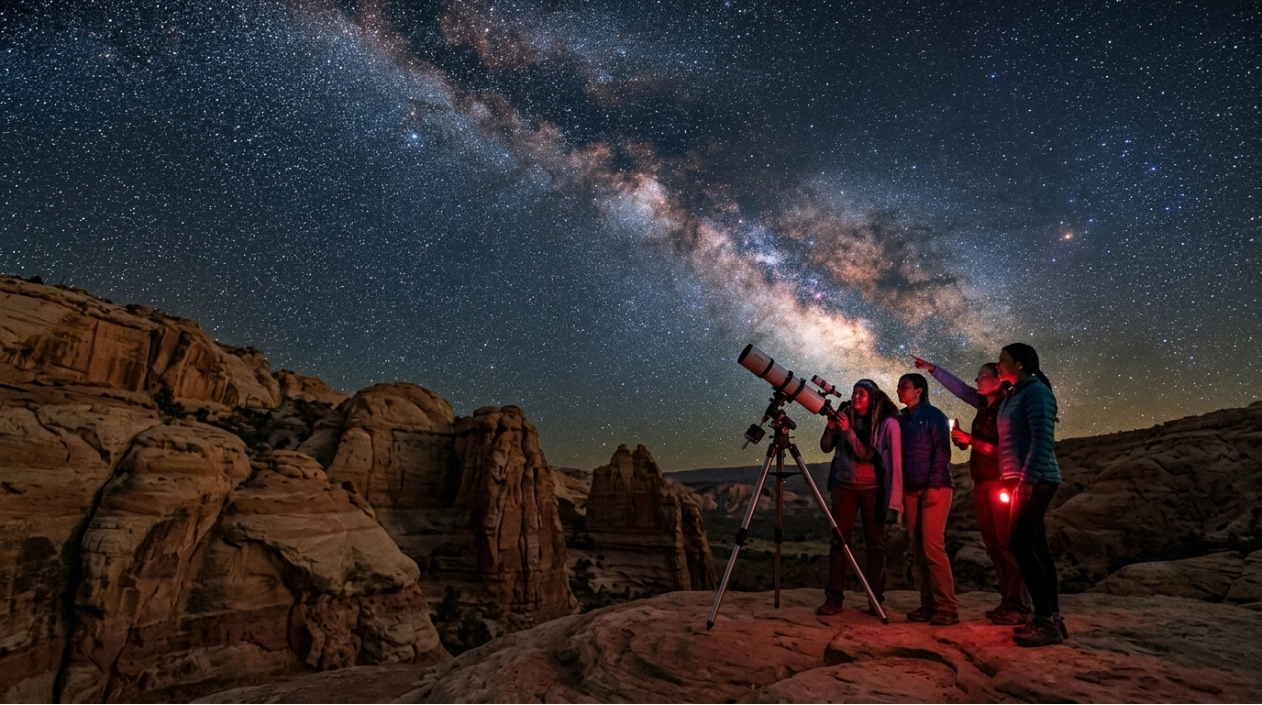
That said, the West holds the aces. Great Basin National Park in Nevada may offer the darkest easily accessible skies in the lower 48, and its annual astronomy festival each September pairs ranger telescopes with bristlecone pine hikes by day. Big Bend in Texas has the least light pollution of any national park in the contiguous states, with the Chisos Mountains Lodge letting you stargaze steps from your room. Utah has embraced the theme statewide, and the region around Torrey and Capitol Reef amounts to a dark sky district where several parks and towns hold certification within an hour’s drive of each other.
In the East, Cherry Springs State Park in Pennsylvania is the standard bearer, drawing stargazers from the entire seaboard to its astronomy field. Many parks now run night sky programs with telescopes and rangers who can walk you through the constellations, and the National Park Service night skies page lists festivals and events across the system each season.
Timing Is Everything
Two calendars govern a stargazing trip, and checking both transforms the experience. The first is the moon, because a full moon washes out the sky nearly as thoroughly as a city, so aim for the week around the new moon each month. The second is the meteor calendar. The Perseids peak in mid August with warm nights and up to 60 meteors an hour, while December’s Geminids are even more prolific for those willing to bundle up. Plan the trip so your darkest night falls midweek near a new moon and you’ve stacked every advantage.
Build in at least two nights rather than one, since a single cloudy evening can otherwise erase the whole point of the journey, and a second night doubles your odds while letting the first serve as a relaxed rehearsal. Autumn deserves special mention, combining early sunsets, crisp transparent air, and comfortable evening temperatures, and it aligns neatly with the quiet season strategy from our shoulder season travel guide.
Making the Night Comfortable
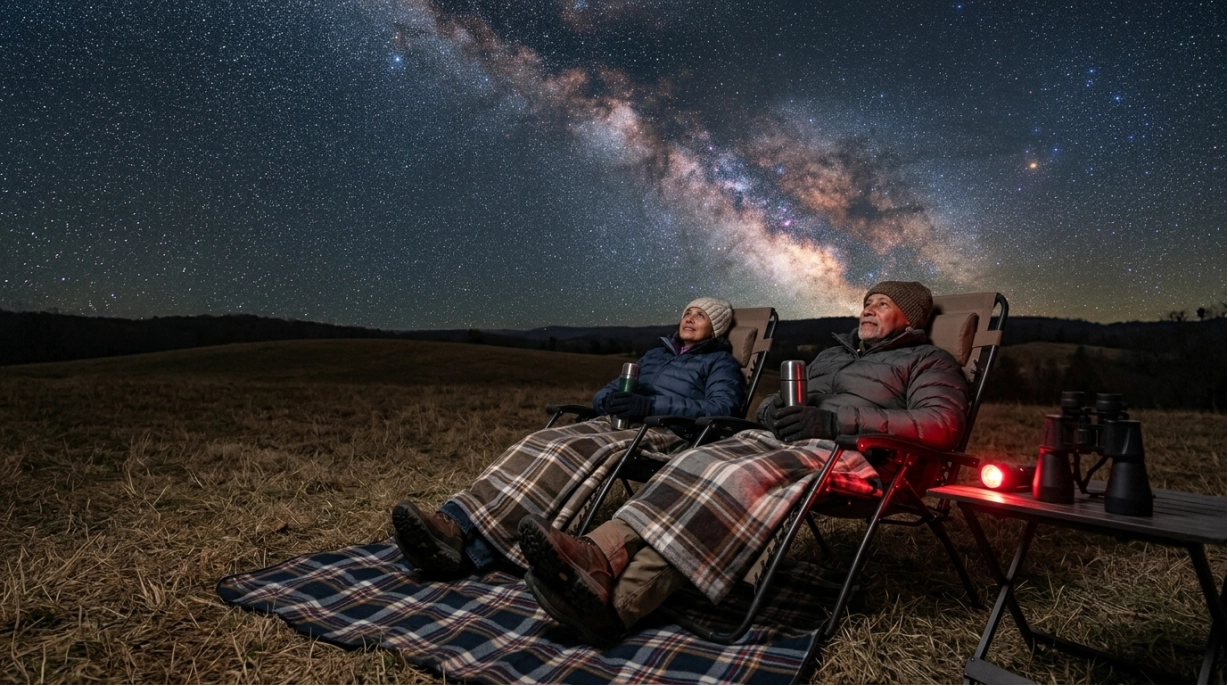
Good stargazing is 90 percent comfort logistics. Bring layers well beyond what the daytime forecast suggests, since desert and mountain temperatures plunge after sunset, plus a reclining camp chair or thick blanket so you’re looking up without craning your neck, a thermos of something hot, and a red flashlight, which preserves night vision where a phone screen destroys it. Give your eyes a full 20 minutes to adapt and the sky will keep deepening the longer you look. Binoculars you already own reveal more than you’d guess, resolving the Milky Way into individual stars and showing Jupiter’s moons as tiny points. No telescope required, ever, though ranger programs happily provide them.
One couple we know built a three night trip around the September astronomy festival at Great Basin, spending days on gentle high country trails and nights wrapped in blankets watching the sky, and they described the Milky Way’s first appearance as the single most moving travel moment of their year. The stars have been putting on this show every clear night all along. The trip is just about getting somewhere dark enough to finally watch it.

Written by the
ZestYears Editorial Team