Some of the best moments with your grandchild begin without a plan: a cardboard box on the floor, a question during a walk or a made-up game that grows as you play. For many grandparents, time like this is a regular part of the week. AARP reported in 2026 that 69% of grandparents provide some level of care for their grandchildren, and 15% do so daily or almost every day. Whether you help every day or once a week, the time you share can encourage curiosity and imagination without feeling like another lesson.
You do not need a lesson plan or a cabinet packed with craft supplies. “You don’t need a full afternoon or elaborate supplies to nurture creativity and curiosity,” Dr. Lauren Loquasto, SVP and chief academic officer at The Goddard School, told ZestYears. According to Loquasto, children can learn a great deal when they have the freedom to follow an idea, test it out and decide where it goes next.
Start With Their Interests
It is tempting to plan the perfect activity before your grandchild arrives. You buy the supplies, clear the table and picture how the afternoon will unfold. Then your grandchild walks in and wants nothing to do with it. Loquasto says grandparents will often get further by following a child’s interests instead of arriving with a rigid plan. That change can be as easy as paying attention to what your grandchild notices first and building from there.
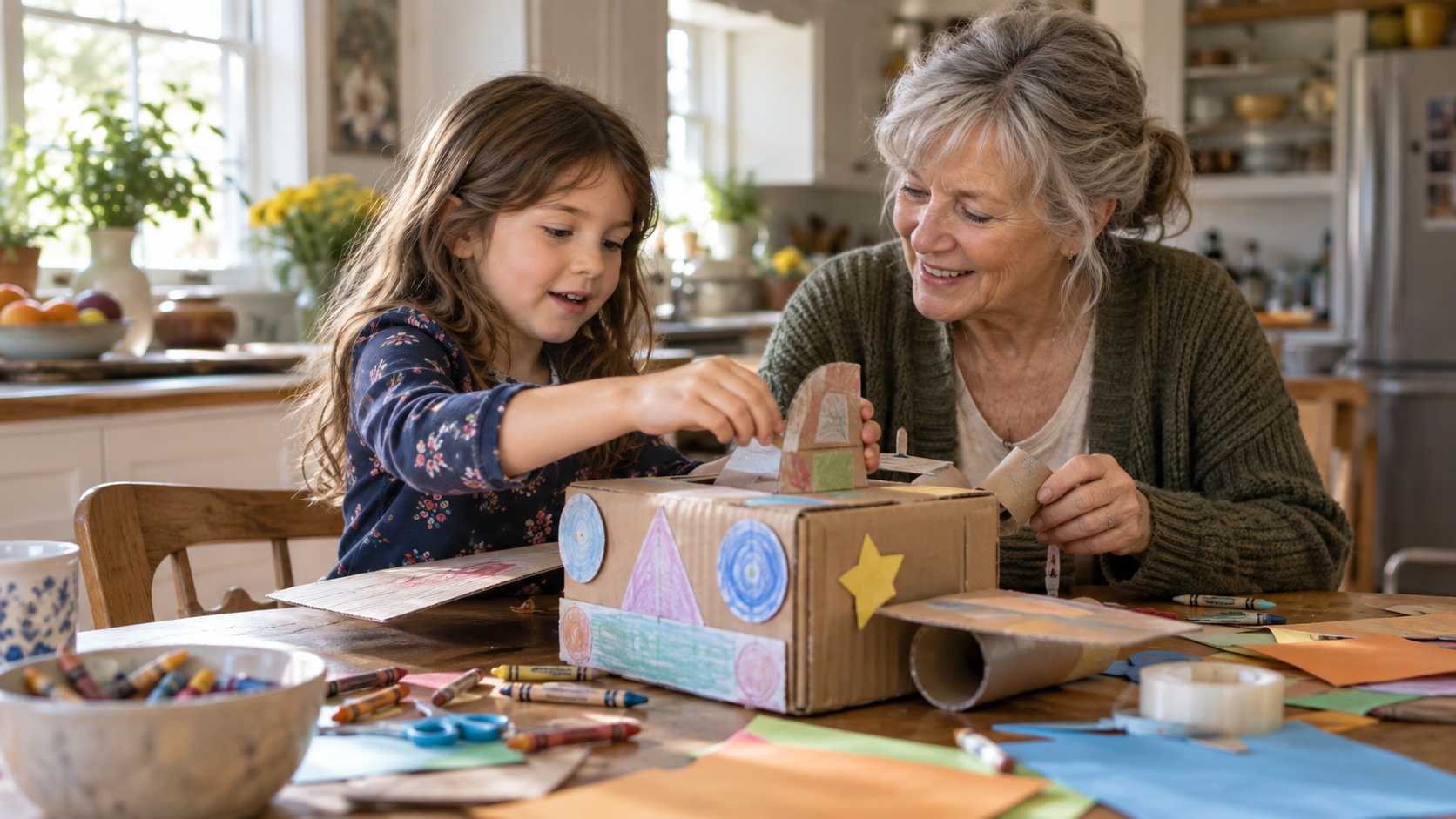
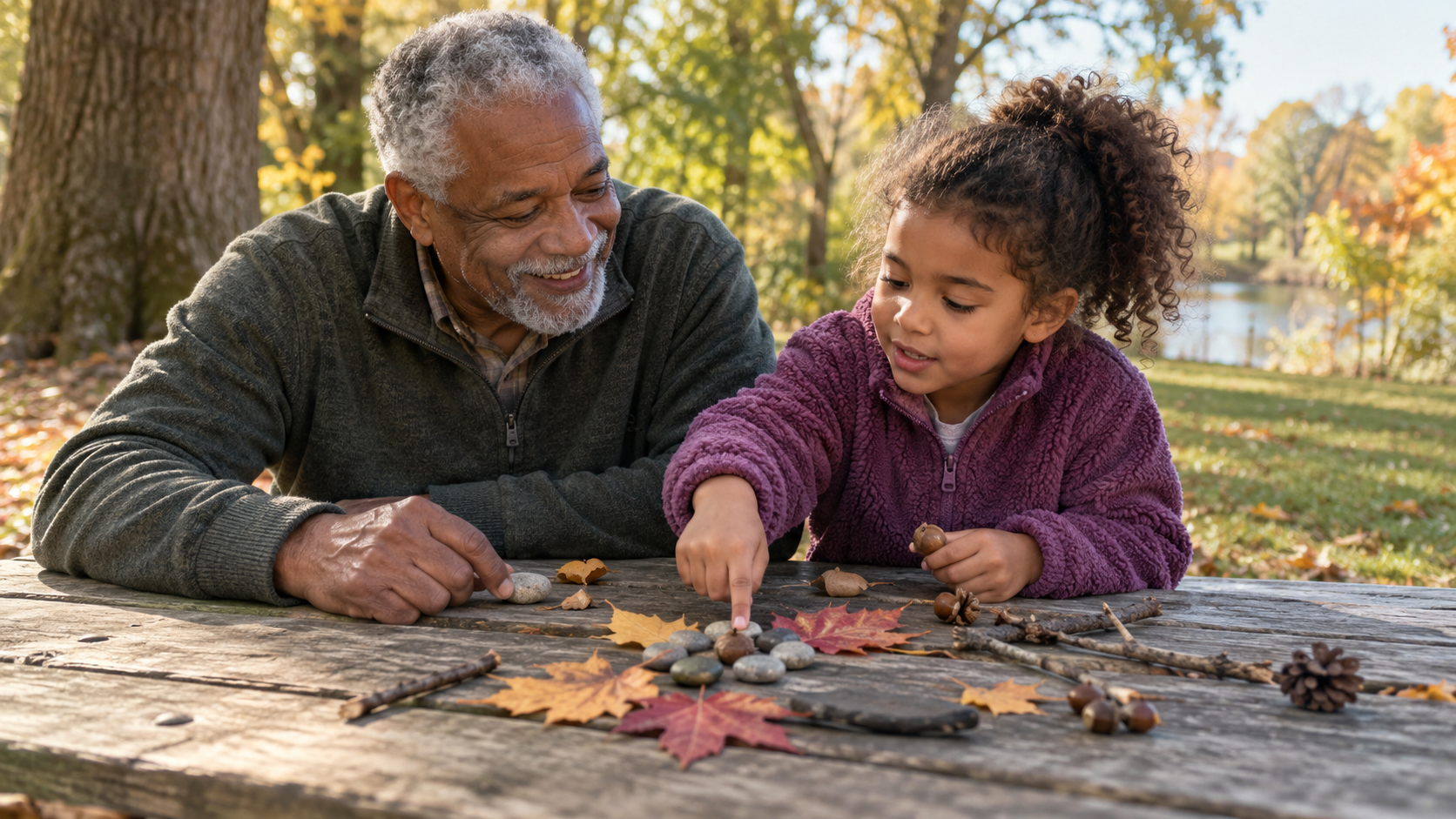
If a strange leaf catches their eye, collect a few and compare their shapes. If a cardboard delivery box becomes a rocket, help find a paper plate for the steering wheel. If the stuffed animals suddenly need a veterinarian, ask where the waiting room should be. You do not have to supply the idea or decide what the game should become. Loquasto’s advice is to let your grandchild take the lead while you show that their ideas are worth your time and attention.
That kind of play may look casual, but children are using language, making decisions and working through problems as they go. An American Academy of Pediatrics clinical report on the power of play explains that play supports language, social-emotional development, cognitive skills and self-regulation. A pretend restaurant or a blanket fort may feel like pure fun to your grandchild, and that is exactly why it works so well.
Ask Questions That Keep the Idea Going
Adults often look at a child’s picture and ask, “What is it?” The question is harmless, but Loquasto recommends opening the conversation a little wider. “Tell me about what you made” or “How did you think of that?” gives your grandchild the freedom to explain the creation in their own way. If they seem eager to keep talking, you can ask what was hardest, what they might add or what they think should happen next.
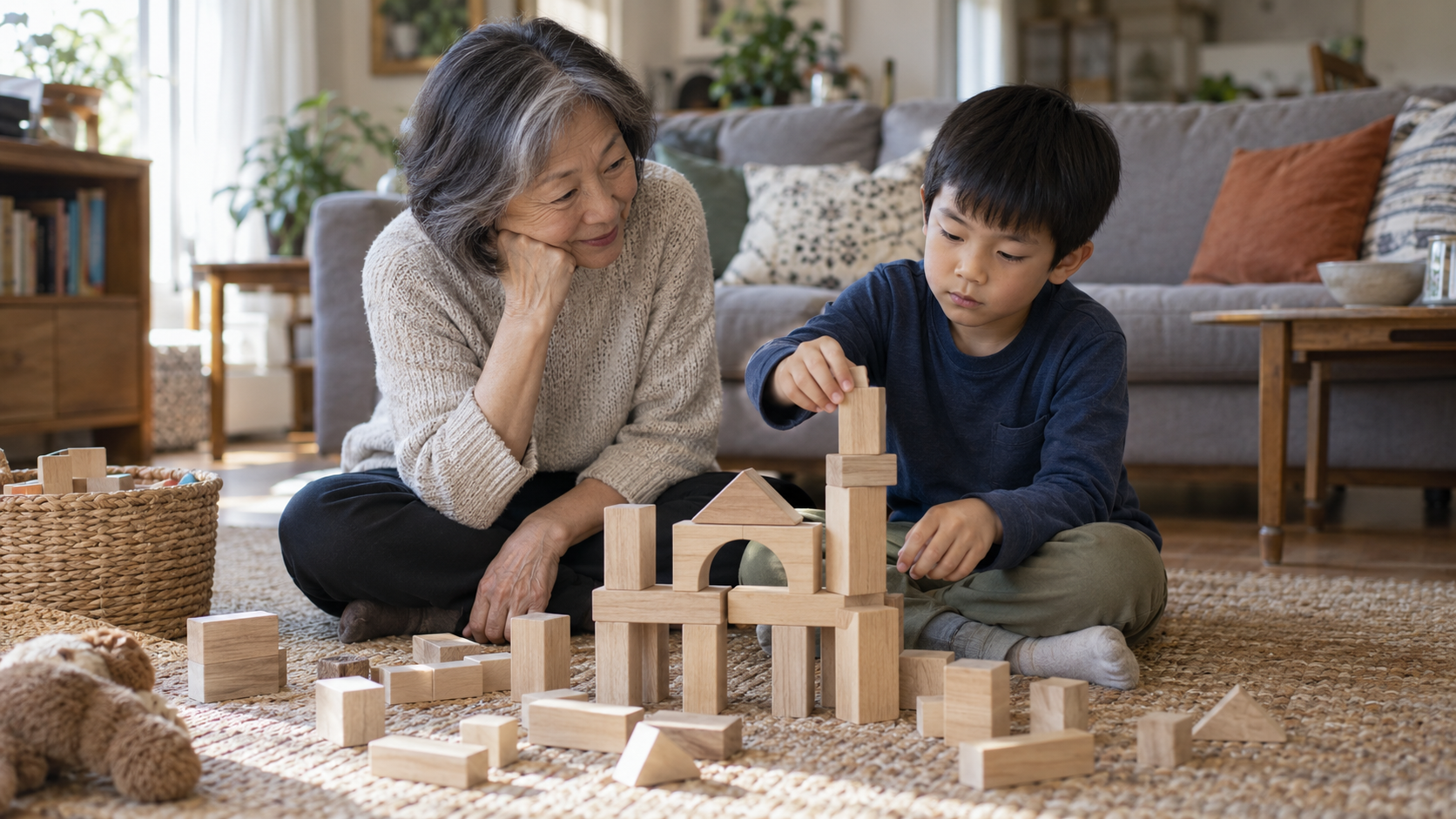
“These conversations shift the focus from the finished product to the creative process, helping children develop confidence, language skills and a sense that their ideas matter,” Loquasto says. The same approach works when something goes wrong. If the tower falls, resist the urge to rebuild it for them and ask what could make the bottom stronger. If the puppet-show plot stalls, wonder aloud who might knock on the door next. The conversation stays playful while your grandchild works through the next step.
Easy Ideas for the Hour After School
Loquasto recommends relaxed activities that can change direction halfway through, including pretend play, building, storytelling, baking and exploring outdoors. They require little preparation and leave the interesting decisions to your grandchild.
Turn everyday items into something new
A pretend restaurant can begin with paper, crayons and a few safe kitchen items. Let your grandchild name the restaurant, create the menu and decide what everything costs. You can be the customer, the server or a food critic with unusual requests. Without feeling like homework, the game brings in storytelling, numbers, conversation and problem-solving.
A cardboard box offers the same kind of freedom. Loquasto suggests using recycled materials for art and imaginative play, so try placing a box on the floor and asking, “What could this become?” Then give your grandchild time to answer. With tape, washable markers, paper scraps and child-safe scissors, that box might become a car, a stage, a pet bed or an invention no adult would have predicted.
Follow curiosity outdoors or into the kitchen
On a walk, Loquasto suggests collecting interesting leaves or rocks and letting a child’s questions guide the outing. You can also look for three things neither of you noticed before, such as an unusual cloud, a tiny insect or a crack in the sidewalk shaped like a river. Back at home, your grandchild might draw the discoveries, invent a story about one of them or arrange the objects into a nature picture.
Cooking together offers a different kind of creative freedom. Let your grandchild arrange fruit into a face, invent a sandwich, decorate mini pizzas or help bake a familiar family recipe. In the University of Michigan poll, 36% of grandparents said they had baked or cooked with their grandchildren in the previous month. Loquasto includes baking among her favorite low-prep activities because it encourages children to communicate, make choices and work alongside someone they love.
If your grandchild is older and enjoys taking pictures, ZestYears also has ideas for turning an ordinary walk into a photography adventure you can share.
Build a story or a secret hideaway
For a two-person story, choose a stuffed animal or an object in the room and begin with one sentence. Your grandchild adds the next, and you continue taking turns. Loquasto encourages grandparents to join children in their imaginary worlds, so do not worry when the story takes an odd turn. If a penguin wants to drive a bus to the moon, climb aboard and find out what happens.
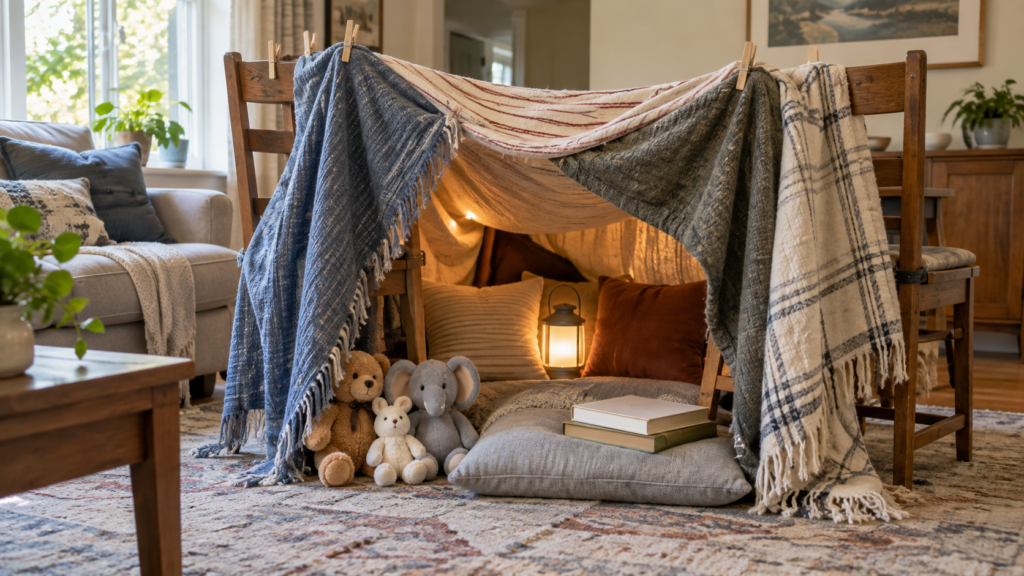
Building a blanket fort adds a hands-on challenge. Gather blankets, cushions and clothespins, then let your grandchild decide what the structure needs. Perhaps it must fit two people, include a window or stay up long enough for a story inside. When part of it collapses, pause before fixing it. Working out how to rebuild the roof is part of the fun and part of the problem-solving Loquasto wants children to experience through play.
Creativity Does Not Always Look Like Art
Some children reach for markers. Others build elaborate block cities, make up rules for a backyard game, hum their own songs, tell jokes, take apart broken gadgets or ask 40 questions about how a zipper works. Loquasto cautions grandparents against treating creativity as another word for artistic ability. She recommends watching what a child chooses, the questions they ask and the way they respond when something does not work the first time.
Those small clues can tell you whether your grandchild is drawn to stories, movement, construction, music, nature, pretend play, puzzles or invention. Once you spot the interest, give it more room. A child who loves building may prefer a basket of clean recyclables to a coloring book. A child who narrates everything may enjoy recording a pretend radio show. A child fascinated by bugs might happily spend 20 minutes watching an ant carry a crumb while you listen to every observation.
Praise the Trying, Not Just the Result
When your grandchild proudly holds up a finished project, “That’s beautiful!” may come out automatically. There is nothing wrong with enjoying the result, but Loquasto recommends noticing what happened along the way, too. You might say, “You kept working even when that part was hard,” “I saw you try three different ways” or “You changed your plan when the first idea did not work.”
That kind of response celebrates persistence and a willingness to experiment instead of concentrating only on the finished picture or whether the tower stayed up. If your grandchild explains how a problem was solved, listen to the full story and let them know you enjoyed hearing it. Loquasto says that when adults show interest in a child’s ideas and projects, the child is more likely to keep exploring and creating.
Leave a Little Room for Boredom
You do not have to fill every minute. In fact, Loquasto sees value in the quiet pause that follows “I’m bored.” “When children have the freedom to explore, experiment and even be a little bored, they begin to come up with their own ideas and solve problems,” she says.
Give that pause a chance before offering another activity. You might say, “I wonder what you’ll come up with,” and stay nearby while your grandchild looks around. A few minutes of wandering may lead to couch-cushion architecture, an invented dance or a detective hunt for missing socks. Even if nothing happens right away, your grandchild has had a rare chance to decide what comes next.
Your Attention Matters
A creativity-friendly home does not require a craft room or shelves filled with new toys. Loquasto suggests keeping a few flexible materials within reach, such as paper, crayons, blocks, books, tape, recycled boxes and dress-up clothes. They give your grandchild a place to begin, but the supplies are only part of the experience. Your interest in what they are making, the questions you ask and your willingness to let them make the decisions are what keep the play moving.
“Children don’t need perfectly planned activities or expensive toys to be creative,” Loquasto says. “They need caring adults who are willing to listen, join in their imaginary worlds and let them lead.”
The next time you are with your grandchild, leave a little space in the schedule. Put a box on the floor, step outside or ask a question you do not already know the answer to. You do not have to direct the activity or know where it is going. Stay interested, follow your grandchild’s lead and see where the idea takes both of you.
Meet the Expert

Dr. Lauren Loquasto is SVP and chief academic officer at Goddard Systems, LLC, the franchisor of The Goddard School. She leads the development of The Goddard School’s proprietary education program and brings more than 20 years of experience in curriculum development, teaching, special education and elementary education.
The Goddard School is a leader in early childhood education serving nearly 100,000 students, from six weeks to six years old, across more than 680 schools in 37 states and Washington, D.C. For nearly four decades, it has partnered with families to create joyful, supportive environments that nurture curiosity, character and a love of learning.