

What if retirement was never supposed to be about simply slowing down? What if it was actually meant to become one of the richest, most intellectually fulfilling chapters of life?
That question sits at the center of an insightful reflection by Ira G. Shapiro, Ph.D., Professor Emeritus from the School of Sport, Tourism, and Hospitality Management at Temple University. In his exploration of the ancient Greek concept of leisure, Dr. Shapiro challenges the modern idea that retirement is simply a reward for years of hard work or a period focused primarily on rest and relaxation.
Instead, he suggests that retirement may offer you something far more valuable: the opportunity to rediscover curiosity, intellectual engagement, creativity, reflection, and personal growth during a stage of life when you may finally have the time to pursue them. Creating a fulfilling retirement may have less to do with how busy you stay and more to do with how you choose to use your newfound time. Look at retirement from that perspective, and the question begins to shift from: How will I fill all this time? to What do I finally have time to explore?
The Ancient Greeks Had a Very Different Idea About Leisure

Drawing from the teachings of Socrates, Plato, and Aristotle, Dr. Shapiro explains that the ancient Greeks viewed leisure very differently than we often do today. Leisure was not considered laziness, idleness, or simply the time left over after your responsibilities were finished. Instead, it was connected to learning, contemplation, conversation, music, philosophy, creativity, and the opportunity to develop yourself.
The Greeks called this concept scholé, pronounced skoh-LAY. It is also the root of the English words “school” and “scholar,” which gives you a sense of how closely leisure and learning were connected. Dr. Shapiro explains that the Greeks did not measure leisure by how many free hours someone had. They saw it as a way of approaching life. Plato connected leisure with the pursuit of wisdom and eudaimonia, or human flourishing, while Aristotle believed it created room for curiosity, contemplation, personal fulfillment, and the cultivation of the self.
Thousands of years later, that idea feels surprisingly relevant. After spending much of your adult life doing what needed to be done, retirement may be one of the first times you can seriously consider what you want to learn, experience, create, or understand simply because it interests you.
When Staying Busy Isn’t the Same as Feeling Fulfilled
You may have spent decades moving from one responsibility to the next. There was work to finish, a household to manage, children to raise, parents to help, appointments to keep, bills to pay, and an endless list of things requiring your attention. Even your free time may have been squeezed between obligations.
Then retirement changes the rhythm. Suddenly, there may be hours that nobody else has claimed for you. That freedom can be wonderful, but it can also take some getting used to. You can fill your calendar with errands, appointments, television, household projects, lunches, and other activities and still wonder whether being occupied is the same thing as feeling engaged.
Dr. Shapiro’s interpretation of scholé offers another possibility. Instead of immediately trying to fill the open spaces in your calendar, you can use some of them to reconnect with interests that may have been pushed aside or discover ones you never had the opportunity to explore. Perhaps there is a subject you have wanted to learn about for 30 years. Maybe you once painted, played an instrument, wrote, gardened, studied history, or loved visiting museums before other responsibilities took over. You might want to learn a language before an upcoming trip, explore your family’s genealogy, take better photographs, join a discussion group, or finally write down family stories your children and grandchildren have heard in pieces over the years.
Dr. Shapiro emphasizes that these pursuits do not need to lead anywhere else to have value. As he describes it, they can be “their own reward.”
Your Brain Hasn’t Retired Either
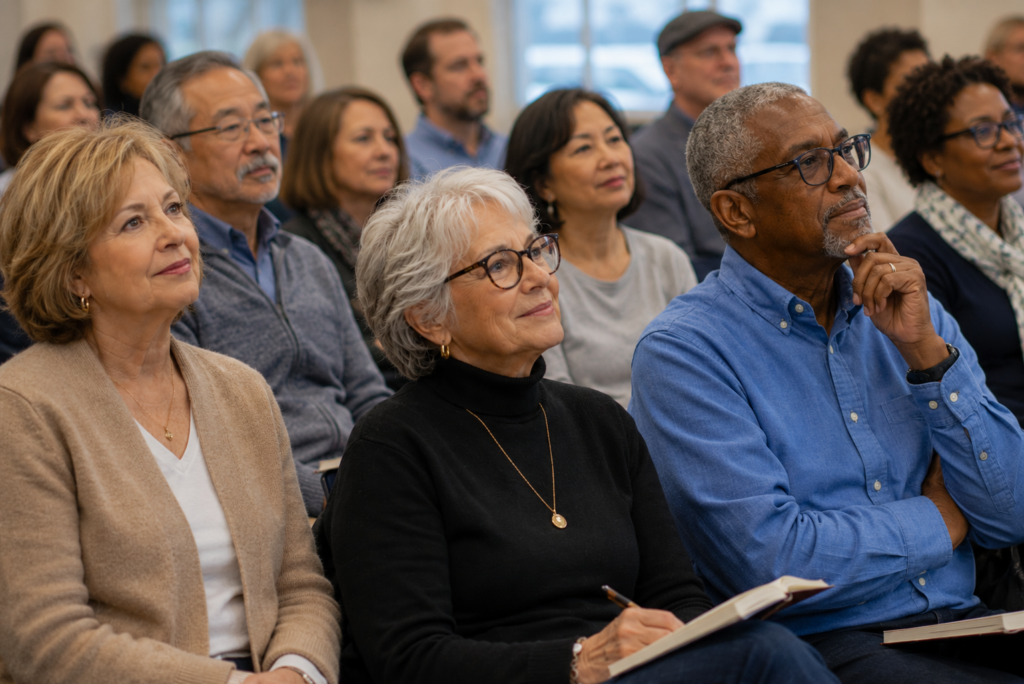
There is another compelling reason to keep exploring: your mind and body continue to respond to learning, creativity, social connection, and new experiences as you age. The National Institute on Aging’s guidance on cognitive health discusses several aspects of supporting cognitive health as you grow older, including taking care of your physical health, keeping your mind engaged, and staying socially connected.
The NIA also points to research involving activities such as music, theater, dance, creative writing, quilting, and photography, while appropriately noting that scientists are still studying how particular activities affect long-term cognitive health. There is no single hobby that guarantees your brain will stay sharp, but the larger message is encouraging: getting older does not mean you need to stop challenging your mind or exposing yourself to new experiences.
More recent research adds another interesting dimension. A 2026 study led by researchers at University College London found an association between regular engagement with arts and culture and a slower pace of biological aging. Researchers analyzed data from more than 3,500 adults and found that both how often people participated and the variety of activities they pursued mattered. Reading, listening to music, visiting museums or galleries, attending performances, and taking part in creative activities were among the forms of engagement studied.
For adults who engaged with the arts at least once a week, the researchers found an approximately 4% slower rate of biological aging compared with those who rarely participated. The association was similar in size to the one researchers observed with weekly physical activity, and the findings were strongest among adults age 40 and older. The study does not mean that picking up a paintbrush can replace exercise, but it offers another compelling reason to keep making room for the activities that stimulate your mind, senses, emotions, and connections with other people.https://www.cnn.com/2026/05/14/health/arts-ageing-study-scli-intl-wellness
Harvard Health Publishing’s discussion of neuroplasticity and cognitive fitness also describes the brain’s continuing capacity to adapt. Its suggestions include learning new skills, reading about unfamiliar subjects, pursuing creative hobbies, traveling, attending cultural events, and maintaining social connections.
The encouraging part is that none of this requires turning retirement into another self-improvement project. You can learn something without needing a grade, promotion, paycheck, or practical reason for doing it. The experience itself can be enough.
Retirement Can Feel More Emotional Than You Expected
For decades, part of your identity may have been attached to what you did and who needed you. You were the teacher, attorney, business owner, nurse, executive, parent, caregiver, problem-solver, or person everyone called when something needed to get done. Those responsibilities did more than fill your calendar. They created structure and, in many cases, became part of how you saw yourself.
When your working life ends or caregiving responsibilities change, you do not simply lose a schedule. You may also lose some of the structure that told you where to be, what needed to happen next, and even how to describe yourself. That can make unstructured time uncomfortable, particularly if you have spent most of your life measuring a good day by how much you accomplished.
The ancient Greek perspective offers an interesting alternative. Open time does not necessarily need to be filled as quickly as possible. It can become room for something new to develop. Reading, conversation, learning, art, music, reflection, and other interests do not have to justify their place on your calendar by producing something at the end.
Dr. Shapiro is also careful to acknowledge an important historical reality. The ancient Greek ideal of leisure was available primarily to a privileged group whose freedom depended in part on the labor of others, including enslaved people. Their concept also did not place the same emphasis on physical recreation that we recognize today. He is not suggesting that we recreate an ancient Greek lifestyle. Instead, he asks us to consider what remains valuable in its philosophy: the belief that time devoted to intellectual exploration, creativity, and reflection has genuine worth.
Find What Makes You Curious Again

So what does scholé actually look like in your life? You might take a painting class even though you have never considered yourself artistic. You might attend a lecture about a subject you know almost nothing about, pick up a camera, learn piano, join a walking group, study the history of somewhere you plan to visit, volunteer for an organization that interests you, or finally start researching your family tree.
You can also try something completely unexpected. Retirement does not have to be about returning to who you were before life became busy. It can be an opportunity to discover interests you have never had before. The important distinction is that you are not replacing your old work schedule with another checklist of accomplishments. You are giving yourself permission to follow an interest because it fascinates, challenges, entertains, or inspires you.
If you are unsure where to begin, ask yourself one question: What am I curious about right now? Then give that curiosity somewhere to go. Borrow the book. Register for the class. Call the friend who has been asking you to join the walking group. Visit the museum. Look up the local lecture. Buy the inexpensive set of paints. Start writing the family story. Learn ten words of Italian. Take the photograph. Try the pottery class even if your first bowl comes out completely crooked.
You do not have to discover a grand new purpose or reinvent yourself overnight. One experience may lead to another. Something you try casually could become an important part of your life, while something else may turn out not to be for you at all. Both outcomes have value because you are still exploring.
Say Yes to What Comes Next
Dr. Shapiro closes his reflection with a wonderfully simple idea. If retirement is the invitation to rediscover this richer form of leisure, retirees need only to “R.S.V.P.”
Perhaps that is worth remembering the next time you find yourself wondering what retirement is supposed to look like. You have spent years accumulating experience, knowledge, stories, relationships, and interests. Now you may finally have more freedom to decide which of those you want to deepen and what completely new ones you want to discover.
You do not need a perfectly planned retirement or a grand vision for the next 20 years. Start with something that interests you now and see where it takes you. The book, class, conversation, trip, lecture, hobby, or idea you say yes to today may introduce you to a part of yourself you simply never had the time to meet before. And that may be one of retirement’s greatest opportunities: not becoming a different person, but discovering how much of you there is still left to explore.
About the contributor

Dr. Ira G. Shapiro is Professor Emeritus in the School of Sport, Tourism and Hospitality Management at Temple University in Philadelphia, Pennsylvania. A published author and longtime educator, his work has explored leisure, recreation, and the role these pursuits can play in personal growth and quality of life.