

When Barbara turned 60, she expected some aches and stiffness. But one morning, her routine walk became unbearable. “It felt like I was stepping on nails,” says Barbara, now 67, from Princeton, NJ. “The pain was so sharp in my heels, I started dreading getting out of bed.”
If that sounds familiar, you’re not alone. According to the American Academy of Orthopaedic Surgeons, more than 2 million Americans deal with plantar fasciitis each year, and most of them are over age 50. This common condition involves inflammation of the plantar fascia, a thick band of tissue that runs along the bottom of your foot and it can make even the simplest activities feel painful.
Why Heel Pain Gets Worse With Age
“With age, we naturally lose the fat padding in our heels,” explains Dr. Stuart W. Kushel, a retired podiatrist with over three decades of experience. “That extra cushioning used to absorb impact. Without it, more pressure is placed directly on the fascia.”
Other age-related factors include tighter calf muscles, reduced ankle flexibility, weight gain, and years of walking barefoot or wearing unsupportive shoes. Pain often flares up in the morning or after sitting for long periods, when the fascia tightens and is suddenly stretched.

The #1 Thing You Can Do: Wear Supportive Shoes
One of the biggest surprises for many older adults is discovering that going barefoot or wearing their favorite cozy house slippers might actually be contributing to foot pain. “Support isn’t just for the gym,” says Dr. Kushel. “You need it throughout the day, especially at home.” The right footwear can make a significant difference in how your feet feel. Shoes with firm arch support, a cushioned heel, a slight lift to avoid being completely flat, and a roomy toe box can help reduce strain and improve overall foot health. Brands like Vionic, Orthofeet, and Oofos are highly rated for their plantar fasciitis relief, offering a variety of options from everyday walking shoes to supportive indoor slippers that feel as good as they look.
Simple Ways to Prevent Plantar Fasciitis at Home
Small daily habits can prevent flare-ups or ease current discomfort. Dr. Kushel recommends:
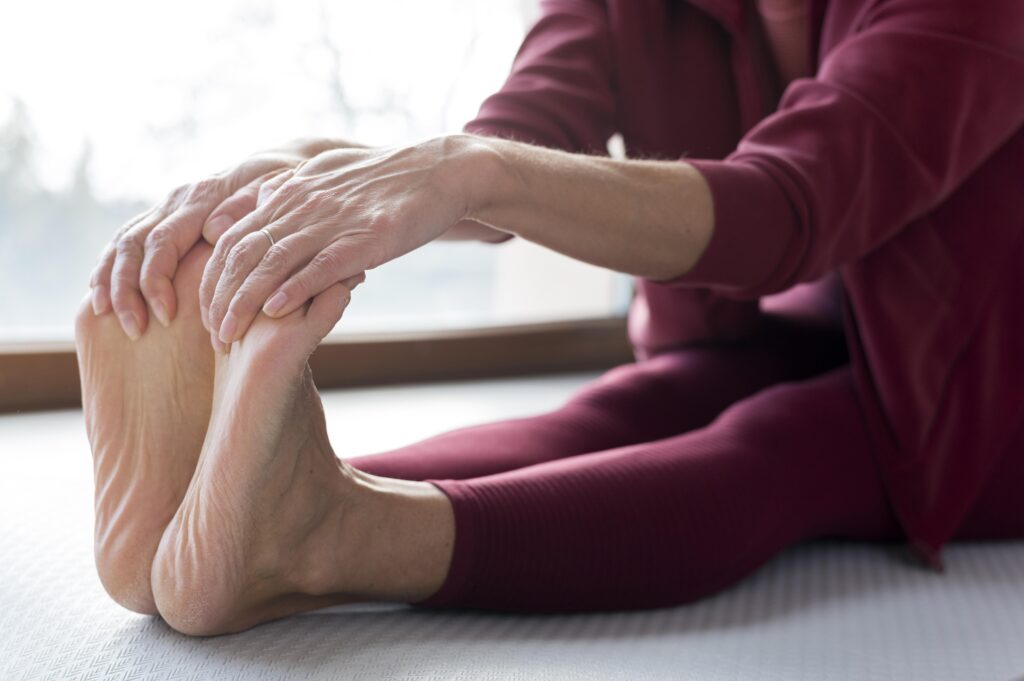
Daily stretching for calves and the bottom of the feet (morning + night)
Rolling a frozen water bottle or tennis ball under the arch for 5–10 minutes
Icing the heel after long walks or time on your feet
Avoiding bare feet on hard floors
Maintaining a healthy weight to reduce pressure on feet
Replacing shoes every 6–12 months
“You don’t have to live with foot pain,” says Dr. Kushel. “But you do have to commit to taking care of your feet.”
Treating Existing Heel Pain Without Surgery
In most cases, surgery is not necessary. With early intervention and consistent care, the majority of people improve using conservative treatments. Night splints, orthotic inserts like Superfeet or Powerstep, and physical therapy are all effective options. If symptoms linger, a podiatrist might suggest corticosteroid injections or shockwave therapy, but these are typically last resorts.
The key takeaway? Foot pain after 55 is common, but it’s not something you have to just accept. With the right steps, you can walk comfortably and confidently again.
About the Expert

Dr. Stuart W. Kushel, DPM is a retired, board-certified podiatrist who practiced for more than 30 years in New Jersey. He owned a busy solo practice in Plainsboro, NJ, and also co-managed a thriving office in Hamilton, NJ alongside a longtime colleague. Known among his patients as “the nice, sweet doctor,” Dr. Kushel built a reputation for kind, attentive care and a thoughtful approach to treatment. Although retired, he continues to share his expertise with those looking to stay mobile and pain-free in their later years.
This article is for informational purposes only and does not replace professional medical advice. Consult a qualified healthcare provider with any health concerns.