
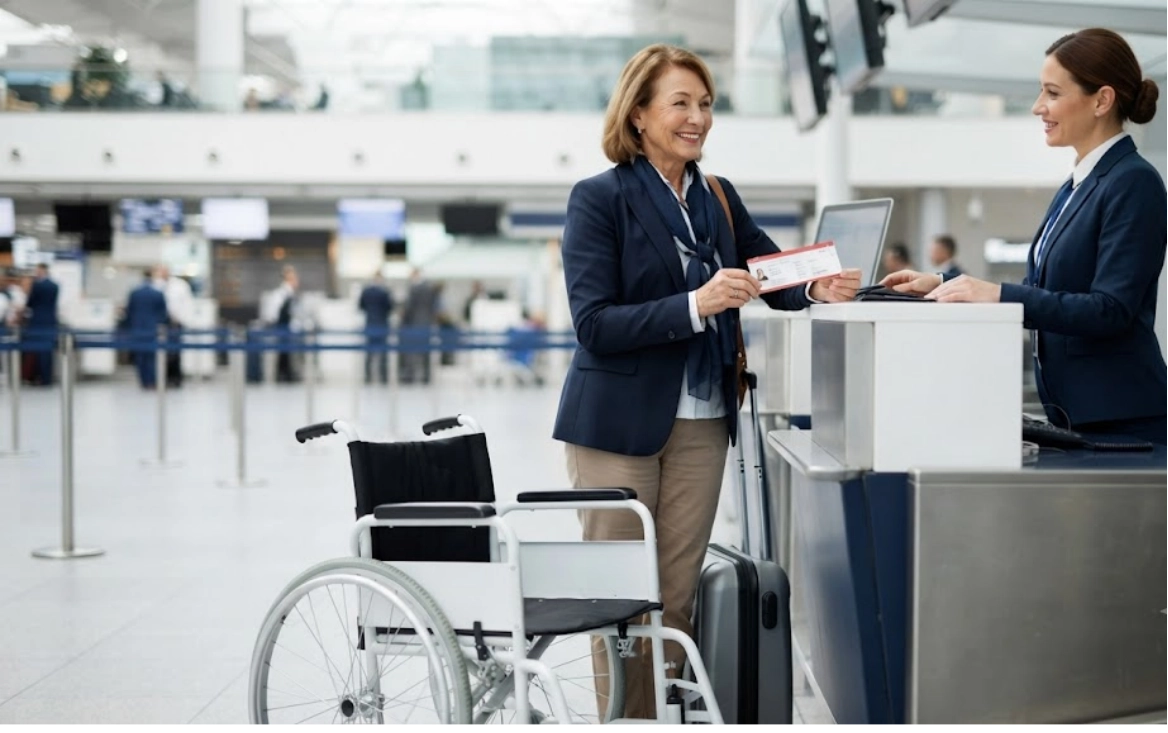
There’s a quiet standoff that plays out before thousands of trips: a traveler who could use help through the airport, and a reluctance to ask for it, tangled up in pride, uncertainty about who qualifies, and visions of bureaucratic hassle. So let’s settle the practical question of how to request wheelchair assistance at the airport, and the emotional one behind it, with the facts. The service is free, it’s your legal right, no doctor’s note or proof is required, you define your own need, and requesting it takes under two minutes. The travelers who use it overwhelmingly report one regret, which is not starting sooner. Here’s how the system works and how to work it well.
What the Law Actually Guarantees
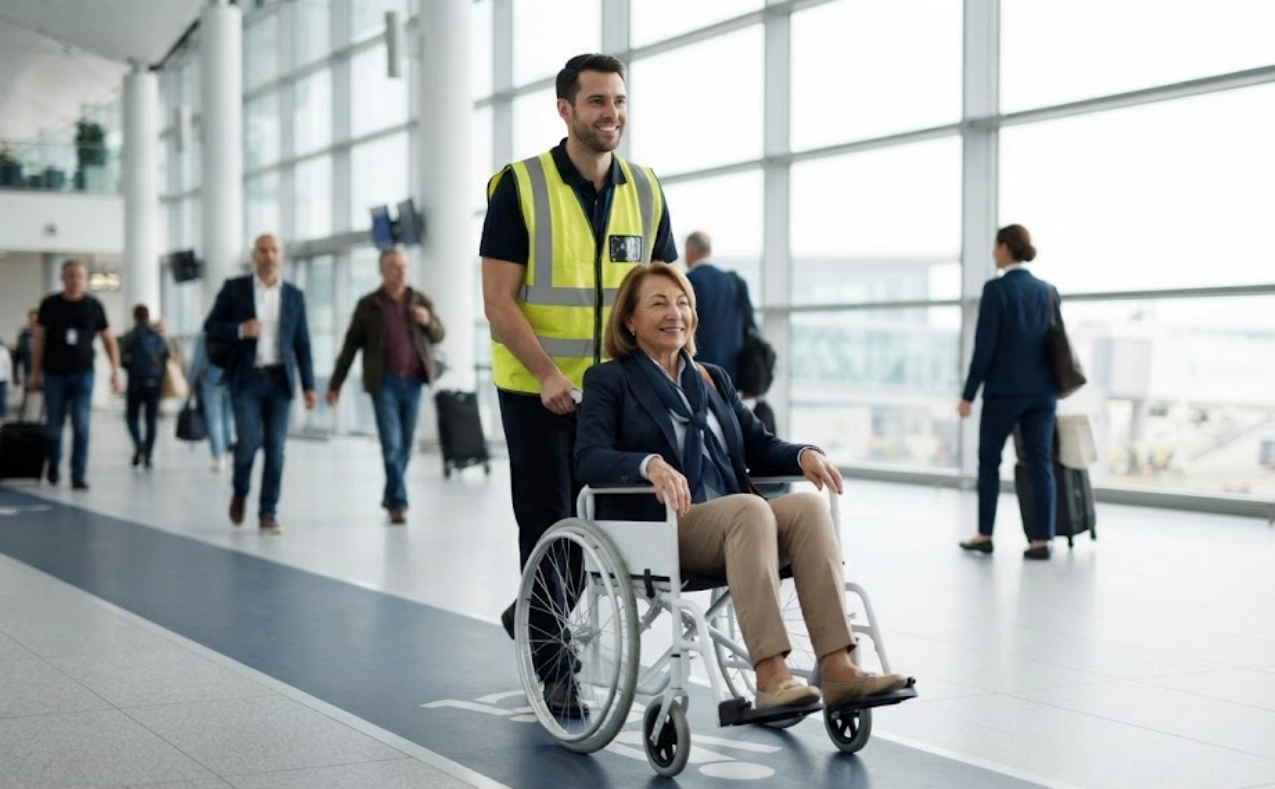
Under the Air Carrier Access Act, every airline flying to, from, or within the United States must provide free assistance to passengers who request it, including wheelchair or guided assistance between the terminal entrance, check-in, gate, and aircraft seat, help with connections, and assistance to baggage claim and the arrival curb. The airline provides the wheelchair and the trained agent who pushes it, you don’t need to own or bring anything, and crucially, eligibility is self-determined: if distance, stamina, balance, breathing, joint pain, or recovery from surgery makes a half-mile concourse unwise, you qualify because you say so. Airlines cannot demand medical documentation for standard wheelchair assistance, and the full rights framework is laid out plainly at the Department of Transportation’s disability travel page. Travelers who bring their own wheelchairs, scooters, or other devices have additional protections, checked free and prioritized, which we covered in our story on air travel tips for seniors with mobility devices.
How to Request It So It Actually Goes Smoothly
The system works best when you trigger it early and confirm it often, a rhythm veterans compress into four touchpoints. Request assistance when booking, through the website checkbox, the app, or a call, which places it on your reservation for every leg including partners’ flights. Call the airline 48 hours before departure to confirm it’s still noted, a two-minute insurance policy against the most common failure, which is the request that never made it into the record. Identify yourself at check-in, where the agent dispatches the wheelchair and escort, and at each gate on connections. And arrive a bit earlier than usual, since assisted boarding happens first, and build generous connection times, ninety minutes or more, because you’ll be transported between gates but the system moves at its own pace. If assistance fails to show, ask any airline agent to call for it and be politely persistent, since every carrier staffs this function at every airport, and complaints about failures carry real regulatory weight with DOT. For help through the security checkpoint specifically, including screening while seated, the TSA’s dedicated program takes requests at least 72 hours ahead through TSA Cares.
The Etiquette, the Tipping, and the In-Between Cases
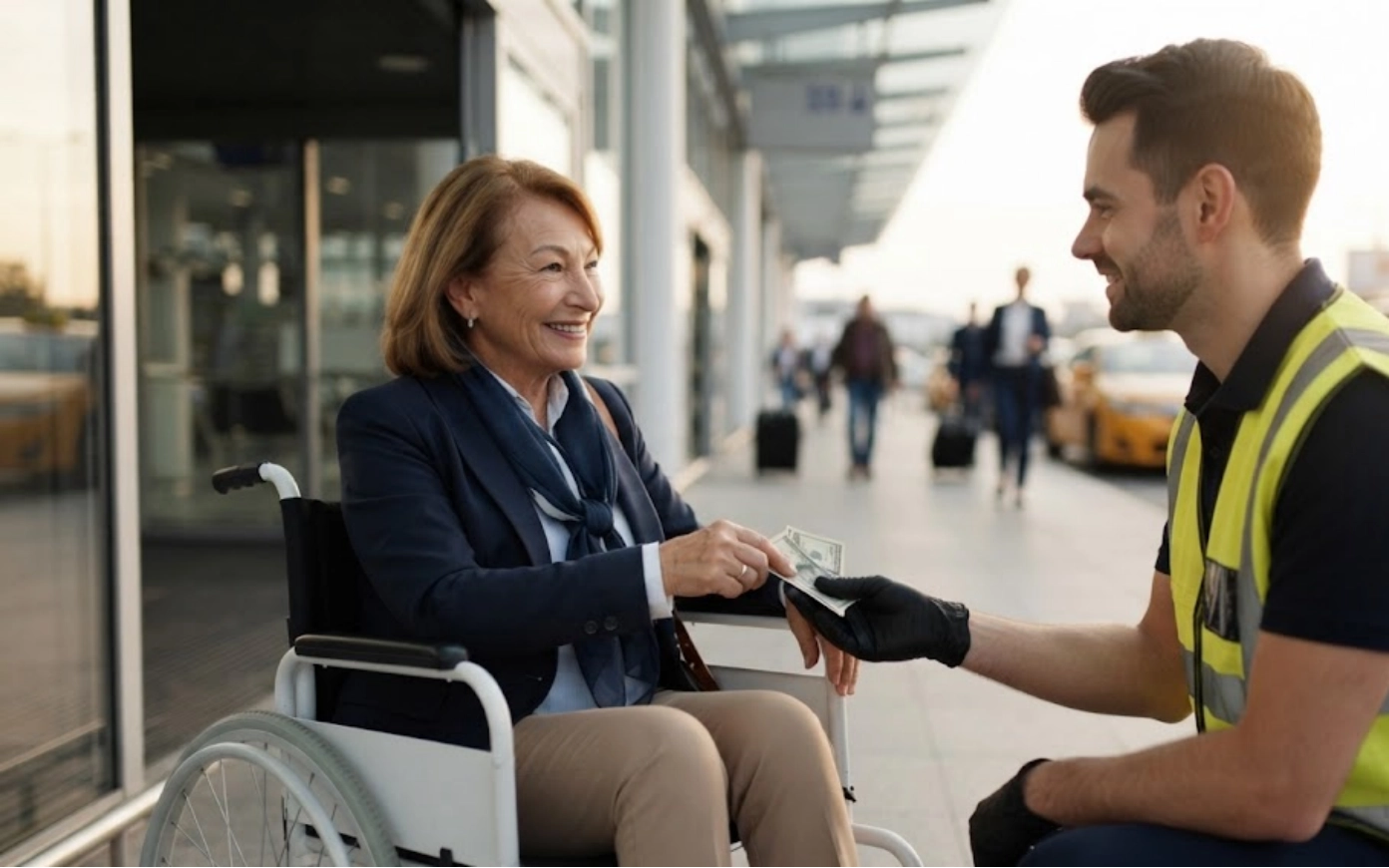
A few realities smooth the human side. The agents pushing chairs are typically contractor employees for whom tips, while never required, are customary and appreciated, with a few dollars per segment the common practice. You can use assistance partially, riding the long concourse and walking the jet bridge, or request an electric cart instead where airports run them, and you can request assistance for arrival only, departure only, or connections only, tailoring it to where your energy actually goes. Travelers who need help with stamina but bristle at the wheelchair image should hear the reframe a reader gave us: she treats it as valet service for her joints, spending her daily energy budget on Rome instead of on Terminal B. And if your situation involves an aisle too far, a bathroom concern, or seating needs, those are requests the airline handles too, including the onboard aisle chair, detailed in our practical guide to managing airplane bathrooms with limited mobility.
So, Should You Ask?
So, should you tell the airline? Yes, every time, at booking, and without a moment’s self-consciousness. The assistance system exists because airports outgrew human walking distances, not because its users failed some test of vigor, and the well-traveled people gliding past you at the gate figured that out years ago. The hassle you’re avoiding by not asking is a fraction of the hassle of a missed connection, an exhausted arrival, or a trip not taken. Two minutes at booking buys back the whole airport. Make the call, take the ride, and spend what you save on the destination, which is what it was always for.

Written by the
ZestYears Editorial Team