

When people think about relationships later in life, the focus is usually on romance. But for many adults over 50, platonic relationships are just as powerful and sometimes even more life changing. Friendship can become the steady presence. The daily check in. The shared laugh over coffee. As life shifts and children grow up, partners pass away, or routines change, it is easy for the world to feel smaller. Social circles thin out. Days grow quieter. The risk of isolation becomes real. For Rebecca Olkowski, friendship became the foundation of her next chapter.
Living Side by Side, Not Alone
Rebecca lives in a unique setup. There are three women, all the same age, living between two homes next to each other. They each have their own space and their own schedules. But there is always someone nearby.
“There is always someone around to talk to, exercise with, shop together, and party with,” she says. If one of them needs a ride, someone steps in. If someone has a medical issue, she is not facing it alone. Even small moments, like having someone to walk with or share a meal, change the rhythm of daily life. They are independent, but connected. And that balance makes all the difference.
The Adjustments No One Talks About
Shared living is not a fantasy. It comes with real life adjustments. Rebecca’s move into this arrangement came after a difficult period. She had been living with a boyfriend who became ill and eventually passed away from cancer. The apartment became too expensive, and she had to move out.
For six months, she lived in a private home where she shared a bathroom with a man she did not know. With two small dogs and the beginning of COVID isolation, she spent most of her time confined to a small bedroom. It was far from ideal. When a high school friend invited her to move into a newly built two bedroom ADU next to her home, Rebecca was ready for change.There were uncertainties. Would they get along? Would their routines clash?
Their schedules turned out to be compatible. They respected each other’s space. Some differences required flexibility. Rebecca’s roommate enjoys decorating in a style that does not always match hers. She also smokes marijuana, which meant adjusting to the smell. But those were manageable. The key, Rebecca says, is compatibility. Shared living works best when routines align and there is mutual respect.
Knowing Someone Is There
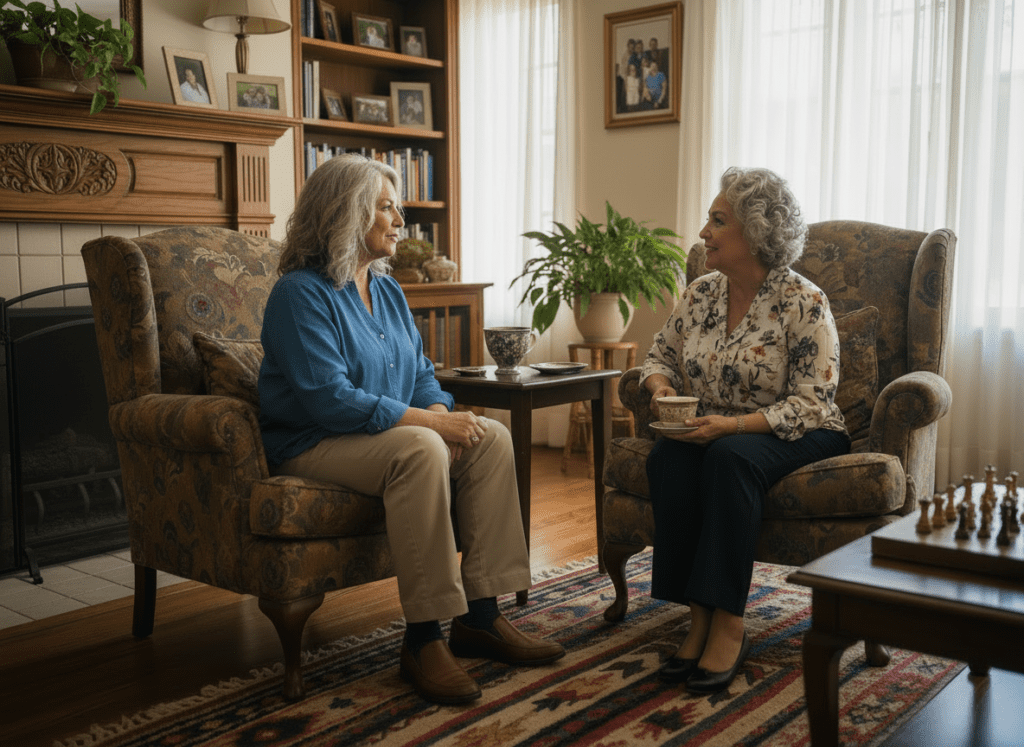
One of the most powerful benefits of platonic co-living is something people rarely discuss openly. Safety. As we age, the risk of falling or having a sudden medical issue increases. Living alone can make that reality feel frightening.
Rebecca and her roommates once worked on an estate sale for a woman in her late 80s who had fallen down the stairs and lay there for days before being discovered. She survived, but eventually had to move into assisted care. That story stayed with them. “The thought of living alone and having something bad happen is terrifying,” Rebecca says. In their arrangement, someone would notice if a door stayed closed too long. Someone would hear a call for help. That quiet layer of protection brings real peace of mind. Shared living does not remove independence. It adds a safety net.
When Friendship Softens the Hard Days

Grief does not follow a script. Rebecca experienced the death of her boyfriend before moving into this new chapter. She describes the loss as complex, given the long illness, but acknowledges that friendship played an important role in her transition. Even when roommates cannot fully understand what you are carrying, their presence helps.
Having someone in the kitchen. Someone to watch a show with. Someone to talk through an ordinary Tuesday. Friendship creates space to move forward without forcing anything. It offers support without pressure. And sometimes that is exactly what is needed.
What Home Looks Like Now

Shared living has reshaped Rebecca’s idea of home. Home is no longer defined by traditional expectations. It is not centered around marriage or a nuclear family structure. It is built around friendship, affordability, and mutual care.
Shared living also makes practical sense. Housing costs continue to rise. Many adults over 50 want to remain active and independent without the financial strain of living entirely alone. Rebecca also believes arrangements like this could help delay or even prevent premature placement in a nursing home. “We are getting creaky in the knees and other parts of our bodies, but we are still active,” she says. Living together allows them to age in place with dignity and companionship. Home, in this season of life, looks different. And that is not a loss. It is an evolution.
If You’re Thinking About Shared Living
If you are considering a similar arrangement but feel unsure, Rebecca offers simple advice. Make sure you are compatible. Have honest conversations about routines, guests, finances, and habits before moving in. Respect personal space. Keep communication open. Understand that small differences are normal.
Most importantly, ask yourself whether you genuinely enjoy spending time with this person. Platonic relationships after 50 are not a backup plan. They can be intentional, strong, and deeply fulfilling.
Why This Matters More Than We Admit

Friendship in later life is not secondary. It is essential. Platonic relationships can provide:
• Daily companionship
• Emotional support
• Shared responsibility
• Increased safety
• Financial flexibility
They can also bring laughter back into the house. Rebecca’s story reminds us that aging does not have to mean isolation. It can mean building community in new ways. It can mean redefining what partnership looks like. It can mean choosing connection on purpose. Sometimes home is not about who you are married to. Sometimes it is about who lives next door, who knocks on your door, and who shows up when you need them.
And that kind of friendship is powerful.
About the contributor

Rebecca Forstadt Olkowski is a digital content creator and voice actor focused on fashion, beauty, travel, and lifestyle for active women over 50. She is the founder of BabyBoomster and Booming in LA, where she shares inspiration for living fully in midlife and beyond.
You can follow her on Instagram and Threads @rebeccaforstadt and explore her curated recommendations through her Amazon storefront.