
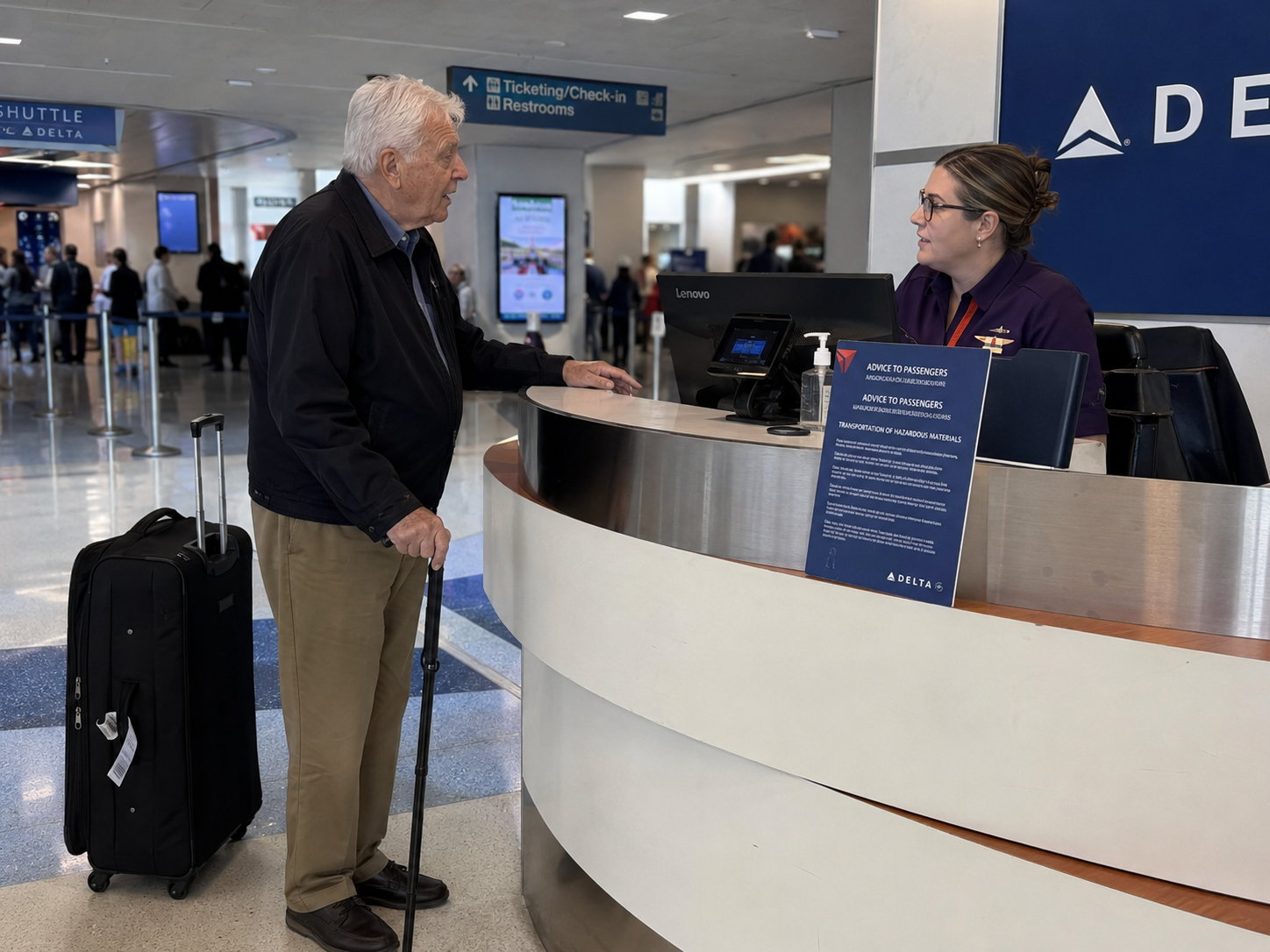
For seniors living with disabilities, travel often involves more research and preparation than it does for the general population. But in 2025, there has been a rise in services and companies that take advantage of that extra planning. Misleading listings, inflated service charges, and dishonest providers are targeting a growing group of travelers: older adults with accessibility needs. According to the Centers for Disease Control and Prevention, more than 27 million Americans over age 60 live with a disability. As demand for accessible travel increases, so do the scams designed to exploit that need. Knowing the disabled travel scams to avoid can make a real difference when planning a safe and enjoyable trip.
Scam #1: Hotels That Falsely Claim ADA Compliance
This is one of the most common problems reported by disabled travelers. A hotel lists itself as “ADA-compliant” or “wheelchair accessible” on its website or a booking platform. But when the guest arrives, the room may be up a flight of stairs, the bathroom lacks grab bars, or the bed is too high for easy transfers. Sometimes, photos are misleading or intentionally cropped. Listings might include vague terms like “accessible bathroom” without showing that there is a steep tub or narrow space.
Diane, age 72, booked a hotel in Philadelphia that claimed to be accessible. The website showed wide doors and a roll-in shower. But when she checked in, the room was on the second floor and the elevator was out of service. The bathroom had a high-walled tub and no grab bars. Diane had to call a taxi and pay out of pocket for a last-minute room at a different hotel.
Always call the hotel directly. Ask for specific details like bed height, bathroom layout, and shower style. Request emailed photos. If you’re using a third-party site, confirm with the hotel before booking. Keep records of your conversation in case you need to dispute charges later.
Scam #2: Overcharging for Basic Accessibility Services
Some travel companies charge senior and disabled travelers significantly more for basic features that should be standard. A company may advertise a “mobility-friendly vacation package” that includes airport transfers and hotel stays, but once booked, the services turn out to be no different than what could have been arranged independently for a much lower price. Others may add high fees for accessible vehicles or devices, even when those options are already available at standard rates elsewhere.
A retired couple booked a trip to Orlando and paid over $1,200 extra for what the company described as a “wheelchair accessible transport package.” When they arrived, the rental van was an ordinary SUV with a flimsy, non-secured ramp. It wasn’t safe or compliant, and they could have booked a fully equipped van locally for half the cost.
Ask for clear details in writing. What kind of vehicle is being used? Is it equipped with tie-downs and a lift, or just a ramp? Get itemized pricing and compare it to local options. If you’re being charged more than 20 percent above the local rate, that’s a red flag.
Scam #3: Paying for Airport Assistance You Can Get for Free
In recent years, unverified websites have popped up offering “special needs airport assistance” for a fee. These sites often use official-looking names and claim to help you navigate TSA security or board early, but they are not affiliated with airlines or government services. In reality, airlines and the Transportation Security Administration already offer these services at no additional cost if requested ahead of time.
A traveler with limited mobility paid $95 online for “airport escort services” through a third-party site. He thought it was a requirement. But when he got to LAX, no one met him. The company didn’t respond, and the contact number was disconnected. He later learned that he could have arranged free wheelchair assistance directly through the airline.
Never pay a website or third-party company for airport wheelchair or escort services. These are available for free through your airline. To access them, contact the airline at least 48 hours before your flight, or use TSA Cares for additional help during security screening.
Scam #4: Misleading Vacation Rental Descriptions
Short-term rental platforms like Airbnb and VRBO are convenient, but many listings exaggerate or misrepresent accessibility. Listings may use phrases like “step-free access” when there’s a small staircase at the front door, or “walk-in shower” that still includes a 6-inch ledge. Some hosts rely on vague wording or wide-angle photos to make tight spaces look open. Others may mark their properties as “accessible” in the filters just to attract more clicks.
Tom, who uses a walker, booked an Airbnb in Scottsdale with a “step-free entrance” and “accessible shower.” When he arrived, there were two stairs leading into the home, and the shower had no grab bar and a steep lip. The host said, “it’s technically accessible if you can step over it.” Tom fell on the second night and spent the remainder of the trip resting.
Ask the host for exact measurements and timestamped photos. Verify entryways, hallway widths, and shower height. Use Google Street View to check the terrain and entrance. Do not rely on filter tags alone.
Scam #5: International Tours That Aren’t Truly Accessible
Some overseas travel companies advertise “accessible tours” to attract U.S. travelers, but fall short of basic expectations. Vehicles may not be equipped with lifts, and guides may have little experience assisting travelers with disabilities. In countries where accessibility laws are less defined, terms like “wheelchair-friendly” often mean little or nothing.
A traveler booked a weeklong “accessible Morocco adventure” with a tour company that claimed to provide lift-equipped vans and hotel rooms with roll-in showers. When she arrived, the van had stairs and the rooms had tubs. The guide shrugged and said most tourists “make do.” She ended up staying in the vehicle during most stops.
How to protect yourself:
Research the company using forums such as WheelchairTravel.org or SATH.org. Request photos, vehicle specifications, and references from past clients with disabilities. If the company avoids detailed questions, consider it a warning sign.
Disabled Travel Scams to Avoid: What You Can Do
Older adults with disabilities should be able to explore the world without worrying about being misled or overcharged. The reality is that there are businesses that treat accessibility as a marketing ploy rather than a commitment.
By staying informed, asking detailed questions, and learning how to spot disabled travel scams to avoid, travelers can protect themselves and focus on what really matters, having a safe and enjoyable trip.
For more accessible travel tips, visit our Accessible Adventures section on ZestYears.

Written by the ZestYears Editorial Team