
Costa Rica’s marketing leans hard on adrenaline, all zip lines and whitewater, which obscures the country’s better story for anyone researching Costa Rica for older travelers. This is the nation whose Nicoya Peninsula ranks among the world’s five blue zones, the regions where people routinely live past 100, and whose unofficial philosophy of pura vida, the pure life, is essentially a national commitment to the unhurried wellbeing the rest of us take vacations to find. Strip away the adventure-sports packaging and Costa Rica reveals itself as one of the finest destinations anywhere for wildlife, wellness, and warm-weather ease, with direct flights under six hours from much of the US, the same time zone as Central time, and a healthcare system ranked among Latin America’s best. Here’s the grown-up version of paradise.
The Wildlife Is the Show, No Harness Required
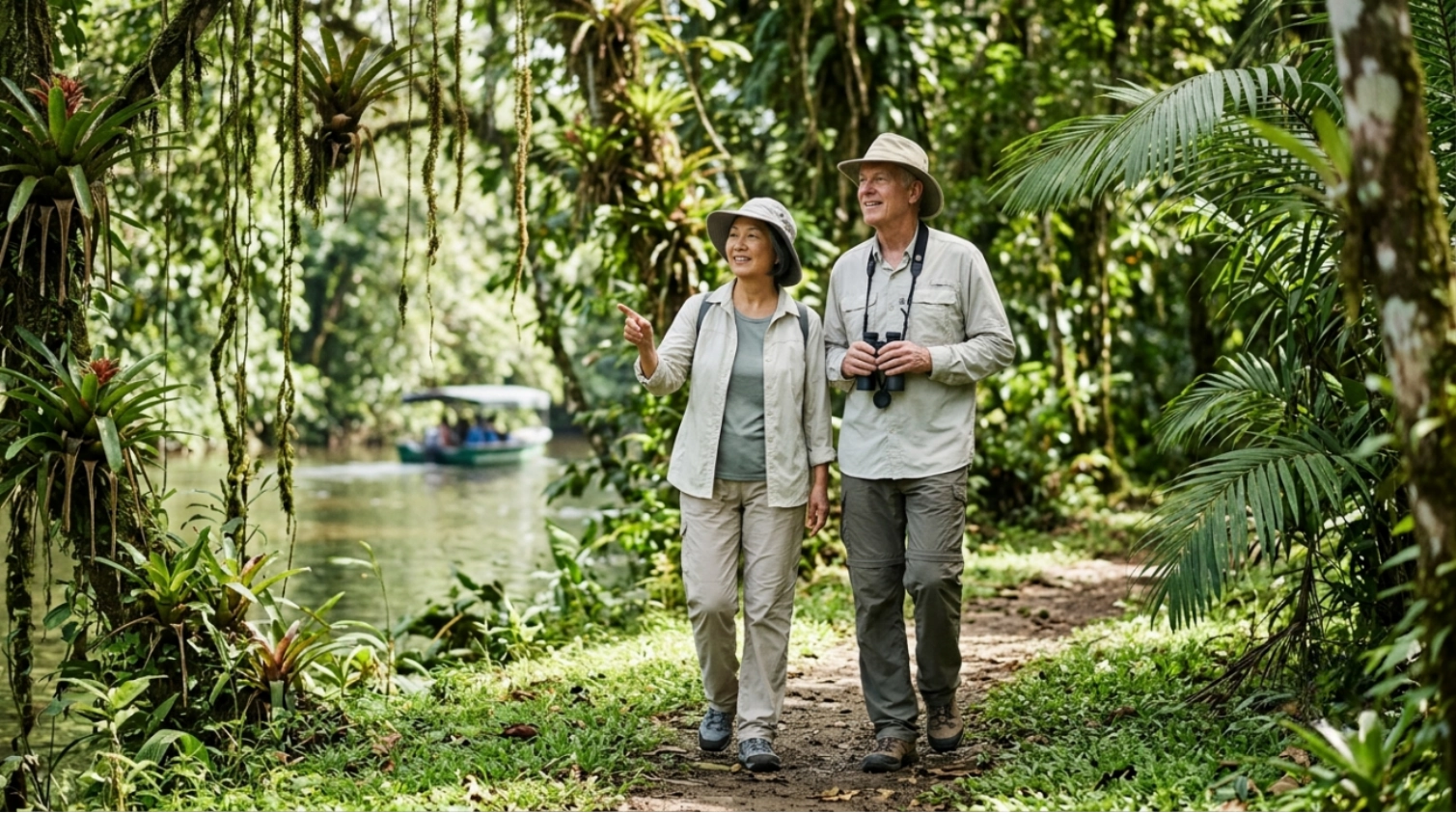
Costa Rica holds roughly five percent of the planet’s biodiversity in a country smaller than West Virginia, and the remarkable part is how gently it can all be seen. Manuel Antonio National Park pairs paved, mostly level trails with guides whose spotting scopes turn distant sloths and toucans into full-frame encounters, and its beaches let you finish a wildlife morning with a swim.
The Tortuguero canals on the Caribbean side replace hiking entirely with boat safaris, where monkeys, caimans, and kingfishers appear from a cushioned seat. Around Arenal volcano, hanging bridges offer canopy-level birding on engineered walkways, a civilized answer to the zip line, and the hummingbird gardens of the Monteverde area deliver dazzling wildlife at standing-still pace. Hire naturalist guides everywhere, typically $25 to $60 per person, since they transform green scenery into a narrated ecosystem and their scopes do the work your neck would otherwise.
Hot Springs, Wellness, and the Blue Zone Lesson
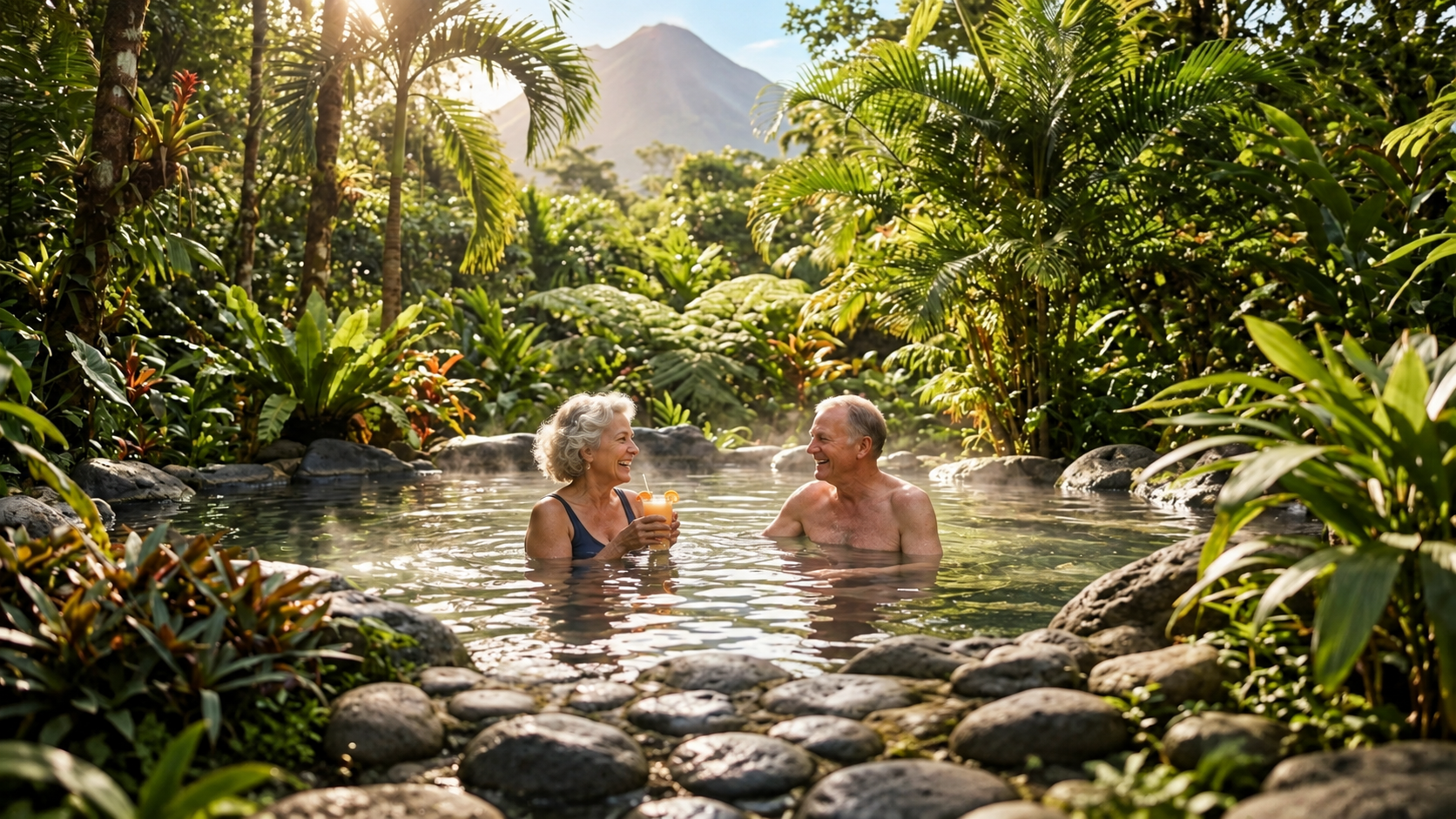
The volcanic spine that built Costa Rica also heated its spas. The hot springs resorts around Arenal channel naturally thermal rivers through landscaped pools, and an afternoon soaking beneath rainforest canopy ranks with any wellness experience in the hemisphere. Yoga and wellness retreats cluster along the Nicoya Peninsula and the southern Pacific coast, many now offering longevity-focused programs that borrow directly from the blue zone research conducted in their own backyard.
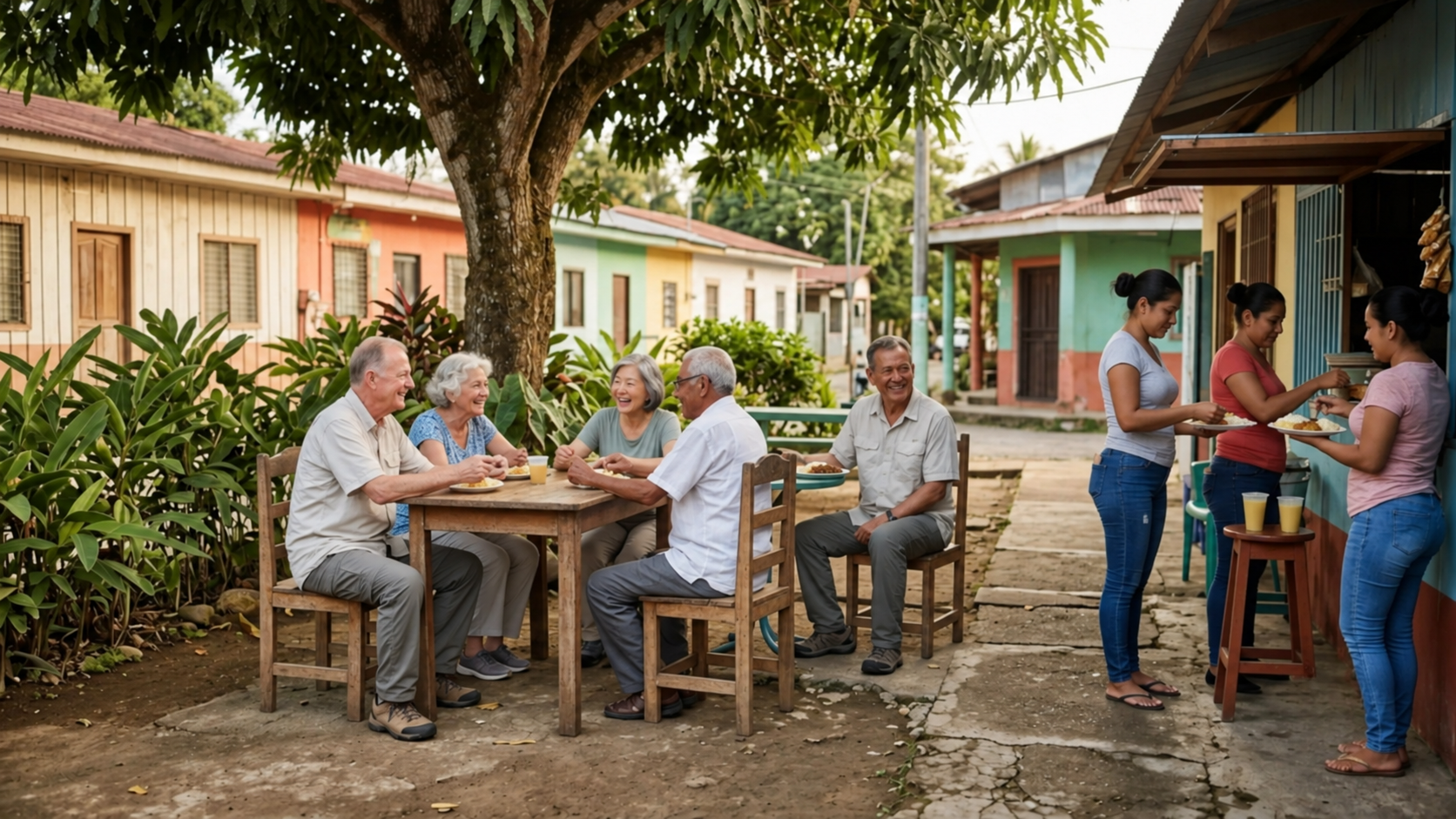
That research, popularized by the Blue Zones project’s Nicoya findings, credits strong social ties, purpose, daily natural movement, and a bean-and-corn-centered diet, which means the wellness lesson of Costa Rica is available at every soda, the family-run lunch counters where the traditional casado plate delivers the longevity diet for about $7. Travelers who visit Nicoya often report the deepest impression isn’t a sight at all but the pace, the plazas full of octogenarians in animated conversation, living proof of the pura vida hypothesis.
Where to Base and When to Go
The comfortable itinerary picks two bases, not five. Pair Arenal’s volcano, hot springs, and bridges with either Manuel Antonio’s wildlife-and-beach combination or the Nicoya Peninsula’s blue zone beaches around Nosara and Samara, connected by the shared shuttle vans that spare you Costa Rica’s famously spirited driving, though rental cars work fine for confident drivers who stick to main routes. December through April is the dry season and the safe bet, while May, June, and November offer the green season compromise of morning sun, afternoon showers, and prices down by a third.
The official tourism board at Visit Costa Rica maintains reliable regional guides, and the country’s tourism infrastructure, honed over four decades, means English is widespread and logistics rarely surprise.
The Practical Grown-Up Notes
A few honest notes complete the picture. Costa Rica is not the budget destination it was, with quality lodges running $150 to $400 nightly in high season, though food and guides stay affordable. Roads to some destinations remain rough, so choosing bases with paved access, as Arenal, Manuel Antonio, and Samara offer, keeps travel days easy. The sun sits nearly overhead year-round, making hats, high SPF, and shaded midday hours genuine health practices rather than suggestions. A dry bag for boat days and a pair of binoculars for each traveler round out the packing list. And comprehensive travel medical coverage matters here as everywhere abroad, a topic our guide to travel insurance essentials covers in full.
One couple in their early seventies told us they’d assumed Costa Rica had aged out of their list until a naturalist-guided week produced three sloths, two volcanoes, a resplendent quetzal, and the best sleep of their year, no harness involved. Pura vida, it turns out, was never about the zip line. It was about everything underneath it.

Written by the
ZestYears Editorial Team