

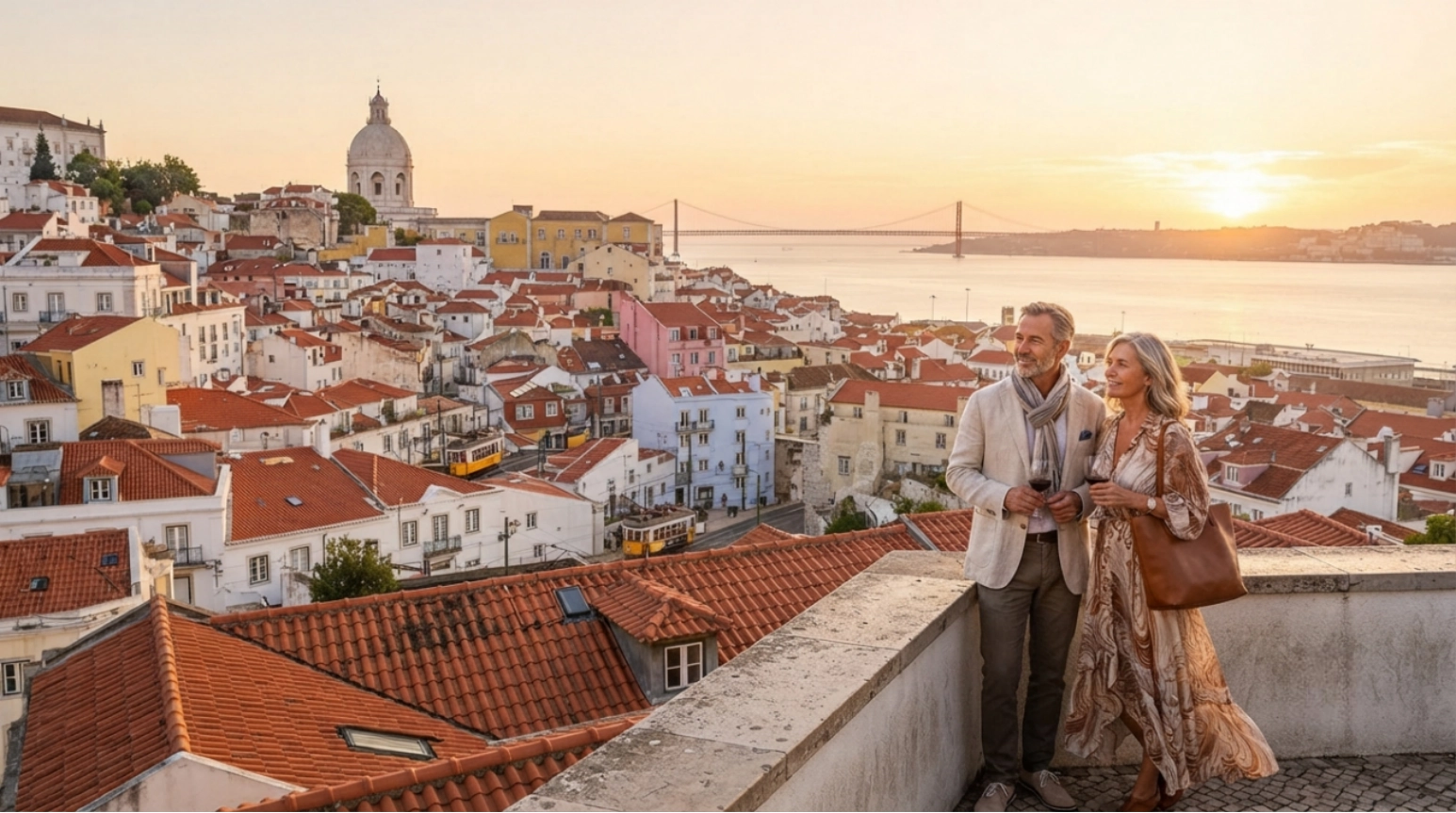
Every year the destination rankings come out, and every year Portugal sits at or near the top, which raises a fair question for anyone who hasn’t been: why visit Portugal when Spain, Italy, and France sit right there? The answer, once you’ve spent a week in the country, is that Portugal delivers nearly everything travelers love about Mediterranean Europe at lower prices, with smaller crowds, milder manners, and a coastline that belongs in the conversation with any in the world.
It has also become one of Europe’s most welcoming countries for travelers in their fifties, sixties, and beyond, with a gentle pace and an English-speaking ease that removes friction from every day. Here’s what the fuss is genuinely about.
The Value Is Real
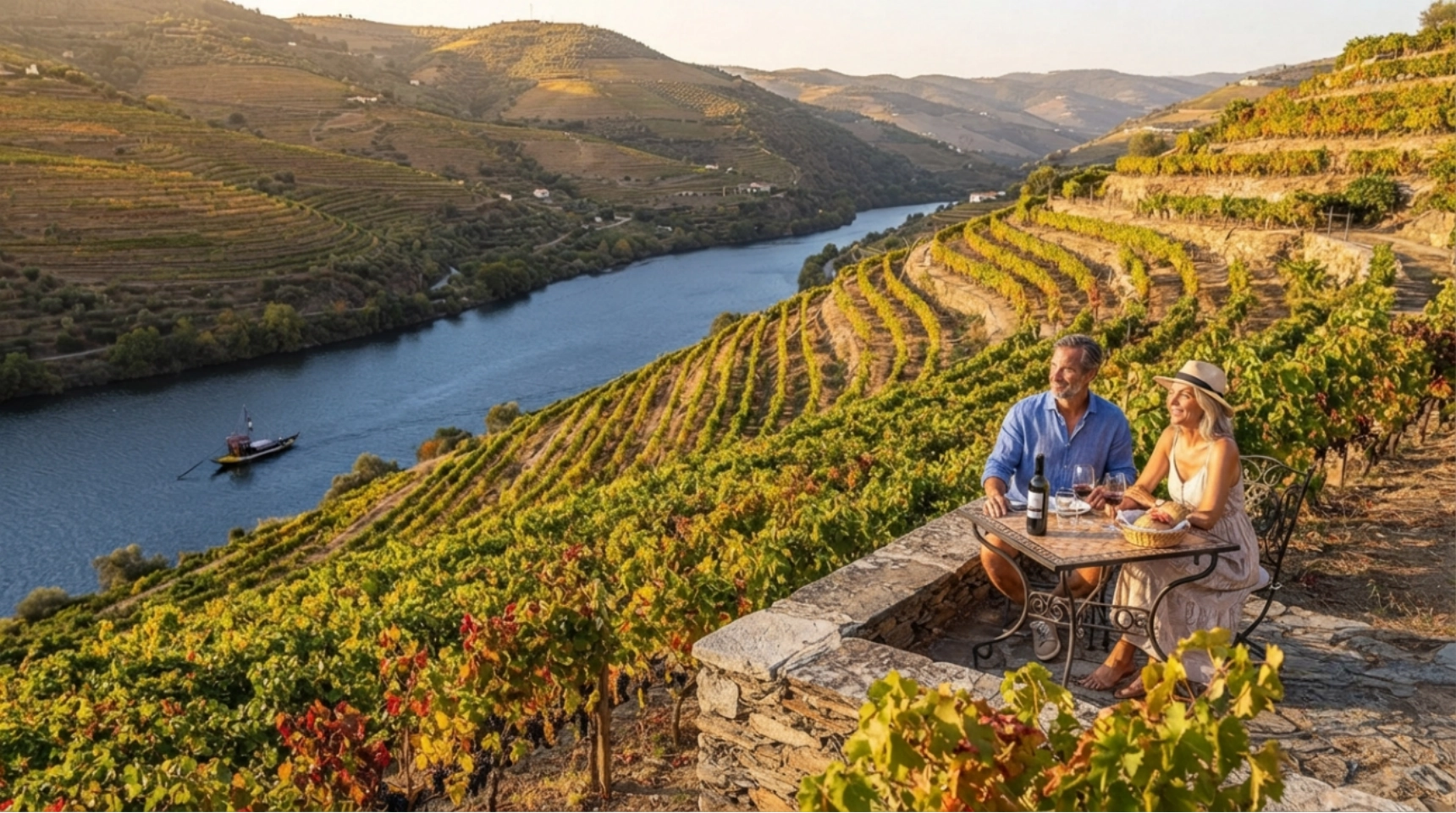
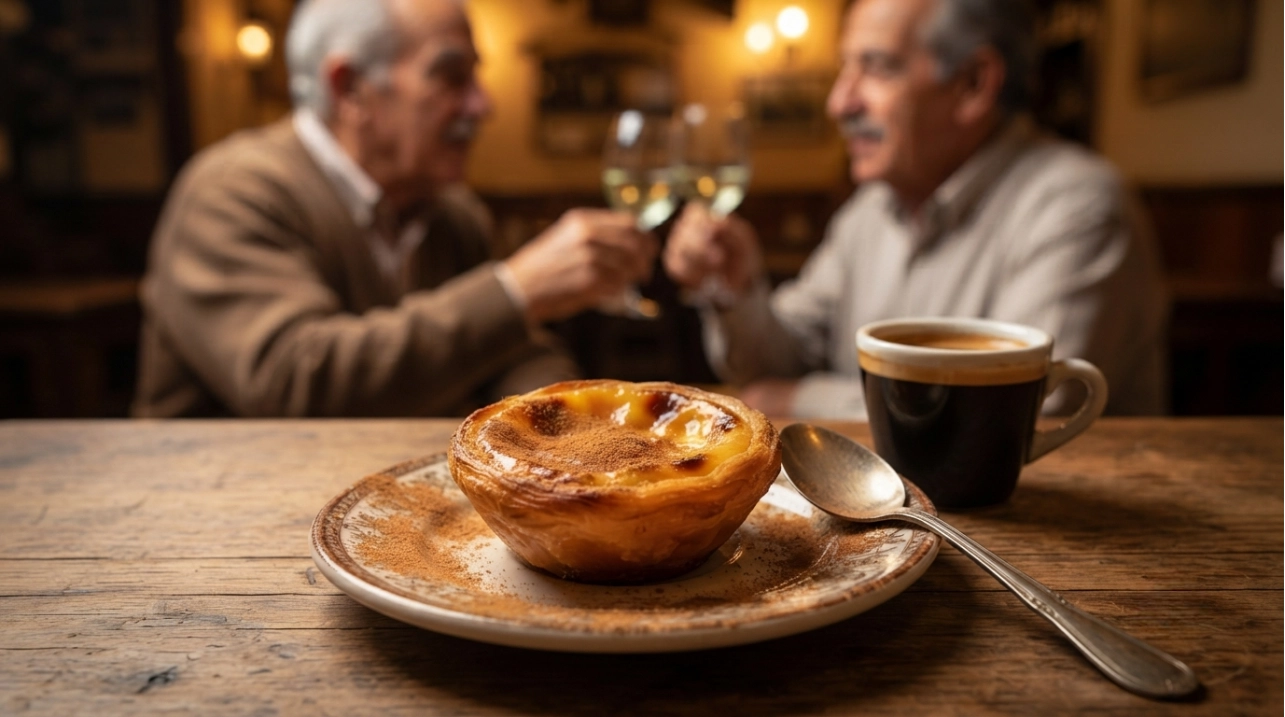
Portugal remains Western Europe’s best bargain by a comfortable margin. A memorable dinner with wine in Lisbon or Porto runs half of what the equivalent costs in Paris or Rome, boutique hotels in beautiful buildings price like chain hotels elsewhere, and the excellent train between the two main cities costs about $25. The famous pastel de nata custard tart, arguably the country’s greatest ambassador, costs about a euro and a half, and a glass of good Portuguese wine often costs less than bottled water in Scandinavia. The savings compound over a two-week trip into hundreds or thousands of dollars, which either shortens the payback on the flight or funds the splurges, like a night at a historic pousada inn or a proper Douro Valley wine lunch overlooking the terraced vineyards.
Lisbon, Porto, and the Places Between
Lisbon: The capital charms with tiled facades, miradouro viewpoints, and the mournful beauty of live fado music, though its famous hills deserve honest mention. The classic trams, tuk-tuks, and a modern metro flatten the city for anyone who prefers not to climb, and basing in the flat Baixa district keeps daily walking gentle.
Porto: Smaller, moodier, and many travelers’ secret favorite, Porto pairs its riverside Ribeira district with the port wine lodges of Vila Nova de Gaia just across the bridge, where tastings come with history lessons and river views. Its compact center also makes it the easier of the two cities on the feet.
Sintra: An easy day trip from Lisbon, this hill town of fairy tale palaces rewards an early start and a pre-booked palace ticket, since it’s the one place in Portugal where crowds genuinely bite in high season. Tuk-tuks and shuttle buses spare you the steep climbs between the palaces.
The Douro Valley: Portugal’s answer to Tuscany layers vineyard terraces above a winding river, best experienced on a leisurely boat trip or from a quinta estate where lunch stretches all afternoon. The scenic train from Porto toward Pinhao hugs the river for nearly the entire ride.
The Algarve: The southern coast delivers golden cliffs, sea caves, and reliably sunny beach towns, at its best in September and October when summer crowds leave and the ocean stays warm. Base in Lagos or Tavira for old town character rather than the high-rise strips.
When to Go and How to Pace It
Portugal rewards shoulder season more than almost anywhere in Europe. April, May, June, September, and October bring warm days, open everything, and hotel rates well below the July peak, a pattern that matches everything in our guide to shoulder season travel. Even winter works, with Lisbon rarely dipping below the 50s and the museums, food, and fado all indoors anyway.
Pace-wise, resist the urge to sprint the whole country in a week. The trip that travelers rave about pairs five nights in Lisbon with four in Porto and a Douro day, or trades one city for a slow week in the Algarve. Official planning resources at Visit Portugal cover regional routes well, and the country’s compact size, roughly that of Indiana, keeps travel days short.
The Welcome Factor
What ultimately sells Portugal is harder to quantify: the country likes its visitors. English is widely and cheerfully spoken, service is warm without performance, and solo travelers in particular report feeling comfortable in a way that busier destinations don’t always deliver, which is worth noting given that solo travel among adults over 55 keeps hitting record highs, as we covered in our story on why solo travel over 55 is surging.
Safety statistics consistently rank Portugal among the world’s most peaceful countries, and the practical worries of travel, from transit strikes to tourist hostility, barely register here. One reader described her October week in Porto as the first trip in years where nothing required bracing for, just a city that kept handing her good days. That, in the end, is what the fuss is about, and current airfare deals through resources like Google Flights make testing the theory easier than ever, with nonstops from several US cities under seven hours.

Written by the
ZestYears Editorial Team